She Thought a Stranger Was Helping Her. Then Alicia Reynolds Vanished From the Highway
Alicia Showalter Reynolds vanished in 1996 after her car was found abandoned along a Virginia highway with a napkin tucked under the windshield, even though the vehicle had no mechanical problems. Investigators later learned that several women had been approached by a clean-cut man in a dark pickup truck who pretended to warn them about car trouble, raising fears that Alicia had been targeted by a killer posing as a Good Samaritan.
 Marie NovakMarie Novak is a crime news writer for Crimehowl, covering true crime, missing persons cases, court updates, and stories that leave communities searching for answers. She focuses on writing with empathy, clarity, and a deep respect for victims and their families while encouraging readers to think critically about the cases that shape the headlines.
PUBLISHED JUL 02, 2026 · 06:00 | 4 MIN READ | FILED UNDER UNSOLVED CASES
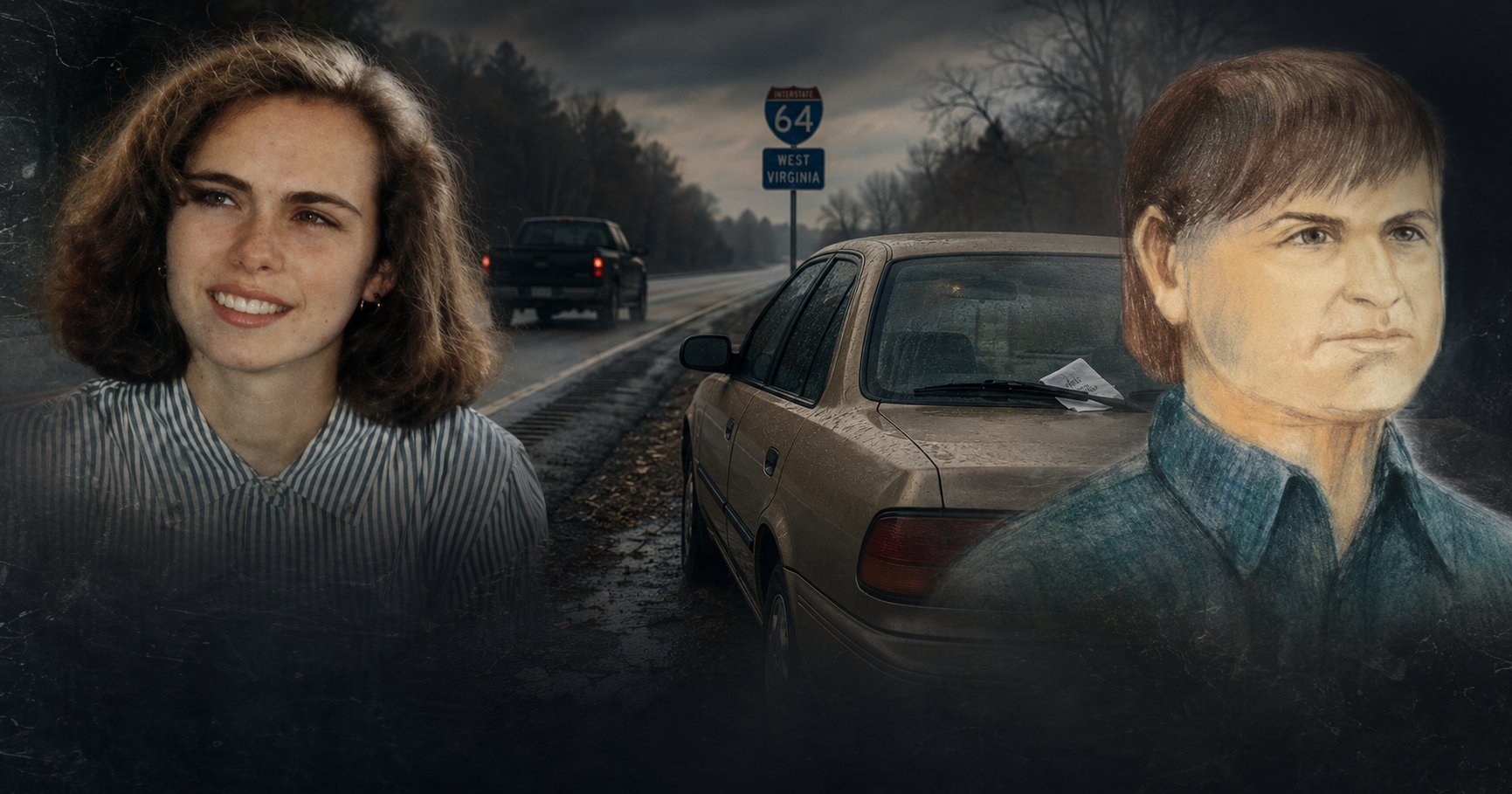
Alicia Showalter Reynolds left her Baltimore home on the morning of March 2, 1996, expecting to spend the day shopping with her mother in Charlottesville, Virginia.
She never made it.
The 25-year-old had said goodbye to her husband, Mark, around 7:30 a.m. and started the more than 150-mile drive. She was supposed to meet her mother, Sadie Showalter, at the mall by 10:30. But when Alicia still had not arrived by 11:00, her mother knew something was wrong.
Alicia was not the kind of person who simply disappeared without calling.
At first, her husband wondered if the weather had slowed her down. It had been foggy and drizzly that morning, and the roads may have been slick. But as the hours passed with no word from Alicia, concern turned into fear.
That evening, around 6 p.m., a Virginia state trooper found Alicia’s car abandoned along a highway near Culpeper, Virginia, about 50 miles from where she was supposed to meet her mother.
A white paper napkin had been tucked under the windshield wiper, a common sign that a vehicle had broken down.
But when police examined Alicia’s car, they found nothing wrong with it.
That was the first sign that this may not have been an ordinary roadside emergency. It may have been a trap.
Witnesses Saw Alicia With a Man in a Pickup Truck
After Alicia was reported missing, police set up a roadblock near the area where her car was found, hoping to speak with drivers who may have seen something.
Several witnesses came forward with the same disturbing detail.
At least three people said they saw Alicia talking to a clean-cut white man who was driving a dark-colored pickup truck.
Then more calls came in.
Nearly 20 women reported that they had recently been approached on the highway by a man matching that same description. His method was chillingly consistent.
According to investigators, the man would drive near women on the road, flash his headlights, honk his horn, and try to get their attention. He would make them believe something was wrong with their car.
If the woman pulled over, he would get out, crawl under the vehicle, pretend to inspect it, and then calmly explain that he had found a mechanical problem.
Then came the offer.
He would suggest driving the woman to the nearest phone.
To many people, it may have sounded like help. A polite stranger. A roadside Good Samaritan. Someone who noticed car trouble and stopped to assist.
But investigators began to believe this was not kindness at all.
They believed it was a rehearsed plan.

Police Believe the Killer May Have Practiced on Other Women
Some women accepted rides from the man and survived. Others became uneasy and refused.
Investigators said his behavior changed when women did not cooperate. When women refused to pull over or declined his help, he reportedly became angry, sometimes pounding his fists on the steering wheel or muttering under his breath.
That reaction told investigators something important: this man may have needed control.
Virginia State Police believed the repeated roadside encounters may have been “dry runs.” In other words, they suspected he was practicing; stopping women, testing his approach, learning what worked, and building confidence.
One week before Alicia disappeared, another woman in a neighboring county was allegedly targeted in a similar way.
She accepted a ride from a man who seemed soft-spoken and trustworthy. But as they drove, he repeatedly pulled off the road, claiming he could not see because of vehicles behind him. Investigators believed he may have been trying to find a place to attack her.
The woman became frightened and fought back. The man pushed her out of the vehicle.
She broke her ankle, but she survived.
Seven days later, Alicia Reynolds disappeared.
Alicia’s Body Was Found Two Months Later
For two months, Alicia’s family waited, searched, and hoped.
Then, on May 7, 1996, her body was found in a wooded area about 15 miles southeast of Culpeper.
Investigators believe she had been murdered, possibly the same day she vanished.
Her case became one of the most unsettling highway abduction cases of the 1990s because it preyed on something many people are taught to trust: a stranger stopping to help when something seems wrong.
But in Alicia’s case, police believe the appearance of help may have been part of the danger.
A man may have created the illusion of car trouble, waited for the right victim to trust him, and then used that trust against her.
The Man Has Never Been Identified
The most disturbing part is that Alicia’s killer was never caught.
Investigators feared that after Alicia’s murder, the man may have left the area and tried the same tactic somewhere else.
That possibility still makes this case frightening decades later.
Who was the man in the dark pickup truck? How many women did he approach before Alicia? Did he stop after her murder, or did he simply move on to another state, another highway, and another unsuspecting woman?
Alicia Reynolds was a wife, daughter, and young woman who was just trying to meet her mother for a shopping trip. Instead, she became the victim of someone who may have spent weeks practicing how to make women trust him.
Her case is also a reminder that danger does not always look threatening at first. Sometimes it looks helpful. Sometimes it smiles. Sometimes it pulls over and tells you there is something wrong with your car.
What do you think happened to Alicia Reynolds after she pulled over? And do you believe her killer may have continued using the same “Good Samaritan” trick somewhere else?