Eight People Were Murdered in Their Beds. More Than 100 Years Later, the Villisca Axe Killer Is Still Unknown
The 1912 Villisca Axe Murders left eight people dead inside a small Iowa home, including six children, and more than a century later the killer has never been identified. With strange crime scene details, multiple suspects, two trials, and a restored house now known for both true crime history and alleged paranormal activity, the case remains one of America’s most haunting unsolved mysteries.
 Marie NovakMarie Novak is a crime news writer for Crimehowl, covering true crime, missing persons cases, court updates, and stories that leave communities searching for answers. She focuses on writing with empathy, clarity, and a deep respect for victims and their families while encouraging readers to think critically about the cases that shape the headlines.
PUBLISHED JUL 15, 2026 · 06:30 | 15 MIN READ | LONG READ | FILED UNDER UNSOLVED CASES
On a quiet summer night in June 1912, the small town of Villisca, Iowa, went to sleep believing it was one of the safest, most peaceful places in the state.
By morning, that illusion was shattered forever.
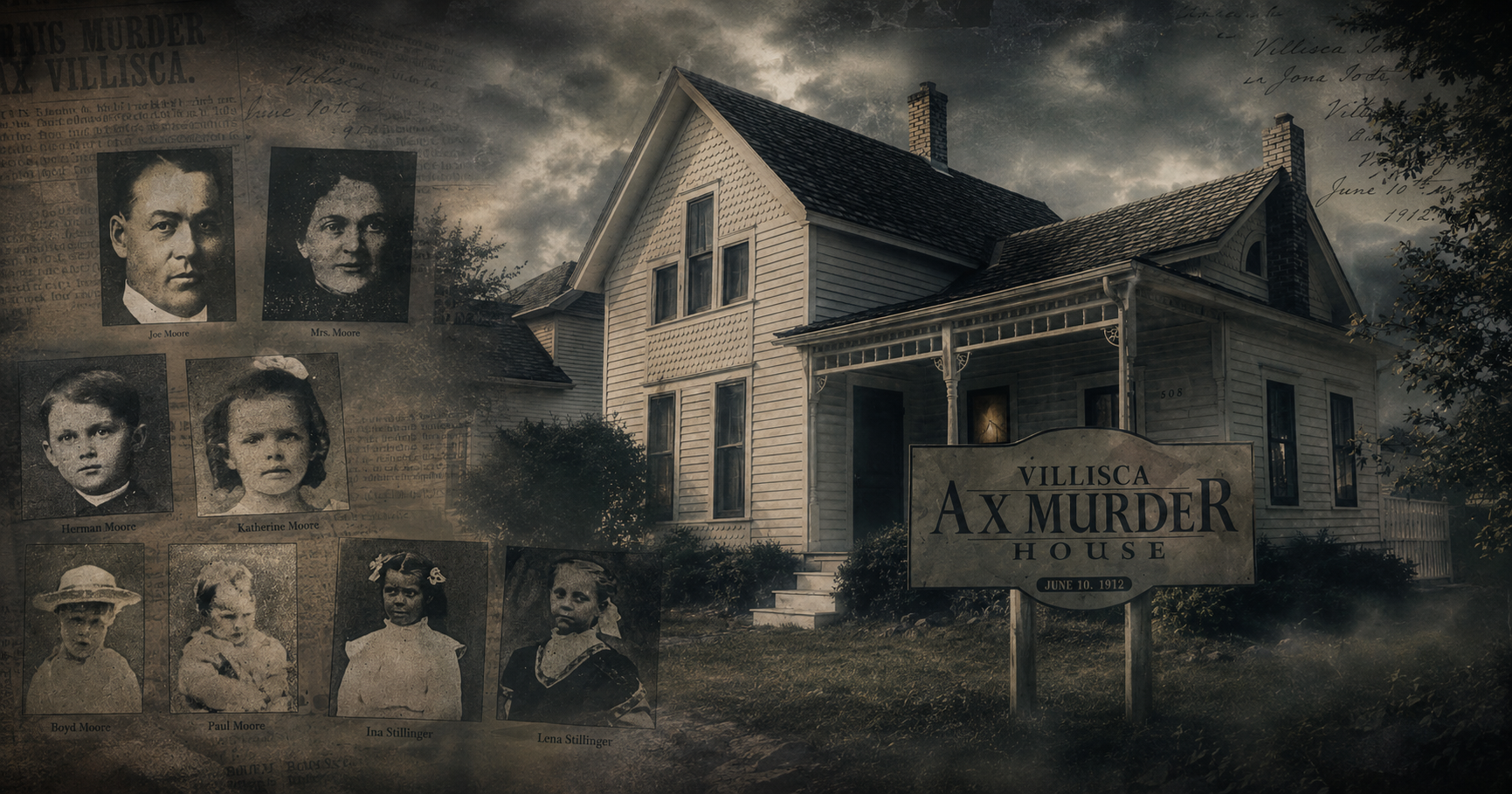
Inside a modest home at 508 East Second Street, eight people were found brutally murdered in their beds: Josiah “J.B.” Moore, his wife Sarah Moore, their four children, and two young sisters who had spent the night after a church event.
The victims were Josiah Moore, 43; Sarah Moore, 39; Herman, 11; Katherine, 10; Arthur, 7; Paul, 5; and visiting sisters Lena Stillinger, 12, and Ina Stillinger, 8.
All eight had been bludgeoned to death with an axe.
More than a century later, the Villisca Axe Murders remain one of the most disturbing unsolved crimes in American history. There were suspects. There were theories. There were trials. There were rumors that split the town for years.
But no one was ever convicted.
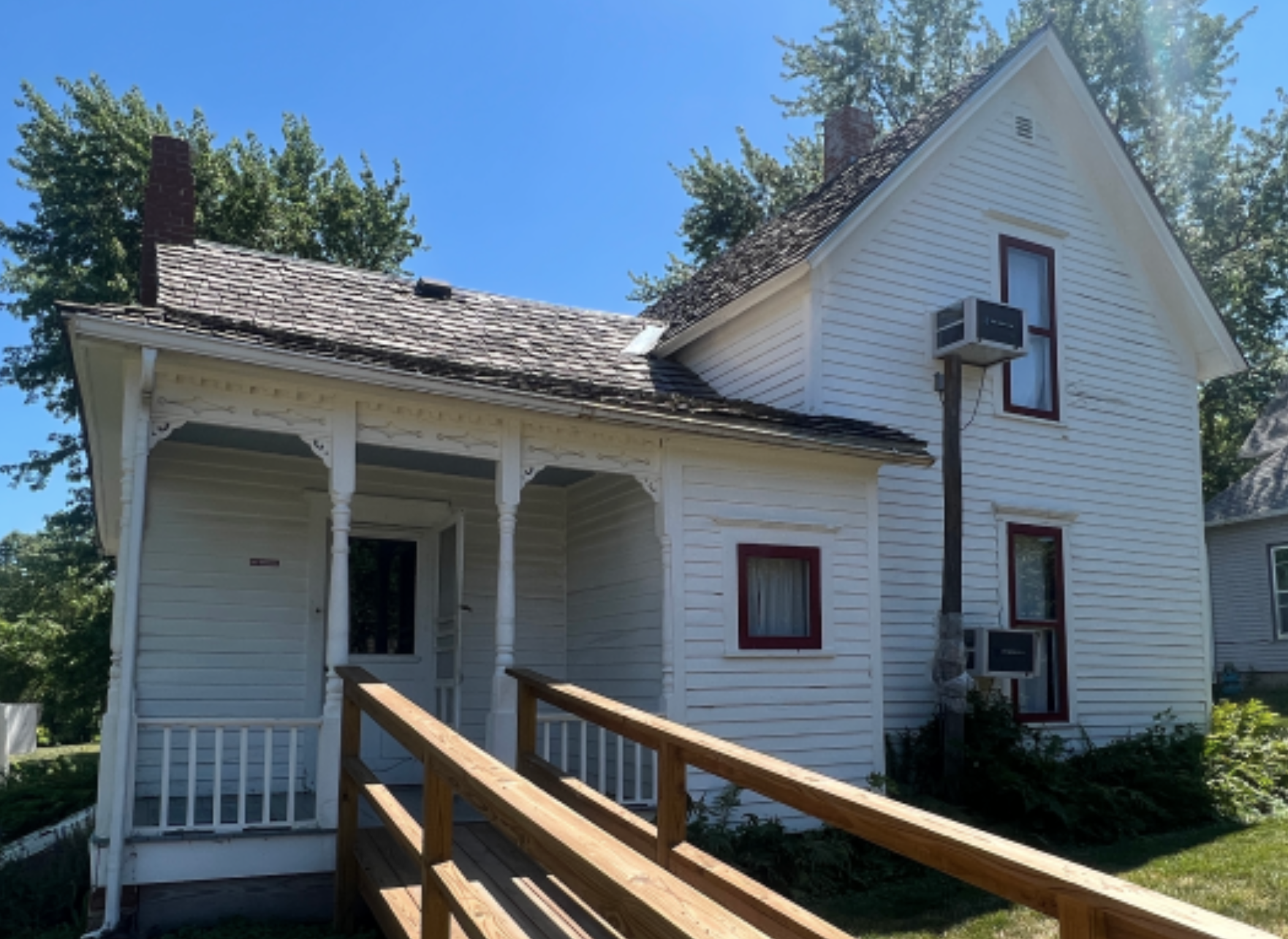
And the house where it happened still stands.
A Normal Sunday Night Turned Into a Nightmare
The Moore family was well-known in Villisca. Josiah Moore was a respected businessman who had built a successful farm implement business and secured a John Deere franchise. Sarah was active in the community, and their children were part of a busy, close-knit town life.
On Sunday, June 9, 1912, the family attended a children’s program at the Presbyterian Church, just a short walk from their home. Two of Katherine Moore’s friends, Lena and Ina Stillinger, also attended. The girls were allowed to spend the night with the Moores after the service.
The group returned to the Moore home sometime after 9:30 p.m.
At some point after midnight, someone entered the house, or had already been hiding inside, and began killing everyone inside.
Investigators believed Josiah Moore was attacked first. Sarah was killed next. Then the killer moved room to room, murdering the children as they slept. The Stillinger sisters were killed in the downstairs bedroom.
But the violence did not stop there.
The killer reportedly returned to some of the victims and struck them again after they were already dead. Josiah Moore was attacked so violently that some reports say he was struck dozens of times.
The brutality was hard for even experienced investigators to comprehend.
The Strange Details Inside the House
The Villisca crime scene was horrific, but it was also filled with strange details that still fuel theories today.
The killer covered mirrors inside the home. The victims’ faces were covered with cloth or clothing. Window blinds were pulled down, and clothing was used to cover windows that did not have blinds.
A lamp was found with its chimney removed and the wick turned low, giving off only a faint light. The axe, believed to have come from the Moore family’s own property, was left in the downstairs bedroom.
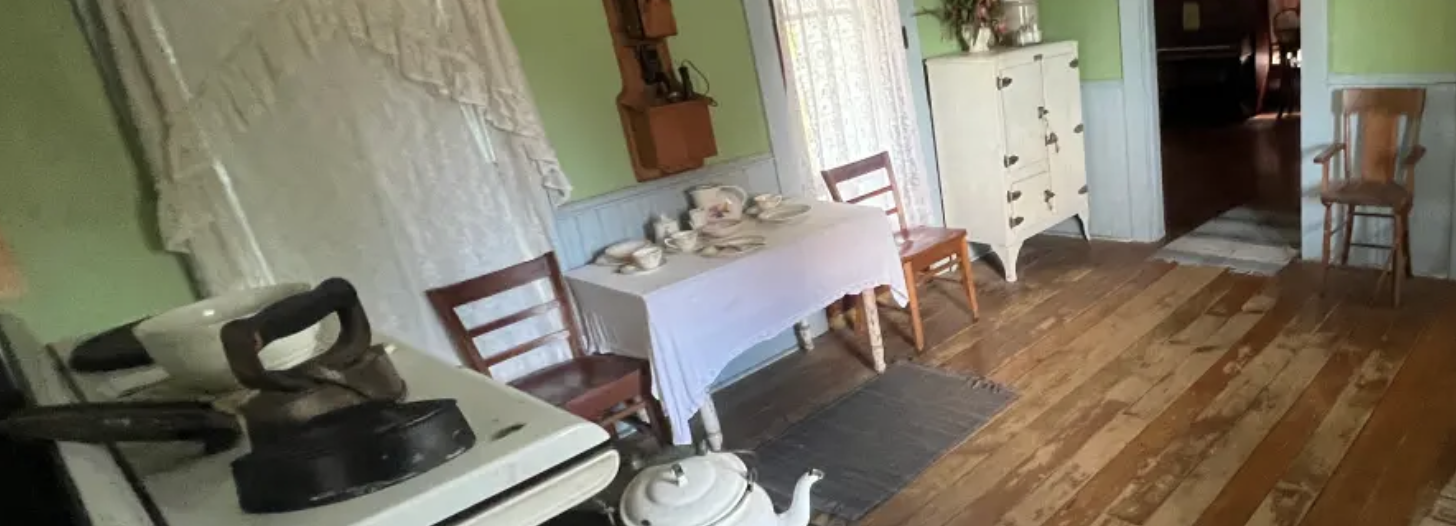
There were also signs the killer may have stayed in the home for some time after the murders. Investigators believed the killer washed up and may have prepared food before leaving. A plate of uneaten food was reportedly found in the kitchen.
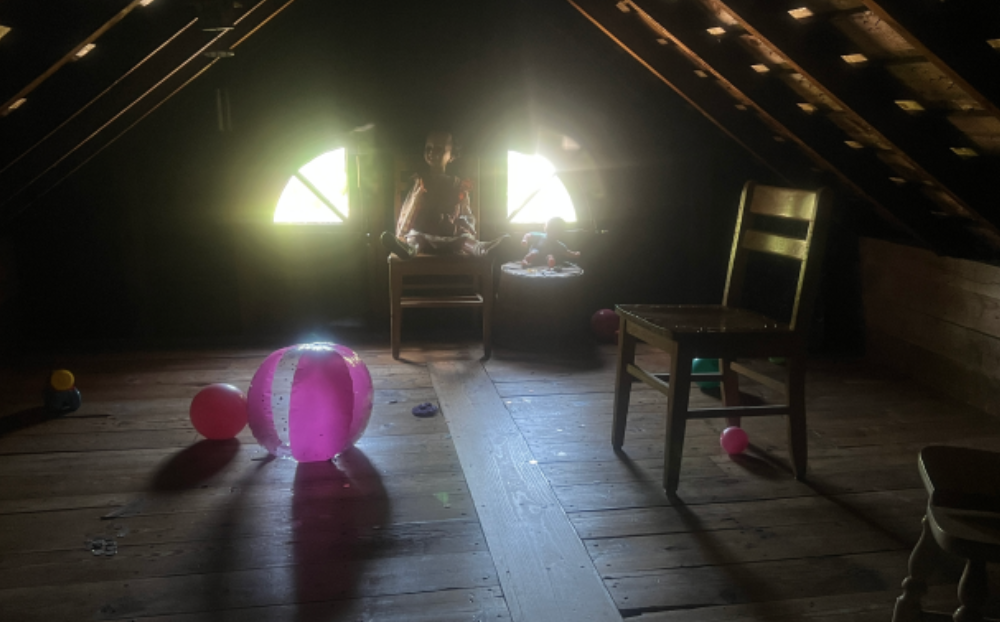
In the barn, investigators found an imprint in the hay in the barn next to a knothole, where they believe the killer observed the family for some time. Two spent cigarettes found in the attic suggested the murderer could have entered the house via a window or unlocked back door and hid until the family returned from church.
Nothing valuable appeared to have been taken. Josiah Moore’s wallet, which contained money, was left behind.
That ruled out burglary as an obvious motive.
So why were eight people killed?
That question has haunted Villisca ever since.
The Discovery That Shocked the Town
The next morning, neighbor Mary Peckham noticed something was wrong.
The Moore home was usually active early. The children had school. The animals needed to be fed. But the house was silent. Curtains were drawn. No one answered the door.
Concerned, Peckham contacted Josiah’s brother, Ross Moore.
Ross eventually entered the house with a key. At first, nothing seemed obviously wrong. Then he opened the downstairs bedroom door and saw blood on the bed where the Stillinger sisters had slept.
He immediately ran outside and told Peckham to call for help.
From there, the scene became chaotic.
Within a short time, word spread through town. Villisca’s telephone exchange issued an alert, and people rushed to the house. Before the scene was secured, dozens of locals walked through the home. Some reportedly touched evidence. Others viewed the bodies. The murder weapon may even have been handled.
By modern standards, the crime scene was destroyed almost immediately.
That mistake may have cost investigators the case.
A Town Divided by Suspicion
The murders were so shocking that people looked everywhere for someone to blame.
One of the most discussed suspects was Frank F. Jones, a prominent Villisca businessman and state senator. Josiah Moore had once worked for Jones before leaving to start his own competing business. Rumors swirled about a possible business feud or personal conflict, and some believed Jones may have hired someone to kill Moore.
Jones was never convicted, and the theory remains debated.
Another major suspect was Reverend George Kelly, a traveling minister who had been in Villisca the night of the murders. Kelly was known for odd behavior and later made statements that drew suspicion. He was tried twice in connection with the killings, but he was never convicted.
Others have suspected a traveling killer, possibly someone who moved through towns by rail. That theory comes partly from similarities between the Villisca murders and other axe murders in the Midwest around that era.
There were also lesser-known suspects, including William “Blackie” Mansfield, Henry Lee Moore, S.A. “Andy” Sawyer, and others. But every lead eventually faded, collapsed, or failed in court.
No theory has ever fully answered every question.
Why Did No One Hear Anything?
One of the most chilling mysteries is how one person could kill eight people in a small, creaking house without waking the entire family or the neighbors.
Some newspapers at the time suggested the family may have been sedated, possibly through milk or cocoa. But toxicology testing was not routinely used in the same way it is today, and there is no firm proof that the victims were drugged.
Another possibility is that the killer attacked quickly and silently, moving through the house before anyone could react.
There is also the terrifying possibility that someone was already hiding inside the home before the family returned from church.
Investigators reportedly found signs that someone may have waited in the attic or barn. Cigarette butts and an impression in the hay suggested the killer may have watched the house before making a move.
If true, that means the killer was not acting on impulse.
He may have been waiting.
The Coroners Inquest from Witnesses
The coroner’s inquest into the Villisca Axe Murders was held on June 11, 1912, just one day after the Moore family and the two Stillinger sisters were discovered dead inside the Moore home. Fourteen witnesses were called, and their testimony helped create the earliest official picture of what happened before the bodies were found, how the crime scene appeared, and what little investigators knew about possible suspects. The accounts also show how quickly the scene became chaotic, with neighbors, family members, doctors, and the town marshal entering the home before the house was fully secured.
Mary Peckham, the Moores’ next-door neighbor, was the first witness. She testified that she had seen the Moore family before they left for church the evening before, but she went to bed around 8 p.m. and did not see them return. The next morning, while hanging laundry between 5 and 6 a.m., she noticed the Moore house seemed unusually quiet. By about 7 a.m., she became more concerned because the family’s animals had not been fed, the blinds were drawn, and no one answered when she knocked. She tried the doors, found them locked, and eventually called Josiah Moore’s brother Ross. Peckham said she stayed on the porch while Ross entered the house and that he quickly returned after seeing blood-stained sheets and bodies in the downstairs bedroom. She also testified that the doors appeared to have been locked with a key, and there was no key left inside the lock.
Ed Selley, an employee of Josiah Moore, testified next. He had opened Moore’s farm implement store that morning and received a call from Ross Moore asking if Josiah had come in. Selley said Josiah had not, which was unusual. After checking with other family members and speaking with Mary Peckham, Selley went to the Moore home to tend the livestock. He later returned with Marshal Hank Horton after receiving word that something was terribly wrong. Selley entered the house with others, saw blood on the downstairs bed, and left. He said Horton later came out and stated that someone was dead or had been killed in every bed. Selley also mentioned that Josiah had once referred to a brother-in-law, Sam Moyer, as someone who did not like him and had allegedly said he would “get even” someday. Still, Selley had no further information proving that anyone wanted to kill the Moore family.
Dr. J. Clark Cooper, the first physician on the scene, testified that Marshal Horton came to his office around 8:15 a.m. and told him that Joe Moore and his family had been murdered in bed. Cooper went to the home and entered with Horton, Dr. Hough, and the Presbyterian minister. In the downstairs bedroom, Cooper saw an arm sticking out from beneath the covers and blood on the pillows. He did not immediately recognize the victims. Upstairs, he saw Josiah and Sarah Moore dead in their bedroom, then moved to the children’s room to count the children. Cooper said he did not touch the bodies, but he observed that the bedding was stiff with dried blood and brain matter. He estimated the victims had been dead for at least five or six hours. He also testified that he noticed no unusual odor in the house and believed the victims’ faces had been covered after they were killed.
Jessie Moore, wife of Josiah’s brother Ross, testified about the early-morning phone calls. She said Mary Peckham called her asking whether something had happened to Josiah’s father, C.C. Moore, because the Moore home was so unusually still. Jessie then called Josiah’s store and spoke to Ed Selley, who later called her back saying he could not locate Josiah at the store, his parents’ home, or his in-laws’ home. Jessie later learned of the murders from a neighbor. She also stated that she entered the home later that day to retrieve family photographs for the press. When asked about possible enemies of Josiah Moore, she had nothing meaningful to add.
Dr. F.S. Williams, the second physician to enter the home and the first to examine the victims more closely, gave some of the most graphic testimony. He said nothing appeared out of place when he entered, and he did not smell anesthetic or any unusual odor. He described Josiah and Sarah Moore lying in their bed with their heads toward the west, both badly beaten. In the children’s room, he found Paul Moore on his stomach with the top of his head beaten in, Katherine in another bed with blood-spattered clothing near her, and Herman and Arthur in another bed with severe head injuries. In the downstairs bedroom, he found the Stillinger sisters. He noted that one girl appeared to have moved or been moved after being struck, and that Lena’s head had been covered with a small boy’s gray coat. He saw clothing and underwear on the floor but said he found no evidence of rape or attempted sexual assault. He also testified that he found no footprints.
Edward Landers, who was staying with his mother near the Moore home, testified that he went to bed shortly after 9 p.m. on Sunday. Before falling asleep, he heard a strange sound that stood out to him. At first, he described it as sounding like “one boy hooting for another” outside. He said the sound came at regular intervals but did not alarm him at the time. After learning of the murders the next morning, he wondered whether the sound may have actually been a woman moaning. He placed the sound at around 11 p.m. Landers also said the only strangers he remembered seeing near the Moore home that weekend were wallpaper cleaners who had stopped by his mother’s home late Saturday night.
Ross Moore, Josiah Moore’s brother, testified that Mary Peckham called him around 8:15 a.m. because she was concerned about how quiet the Moore home was. Ross went to Josiah’s store first and spoke with Ed Selley, who also found it strange that Josiah had not arrived. Ross then went to the Moore house, checked the barn, and saw that the horses were still there. He and Peckham tried knocking and looking through the windows, but the blinds were down. Ross used a key to enter the house. At first, he saw nothing unusual in the parlor. But when he opened the door to the downstairs bedroom, he saw blood on the sheets. He did not stay to investigate further and immediately went back outside, telling Peckham to call the marshal. Ross could not provide any useful information about possible suspects.
Fenwick Moore, another of Josiah’s brothers, was also questioned. He lived in Red Oak and testified that he did not know much about Josiah’s business affairs. He also said he had no idea who would have wanted to harm Josiah or his family. His testimony did not add much to the investigation, but it showed that even close relatives had little clear direction when asked about possible enemies.
Marshal Hank Horton, the Villisca town marshal, testified briefly. He confirmed that Ed Selley approached him between 8:15 and 8:30 a.m. and asked him to go to the Moore home. Horton entered the house with Selley and saw enough to know the situation was horrific. He then went to get Dr. Cooper and returned with Cooper and Dr. Hough. Horton confirmed several important crime scene details: there were no unusual odors, the blinds were down, and the victims’ bodies had been covered.
John Lee Van Gilder and Harry Moore were the tenth and eleventh witnesses. Van Gilder, Josiah’s nephew, said he had spoken briefly with Josiah on Sunday afternoon, but he had no information about what happened later that night. Harry Moore, Josiah’s brother, was questioned about possible suspects, including Sam Moyer and Van Gilder, but like the others, he did not provide anything that clearly pointed investigators toward a killer. His testimony reinforced how little the family knew about any immediate threat to Josiah.
Blanche Stillinger, the older sister of Ina and Lena Stillinger, testified about how the girls came to spend the night at the Moore home. She said Josiah Moore called the Stillinger home around 6 p.m. on Sunday and asked to speak to her mother. When Blanche told him her mother was outside, Josiah explained that the girls were going to church with the Moore family and did not want to walk back to their grandmother’s house in the dark. He asked if Blanche thought it would be all right for them to stay overnight, and she said she believed it would be okay. Her testimony helped explain why the Stillinger sisters were inside the Moore home that night.
Joseph Stillinger, father of Ina and Lena, testified after Blanche. He was asked about his hired help and whether he knew anyone who might have committed the murders. He did not identify a clear suspect. He also said his wife had called the Moore house several times Monday morning because she expected the girls to return before school. His testimony added to the heartbreaking timeline showing that the Stillinger family did not know the girls had been murdered until after concern began spreading through town.
Charles Moore, another brother of Josiah, was the final witness. He could not positively identify the axe believed to be the murder weapon as Josiah’s, but he did say Josiah kept an axe in the coal shed. He also testified about Josiah’s habit of locking the house from the inside at night. Charles said that when he had come to the house in the mornings in the past, he usually had to wait for someone to unlock the door. That detail mattered because the house was locked the morning after the murders, raising more questions about whether the killer used a key, locked the door behind him, or knew the family’s routines.
Taken together, the witness accounts created a disturbing but incomplete picture of the Villisca murders. The testimony showed that the Moore home was locked, quiet, and covered from view by drawn blinds; the victims had been attacked in their beds and covered afterward; there was no obvious robbery motive; and no witness could clearly name a killer. The statements also revealed how badly the crime scene was compromised almost immediately, with multiple people entering the home before it was properly secured. More than anything, the inquest showed how many small clues existed, but how few of them led anywhere certain. Each witness added a piece of the puzzle, yet the full picture of who killed the Moore family and the Stillinger sisters remained out of reach.
The House Became Part of the Mystery
For decades, the Moore house remained standing as Villisca tried to live with the stain of the murders.
The town had once been described as one of Iowa’s finest small communities, a place with thriving businesses, churches, a theater, and a strong railroad economy. But after the murders, Villisca became known for something else entirely.
The house changed owners many times and eventually fell into disrepair.
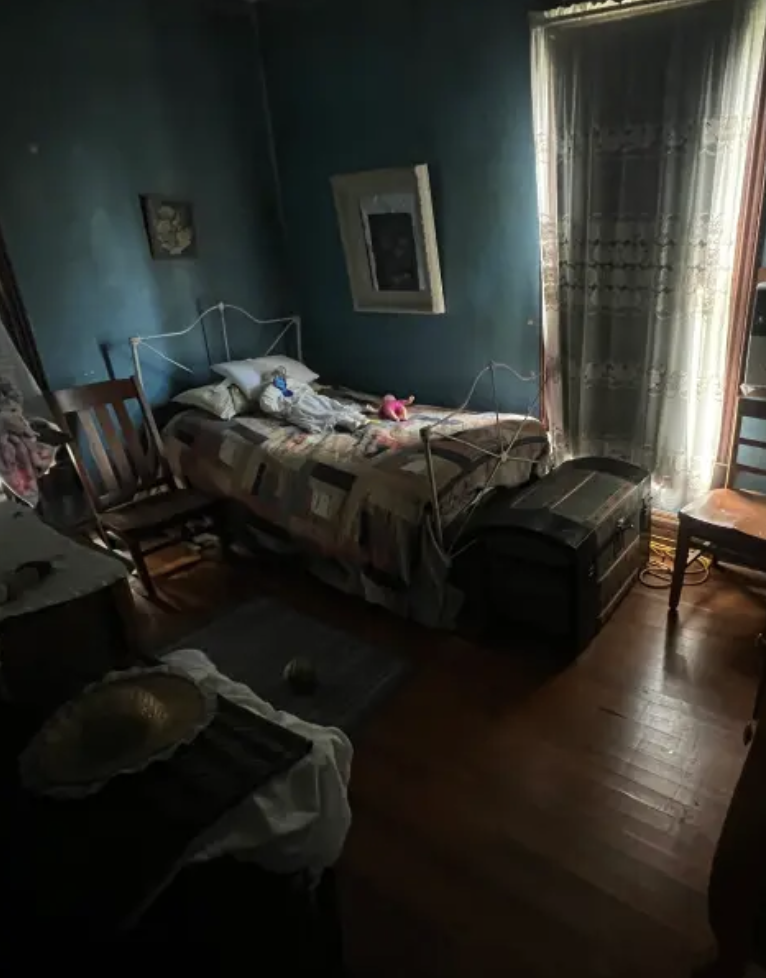
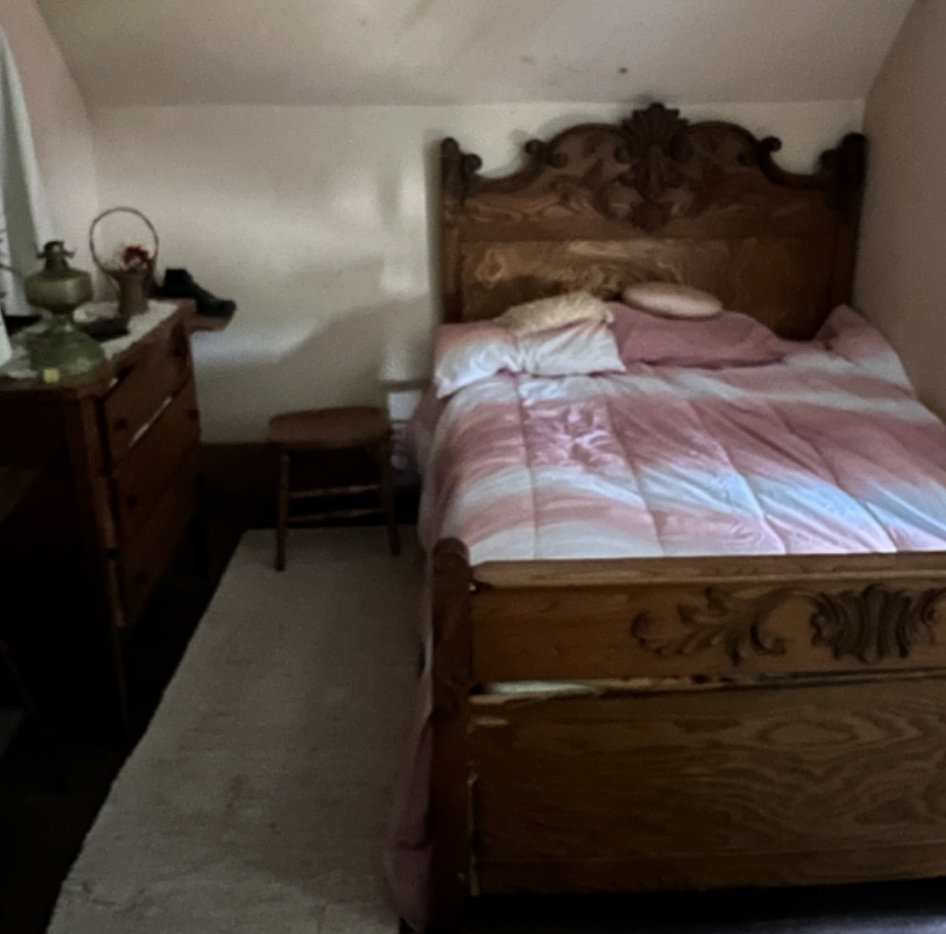
In the 1990s, historians Martha and Darwin Linn helped restore the property to look closer to how it appeared in 1912. The home later became a museum and was listed on the National Register of Historic Places.
Today, the Villisca Axe Murder House is open for tours and overnight stays.
That has made it famous not only among true crime readers, but also among paranormal investigators.
Visitors have reported hearing footsteps, children’s voices, unexplained sounds, and feelings of dread inside the home. Some believe the house is haunted by the victims. Others believe the real horror is not supernatural at all, but the knowledge that eight people were murdered there and no one ever answered for it.
A Crime That Still Feels Unfinished
The Villisca Axe Murders are more than an old unsolved case.
They are a reminder of how quickly a crime scene can be lost, how rumors can divide a town, and how a single night of violence can define a place for generations.
Eight people went to bed after a church program and never woke up.
Six of them were children.
A killer walked out of that house and disappeared into history.
More than 100 years later, people are still asking the same questions: Was the killer someone from Villisca? A jealous rival? A disturbed preacher? A hired murderer? A drifter? A serial killer moving through the Midwest?
Or was the truth buried forever by a contaminated crime scene and a town desperate for answers?
The Villisca Axe Murder House still stands, quiet and restored, holding one of America’s darkest mysteries inside its walls.
What do you think happened that night? Was the killer someone close to the Moore family, or was Villisca attacked by a stranger passing through?