He Hid in Plain Sight for Decades. Then a Discarded Napkin Helped Expose the Golden State Killer
For decades, the Golden State Killer terrorized California while hiding in plain sight. Investigators finally identified Joseph James DeAngelo through DNA evidence, genealogy databases, and discarded items like napkins and razors, linking him to 13 murders, 51 sexual assaults, and more than 120 burglaries before he was sentenced to life in prison without parole.
 Marie NovakMarie Novak is a crime news writer for Crimehowl, covering true crime, missing persons cases, court updates, and stories that leave communities searching for answers. She focuses on writing with empathy, clarity, and a deep respect for victims and their families while encouraging readers to think critically about the cases that shape the headlines.
PUBLISHED JUL 03, 2026 · 06:00 | 5 MIN READ | FILED UNDER SOLVED CASES
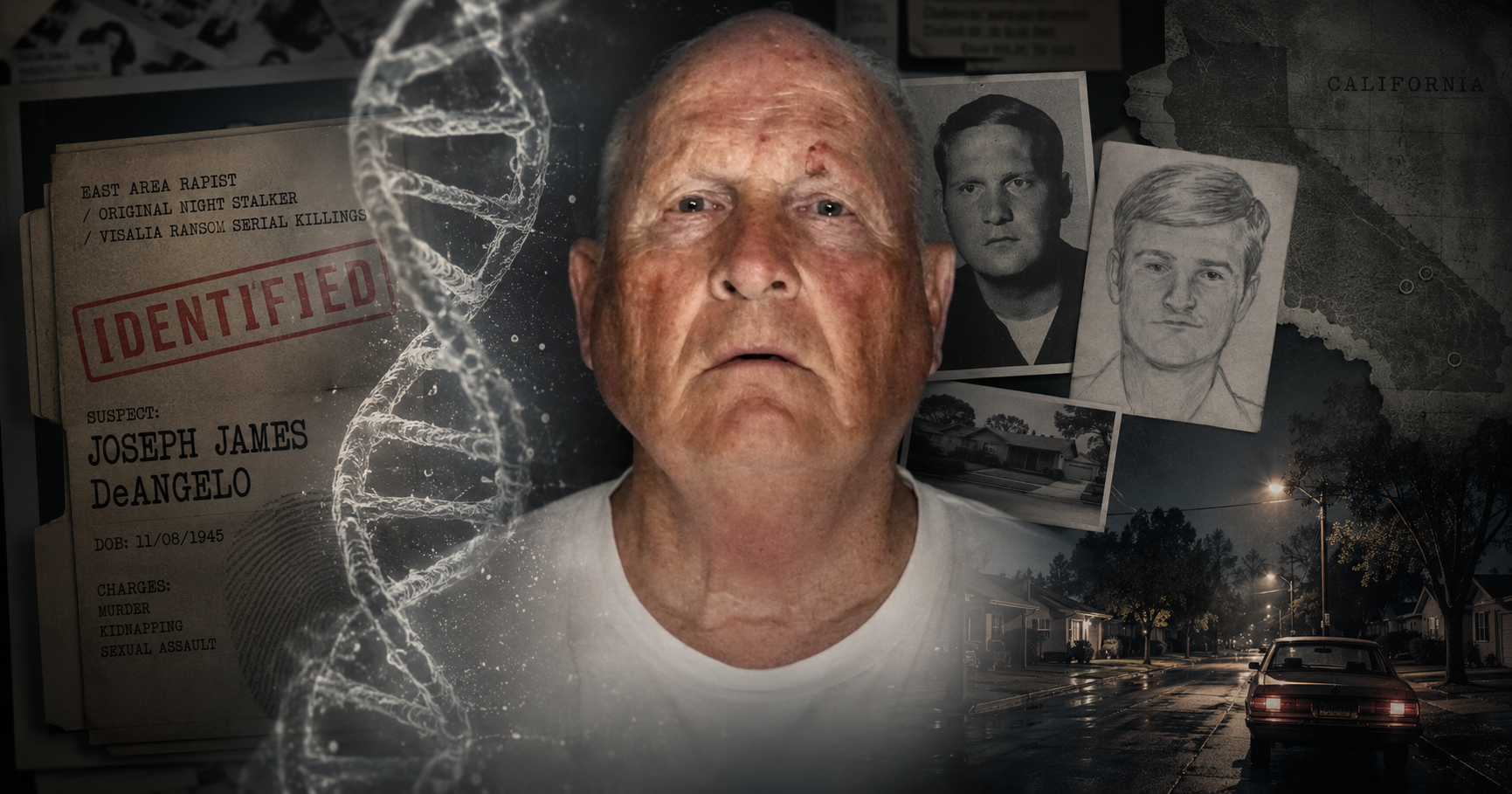
For more than 40 years, the Golden State Killer was one of the most terrifying mysteries in American true crime.
He broke into homes. He attacked women and couples. He terrorized communities across California. Then, after years of violence, he seemed to disappear.
But the evidence did not disappear with him.
Decades later, investigators used DNA, genealogy databases, and discarded items to identify Joseph James DeAngelo as the man behind a series of crimes that haunted California from the 1970s through the 1980s.
DeAngelo was arrested in 2018 and later linked to 13 murders, 51 sexual assaults, and more than 120 burglaries. In 2020, he was sentenced to life in prison without the possibility of parole.
The case became one of the most famous examples of how genetic genealogy can crack cold cases that once seemed impossible to solve.
A Killer With Many Names
Before police knew who he was, the attacker had several names.
In Northern California, he was known as the East Area Rapist. In Southern California, he became known as the Original Night Stalker. Later, as DNA connected the crimes, he became known as the Golden State Killer.
His attacks began in and around Sacramento in the mid-1970s. At first, many of the victims were women who were alone or home with children. By 1977, the attacks expanded to couples.
The crimes created a wave of fear. People bought locks, kept weapons nearby, and lived with the terrifying possibility that the attacker could break into their home next.
One of the most disturbing things about the case was how calculated he seemed to be. He often stalked neighborhoods before attacking. He avoided leaving fingerprints. He appeared to know how police worked and how to stay one step ahead.
That detail would become even more chilling years later, when investigators learned DeAngelo had once been a police officer.
The Suspect No One Expected
Joseph James DeAngelo did not look like the monster people had imagined for decades.
He was a Vietnam veteran. He served in the Navy aboard the USS Canberra. He later worked as a police officer in Exeter and Auburn, California, during the 1970s.
That timeline stunned investigators because some of the Golden State Killer crimes overlapped with his time in law enforcement.
DeAngelo was eventually fired from the Auburn Police Department in 1979 after he was accused of shoplifting dog repellent and a hammer from a drugstore.
After that, he worked for years as a mechanic at a Save Mart distribution center in Roseville before retiring in 2017. People who lived near him described him as odd, private, and sometimes angry, but not someone they suspected of being connected to one of California’s most notorious crime sprees.
That is part of what makes the case so unsettling.
For decades, he lived in a normal neighborhood. He had a family. He worked a job. He blended into everyday life while victims and families continued waiting for justice.
DNA Finally Connected the Crimes
For years, police had pieces of the puzzle, but not enough to name the man behind the attacks.
The crimes stretched across multiple counties and had different nicknames attached to them. Investigators did not initially know that the East Area Rapist and the Original Night Stalker were the same person.
That changed when DNA testing became available.
DNA evidence confirmed that some of the attacks were connected, proving that one man had committed crimes across different parts of California. Still, even with that breakthrough, investigators did not have a name.
Then genetic genealogy changed everything.
Investigators used DNA from crime scene evidence and compared it through public genealogy databases. Instead of matching the killer directly, they found relatives. From there, investigators built family trees, narrowed the possibilities, and eventually focused on DeAngelo.
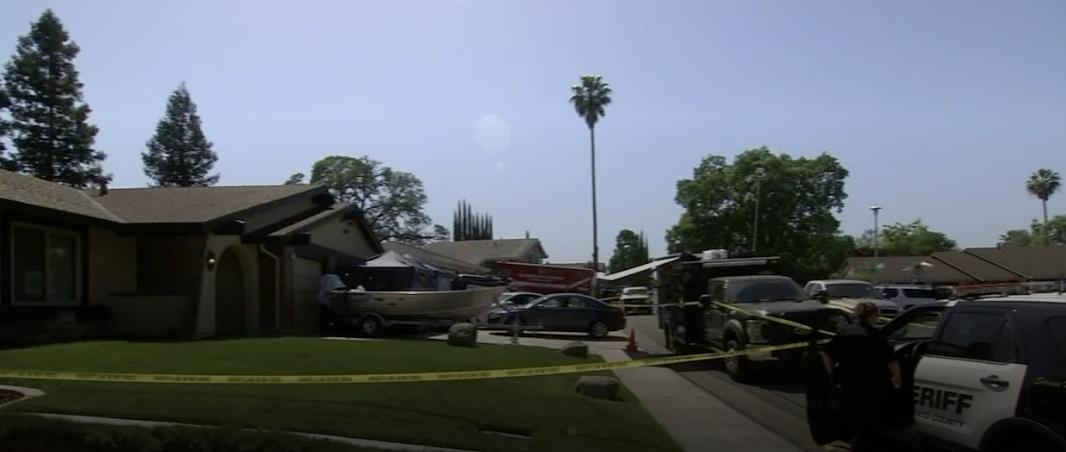
To confirm it, detectives collected DNA from items he had discarded, including things like razors and napkins.
The match connected him to the case.
After more than four decades, the man once known only by terrifying nicknames finally had a name.

Survivors Waited Decades for This Moment
For survivors, DeAngelo’s arrest was not just a headline. It was the end of a nightmare that had followed them for most of their lives.
Jane Carson-Sandler, one of the earliest known rape survivors connected to the case, had been attacked in 1976. She later said that thinking about all the lives he destroyed made her angry.
That anger is understandable.
The Golden State Killer did not only harm the people he physically attacked. He traumatized families, neighborhoods, and entire communities. His crimes changed how people lived inside their own homes.
Some victims never got to see his arrest. Others spent decades wondering if the man who hurt them would ever be caught.
When DeAngelo was finally arrested in 2018, it proved something many families had desperately hoped was true: old evidence can still speak.
The Role of “I’ll Be Gone in the Dark”
Public interest in the case grew again in the years before DeAngelo’s arrest, partly because of writer Michelle McNamara’s work on the Golden State Killer.
Her book, “I’ll Be Gone in the Dark,” helped bring renewed attention to the case. The HBO limited series of the same name later featured interviews with victims, family members, and investigators, giving viewers a deeper look at the crimes, the fear, and the long search for answers.
McNamara did not live to see DeAngelo arrested, but her work helped keep the case in the public eye.
That public pressure mattered. Cold cases can fade from the headlines, but they do not fade from the lives of the people still waiting.
A Life Sentence, but Not a Full Repair
In 2020, DeAngelo was sentenced to life in prison without parole.
For many, it was justice. But for the victims and families, no sentence could undo what happened.
Thirteen people were murdered. Dozens were sexually assaulted. More than 100 homes were burglarized. Entire lives were changed by a man who hid in plain sight for decades.
The Golden State Killer case is now remembered not only for its horror, but also for the way it was solved. It showed the power of DNA evidence, persistence, and modern genealogy tools. It also opened a larger debate about privacy, public genealogy databases, and how far investigators should be allowed to go when trying to solve violent crimes.
Some see genetic genealogy as one of the most important tools in modern policing. Others worry about how DNA from family members can lead investigators to people who never personally uploaded their own genetic information.
But in this case, it helped identify a serial predator who had escaped justice for more than 40 years.
And that leaves a question worth asking.
Do you think genetic genealogy should be used in more cold cases, even if it raises privacy concerns? Or should there be stricter limits on how investigators use public DNA databases?