He Pleaded the Fifth More Than 100 Times—Now a Senate Panel Has Voted to Hold Dr. Fauci in Contempt
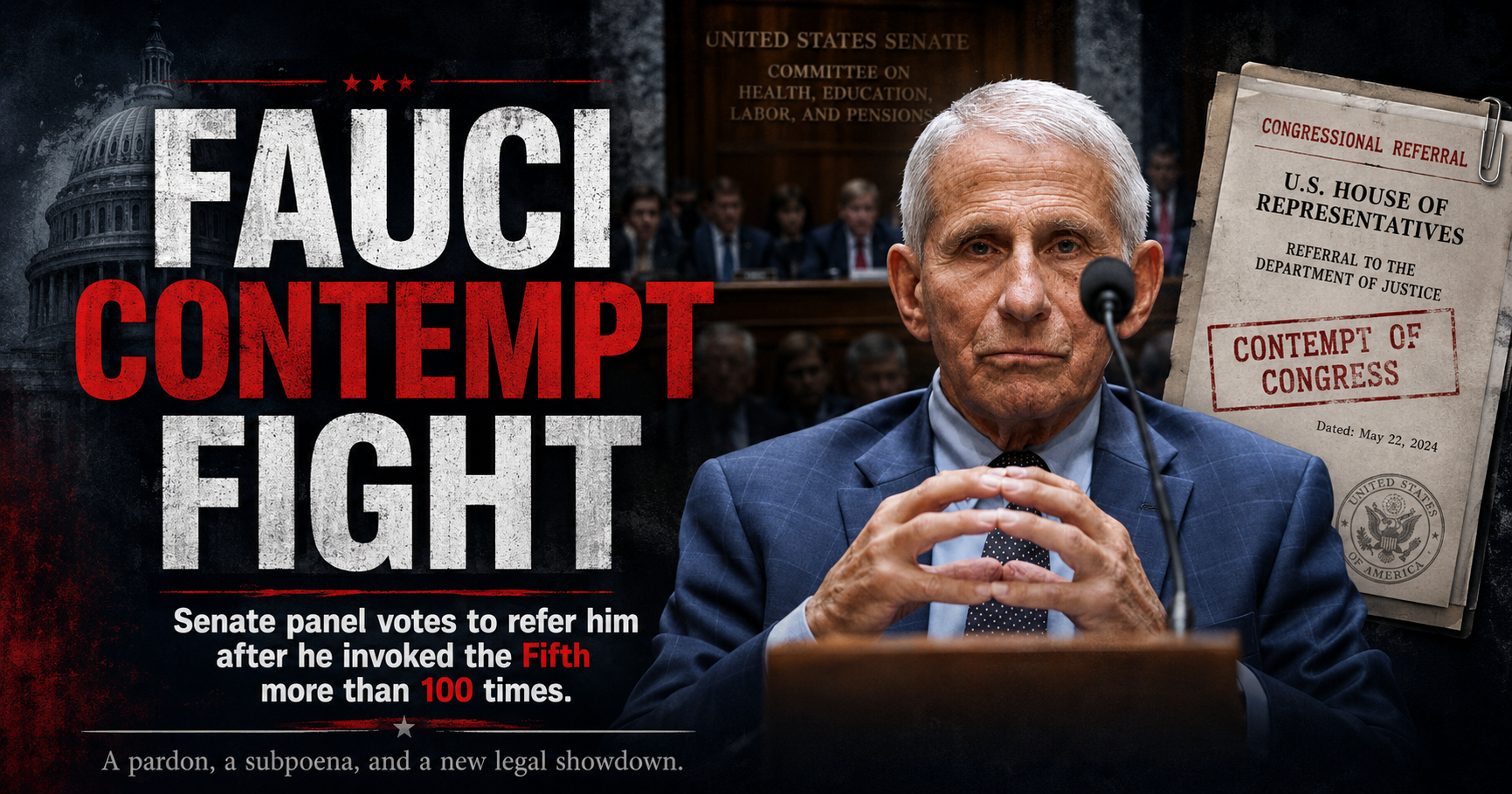
A Republican-led Senate committee voted to hold Dr. Anthony Fauci in contempt of Congress after he repeatedly invoked the Fifth Amendment during a contentious COVID-19 hearing. The referral could reach the Justice Department, but Fauci’s sweeping presidential pardon and unresolved questions about the Senate’s process could turn the case into a major constitutional fight.
 Marie NovakMarie Novak is a crime news writer for Crimehowl, covering true crime, missing persons cases, court updates, and stories that leave communities searching for answers. She focuses on writing with empathy, clarity, and a deep respect for victims and their families while encouraging readers to think critically about the cases that shape the headlines.
PUBLISHED AUG 10, 2026 · 08:00 | 13 MIN READ | LONG READ | FILED UNDER POLITICAL CRIME
Dr. Anthony Fauci spent decades answering questions before Congress about infectious diseases, public health policy and the federal government’s response to medical emergencies.
Last week, however, the former director of the National Institute of Allergy and Infectious Diseases largely refused to answer at all.
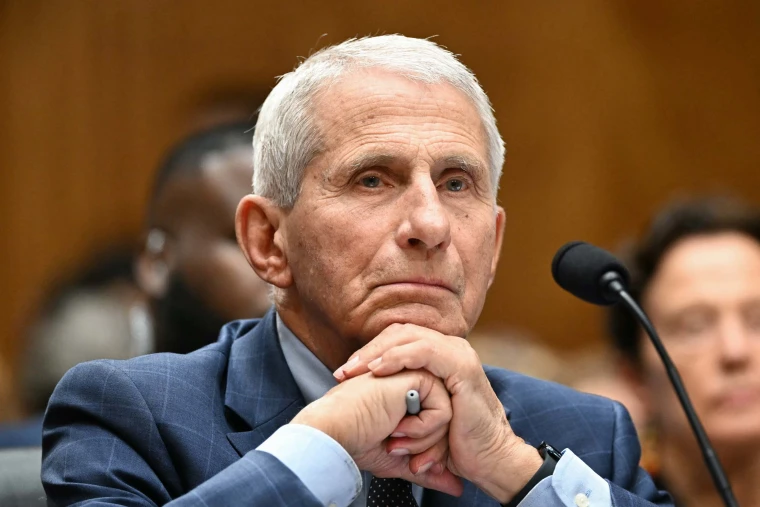
Fauci invoked his Fifth Amendment right against self-incrimination more than 100 times while appearing under subpoena before the Senate Committee on Homeland Security and Governmental Affairs on July 29, 2026. One week later, the Republican-led committee voted 8-7 along party lines to hold him in contempt of Congress and pursue a potential criminal referral to the Department of Justice.
The extraordinary confrontation has reignited nearly every unresolved political battle surrounding the COVID-19 pandemic: the origins of the coronavirus, U.S. funding of research in China, pandemic restrictions, vaccine policies and Fauci’s previous testimony before Congress.
However, the immediate controversy is no longer simply about masks, lockdowns or laboratory research.
It is now about whether Fauci had the constitutional right to remain silent after receiving a sweeping federal pardon from former President Joe Biden—and whether a Senate committee can refer him for prosecution without first winning approval from the full Senate.
Fauci has not been criminally charged, and the committee’s vote is not a conviction. The Justice Department will ultimately decide whether to investigate the contempt referral, while prosecutors and potentially the courts would have to resolve the complicated constitutional questions surrounding his refusal to testify.
What Happened During the Anthony Fauci Senate Hearing?
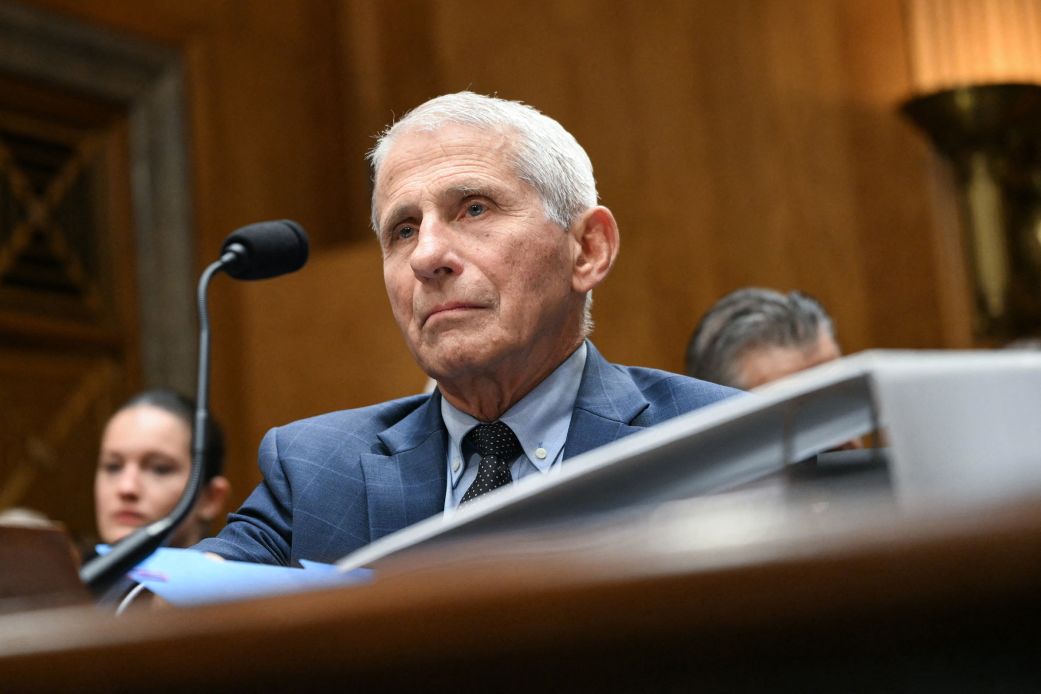
Fauci appeared before the Senate Homeland Security and Governmental Affairs Committee on July 29 after being subpoenaed to testify about his handling of the COVID-19 pandemic.
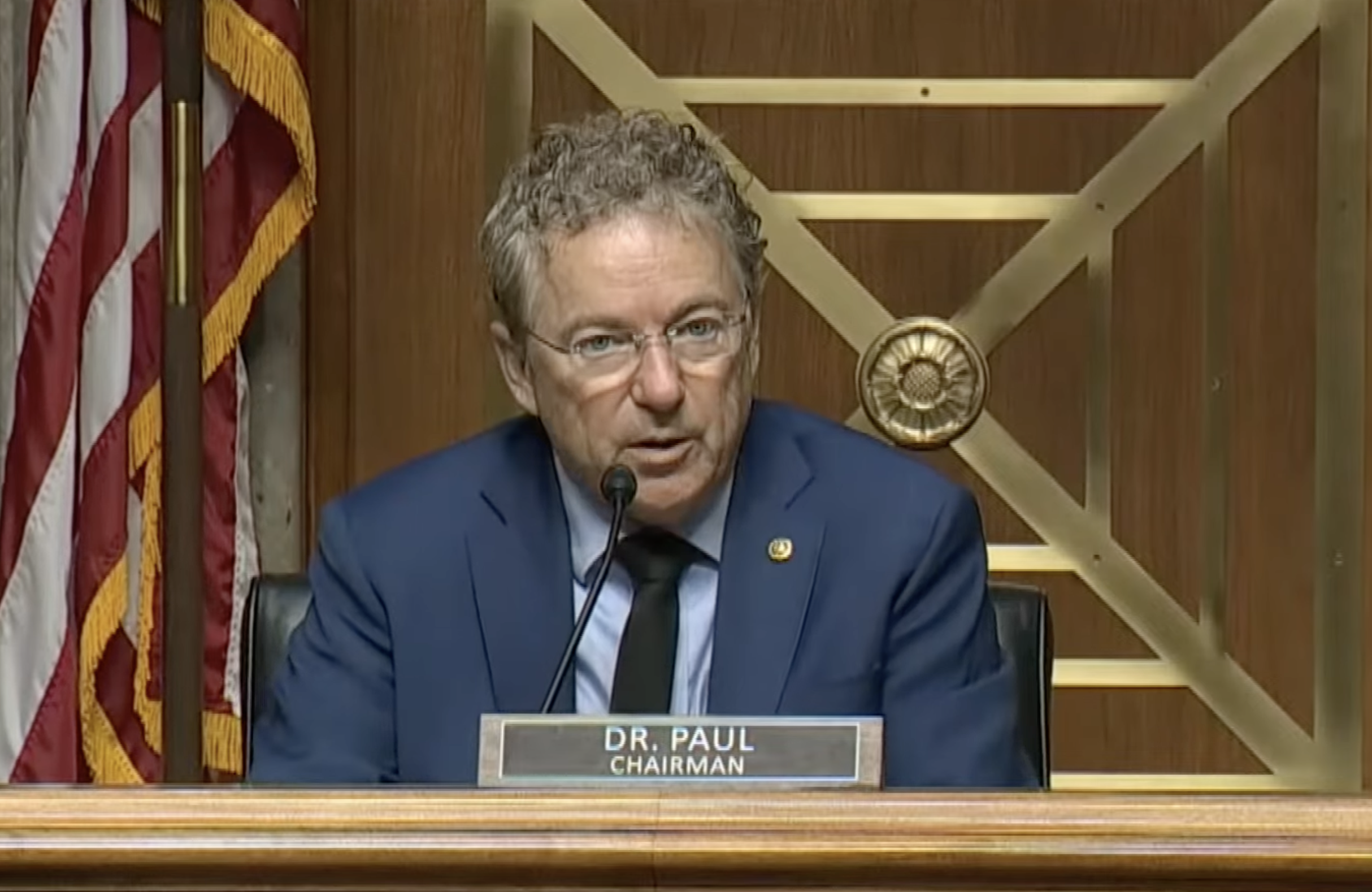
Sen. Rand Paul of Kentucky, the committee’s Republican chairman and one of Fauci’s most persistent critics, questioned him about subjects including the origins of COVID-19, research connected to the Wuhan Institute of Virology and whether Fauci had previously misled Congress about federal support for potentially risky virus research.
Instead of answering the majority of those questions, Fauci repeatedly invoked the Fifth Amendment.
The constitutional protection allows witnesses to refuse answers when they reasonably believe their statements could be used against them in a criminal prosecution, or could lead investigators toward other potentially incriminating evidence. Invoking the Fifth Amendment is not, by itself, proof that someone committed a crime.
Fauci reportedly declined to answer more than 100 questions. Some reports placed the precise number at 111.
His decision immediately prompted Paul to announce that he would seek an Anthony Fauci contempt of Congress resolution.
The committee officially advanced that resolution on August 6, with all eight Republicans voting in favor and all seven Democrats opposing it.
Paul insisted that the vote was not intended to punish Fauci over public health policies or opinions expressed during the pandemic.
Instead, he framed it as a direct test of congressional authority.
According to Paul, Fauci’s federal pardon eliminated any legitimate threat of prosecution over the subjects covered by the hearing. Therefore, the senator argued, Fauci no longer had a valid basis for invoking the Fifth Amendment.
“Dr. Fauci faced no risk of federal prosecution,” Paul said before the vote, adding that Fauci only needed to tell the truth.
Fauci and his attorneys strongly disagree.
Fauci Says He Had a Real Fear of Prosecution
Fauci said his refusal to answer was based on repeated public statements from Paul and other Republicans who have called for him to be investigated, prosecuted or imprisoned.
In a statement explaining his decision, Fauci argued that Paul appeared determined to obtain testimony that could support his long-running campaign to place Fauci “behind bars.”
Fauci’s attorney, David Schertler, described the contempt vote as a politically motivated attempt to punish his client for exercising a constitutional right. Democrats on the committee made a similar argument, warning that Congress could establish a dangerous precedent if witnesses were threatened with prosecution merely for asserting the Fifth Amendment.
Fauci’s position is that the Biden pardon did not eliminate every possible criminal risk.
The pardon covered federal offenses connected to Fauci’s government service from January 1, 2014, through January 19, 2025. It applied to conduct related to his work as NIAID director, a member of the White House Coronavirus Task Force and COVID-19 Response Team, and President Biden’s chief medical adviser.
That protection was broad, but it was not limitless.
A presidential pardon applies only to federal offenses. It cannot block a state prosecution. It also cannot protect someone from charges tied to conduct occurring after the pardon’s effective date.
That means Fauci could theoretically face exposure from state authorities or for any new federal offense allegedly committed after January 19, 2025.
The pardon would not, for example, protect him from a future perjury or false-statements charge based on answers he gave during the July 2026 hearing.
Fauci’s legal team therefore argues that every answer carried some potential risk, particularly when the committee chairman had openly called for his prosecution.
Why Joe Biden Pardoned Anthony Fauci
President Biden issued Fauci a “full and unconditional” pardon shortly before leaving office in January 2025.
Fauci had not been charged with a crime at the time.
Biden said the preemptive pardon was intended to protect Fauci from what he viewed as politically motivated retaliation. The president also granted clemency protections to retired Gen. Mark Milley and members or witnesses associated with the congressional investigation into the January 6 attack.
The Fauci pardon covered any federal offenses he may have committed or participated in during an 11-year period beginning in 2014, provided the conduct arose from or was connected to his federal public health roles.
Biden emphasized that issuing the pardon should not be interpreted as an acknowledgment that Fauci had committed a crime.
Republicans have nevertheless pointed to the extraordinary breadth of the pardon while questioning why such extensive protection was necessary.
Paul has also previously raised questions about whether Biden personally authorized pardons produced through the White House’s autopen process. The Justice Department’s Office of the Pardon Attorney continues to list Fauci’s pardon as an official executive grant of clemency.
Does a Pardon Eliminate the Right to Plead the Fifth?
This is where the Anthony Fauci contempt case becomes legally complicated.
In older cases, the Supreme Court indicated that a person who has received a valid pardon may lose the ability to invoke the Fifth Amendment regarding the pardoned offense. The reasoning is that the witness can no longer be prosecuted for that federal conduct and therefore no longer faces the criminal danger the privilege is designed to prevent.
Congress can similarly compel testimony by granting immunity broad enough to prevent prosecutors from using that testimony or any evidence derived from it against the witness.
A person who receives sufficient immunity and still refuses to testify may be held in contempt.
Paul believes Biden’s pardon placed Fauci in essentially that position.
However, Fauci’s situation does not fit neatly into the older cases.
The pardon did not cover state offenses, and it did not cover conduct after January 19, 2025. It is also possible that answers concerning pardoned conduct could provide investigators with leads involving unpardoned individuals or later actions.
Legal experts interviewed by the Associated Press and Reuters have described the issue as unsettled, particularly because courts have not directly ruled on a modern dispute involving such a broad preemptive pardon, possible state exposure and a congressional hearing led by lawmakers openly demanding prosecution.
A prosecutor would have to prove that Fauci willfully refused to answer pertinent questions despite lacking a valid Fifth Amendment justification.
Fauci’s lawyers would likely argue that his concerns were reasonable, especially in an environment where both federal and state investigations remained possible.
The result could become an important test of how far a presidential pardon reaches and whether Congress can force a pardoned witness to answer questions that might create new legal danger.
What Does Contempt of Congress Mean?
Federal law makes it a misdemeanor for a properly summoned congressional witness to willfully refuse to appear, produce required records or answer a pertinent question.
A criminal contempt of Congress conviction can carry a fine and a prison sentence ranging from one month to one year under the statute.
The committee vote does not mean Fauci is automatically prosecuted.
Congress does not conduct criminal trials, and the Senate committee cannot sentence him. Its resolution instead asks the executive branch to consider whether the evidence supports a criminal case.
The Justice Department must decide whether to investigate. Prosecutors would then have to determine whether a charge is legally and factually justified, and a grand jury would ordinarily decide whether to return an indictment.
Even after an indictment, the government would still have to prove its case beyond a reasonable doubt.
Fauci could challenge the validity of the subpoena, the committee’s procedures, the relevance of particular questions and the decision to reject his Fifth Amendment claims.
Supreme Court precedent requires congressional inquiries to define their scope with enough clarity to protect witnesses from vague or unpredictable criminal liability. A witness must also receive a clear ruling that an objection has been rejected and a direction to answer before a contempt prosecution can proceed.
Can Rand Paul Bypass the Full Senate?
A second controversy involves how the contempt resolution will reach the Justice Department.
The standard congressional process generally begins with a committee vote. The committee then reports the matter to the full House or Senate, which votes on whether to adopt the criminal contempt resolution and certify it to federal prosecutors.
Paul acknowledged that a full Senate vote would face major obstacles. Advancing the resolution would likely require 60 votes, meaning Republicans would need Democratic support that does not currently appear available.
The chairman said he did not want to “waste time” pursuing a floor vote that was unlikely to succeed. Instead, he indicated that he would send the committee’s criminal referral directly to the Justice Department along with a legal memorandum.
Sen. Gary Peters of Michigan, the committee’s ranking Democrat, challenged that approach.
Peters argued that bypassing the full Senate would weaken the institution’s established procedures and could render the referral legally defective.
Federal law states that when a witness’s refusal is reported to the relevant chamber, the president of the Senate or speaker of the House certifies the facts to the appropriate U.S. attorney. Congressional Research Service materials describe the usual process as a committee report followed by action from the full parent chamber. At least one judicial decision has recognized a full-chamber vote as necessary for a formal criminal contempt referral.
However, there is an important distinction between a statutory contempt certification and a general criminal referral.
A congressional committee, or even an individual lawmaker, can send the Justice Department information alleging a possible crime. Such referrals are nonbinding and do not force prosecutors to bring charges.
Paul may therefore send the material to the Justice Department even without a full Senate vote. The disputed question is whether it would carry the same legal status as a contempt certification formally approved by the Senate.
What Was Fauci Being Asked About?
The July hearing was part of a broader Republican investigation into the federal government’s COVID-19 pandemic response and the origins of the virus.
Paul has spent years accusing Fauci of withholding information or giving misleading testimony about research funded by the National Institutes of Health and conducted through organizations connected to the Wuhan Institute of Virology.
The senator and other Republicans believe U.S. funding may have supported research that increased the capabilities of coronaviruses and may be relevant to the theory that COVID-19 originated through a laboratory accident.
Fauci has consistently denied lying to Congress or concealing the nature of NIH-funded work.
He has said that the research in question did not meet the federal definition of gain-of-function research that he discussed during previous hearings. He has also maintained that he considered both natural emergence and a laboratory accident possible, even when he believed the available scientific evidence favored natural transmission.
No conclusive public evidence has established the exact origin of COVID-19.
Different U.S. intelligence agencies have reached varying assessments, often with low or moderate confidence. The continuing uncertainty has allowed the scientific question to become deeply entangled with partisan arguments over blame, secrecy and the government’s pandemic response.
The contempt vote does not determine whether Fauci’s previous statements were truthful.
It addresses only his refusal to answer the committee’s latest questions.
Republicans Say Congress Cannot Be Defied
For Paul and the committee’s Republican majority, the case is about congressional oversight.
They argue that Congress cannot investigate the federal government effectively if witnesses can accept broad pardons and then continue refusing to testify about the conduct the pardons covered.
Under that reasoning, the Biden pardon removed Fauci’s federal criminal exposure while leaving Congress and the public entitled to answers.
Republicans also argue that allowing Fauci to remain silent would encourage future administrations to issue preemptive pardons to senior officials specifically to shield politically damaging conduct from congressional scrutiny.
Paul warned that such a precedent could affect future presidents of either party.
A departing president could pardon aides for their conduct in office, and those aides could then attempt to invoke the Fifth Amendment when the next Congress demanded testimony.
Democrats Warn of Political Prosecution
Democrats view the matter differently.
They argue that Paul’s repeated public promises to pursue Fauci criminally provided the doctor with a reasonable fear of prosecution. They also note that Fauci’s pardon cannot prevent state cases or protect him from accusations involving later testimony.
Peters warned that Congress could damage its own investigative authority by appearing to punish a witness for asserting a constitutional protection.
Future witnesses might become less willing to cooperate voluntarily if they believe a committee will disregard legal advice, reject good-faith Fifth Amendment claims and pursue criminal charges whenever their answers are politically inconvenient.
Democrats also accuse Republicans of using Fauci as a symbolic target in an effort to relitigate pandemic grievances years after the emergency phase ended.
Fauci’s attorney called the vote a political stunt and said his client had committed no crime.
What Happens to Fauci Now?
The next step depends largely on how Paul submits the matter and how the Justice Department responds.
If the referral is delivered directly to the U.S. attorney’s office in Washington, prosecutors can review the committee materials and decide whether an investigation is warranted.
They are not required to accept Paul’s interpretation of the pardon or the Fifth Amendment.
The Justice Department could decline the referral, request more information, investigate without filing charges or ask a grand jury to consider a criminal contempt case.
The department could also conclude that the lack of a full Senate vote creates a procedural barrier to prosecution under the congressional contempt statute.
If Fauci were eventually indicted, the case could produce a court battle over whether Biden’s pardon eliminated his Fifth Amendment rights.
Such litigation might examine the exact wording of the pardon, whether particular committee questions concerned covered federal offenses, whether state prosecution remained realistically possible and whether Fauci was properly ordered to answer after asserting the privilege.
As of August 6, 2026, Fauci has not been charged or convicted of contempt of Congress.
The Vote Does Not Prove Fauci Committed a COVID-19 Crime
The language surrounding the Anthony Fauci investigation has often blurred several separate issues.
The committee voted to hold Fauci in contempt because he refused to answer questions.
It did not issue a legal finding that he created COVID-19, funded its creation, covered up the origin of the pandemic or lied during earlier testimony.
Those remain accusations or disputed interpretations, not criminal verdicts.
Likewise, Fauci’s decision to invoke the Fifth Amendment does not legally establish guilt. The privilege exists precisely because a witness should not have to gamble on whether an answer could later be used in a prosecution.
At the same time, the Fifth Amendment does not automatically protect every refusal to answer. Courts can determine that a witness faces no reasonable danger and order testimony to continue.
That is the conflict now confronting the Justice Department.
A Constitutional Fight Bigger Than Fauci
The most lasting consequence of the Rand Paul–Anthony Fauci hearing may have little to do with the pandemic itself.
The case could determine how Congress treats witnesses who receive preemptive presidential pardons.
If a pardon completely removes the Fifth Amendment privilege for every subject it covers, Congress may gain sweeping power to force pardoned officials to describe their actions under oath.
Those officials could still face prosecution for new lies, making every answer potentially dangerous even when the original conduct is protected.
If witnesses may continue invoking the Fifth because of possible state charges or future federal exposure, broad pardons may do little to unlock the testimony Congress wants.
The dispute could also affect how presidents use clemency during their final days in office. Biden issued Fauci’s pardon as protection against political retaliation. Critics now argue that the pardon should also require him to provide the testimony that the threat of federal prosecution previously allowed him to withhold.
A future president could face the same dilemma when considering pardons for Cabinet officials, White House aides, military leaders or political allies.
For now, Fauci remains a private citizen, a pardoned former federal official and the target of a Senate committee’s contempt resolution.
Whether he becomes a criminal defendant will be decided somewhere else.
Do you believe Biden’s pardon removed Fauci’s right to plead the Fifth about his pandemic-era work, or did the possibility of state charges and new federal allegations give him a legitimate reason to remain silent? And should a Senate committee be allowed to pursue a contempt prosecution without approval from the full Senate?