He Checked Into Room 1046 With No Luggage — Days Later, Hotel Staff Found A Bloodbath
In 1935, a mysterious young man checked into Kansas City’s President Hotel under the name Roland T. Owen. He carried no luggage, sat alone in a dark room, spoke of a man named “Don,” and was later found brutally tortured in Room 1046. Nearly 90 years later, the case remains one of America’s strangest unsolved hotel murders.
 Marie NovakMarie Novak is a crime news writer for Crimehowl, covering true crime, missing persons cases, court updates, and stories that leave communities searching for answers. She focuses on writing with empathy, clarity, and a deep respect for victims and their families while encouraging readers to think critically about the cases that shape the headlines.
PUBLISHED JUL 17, 2026 · 06:11 | 10 MIN READ | LONG READ | FILED UNDER UNSOLVED CASES
The Man Who Walked Into The President Hotel And Never Really Left
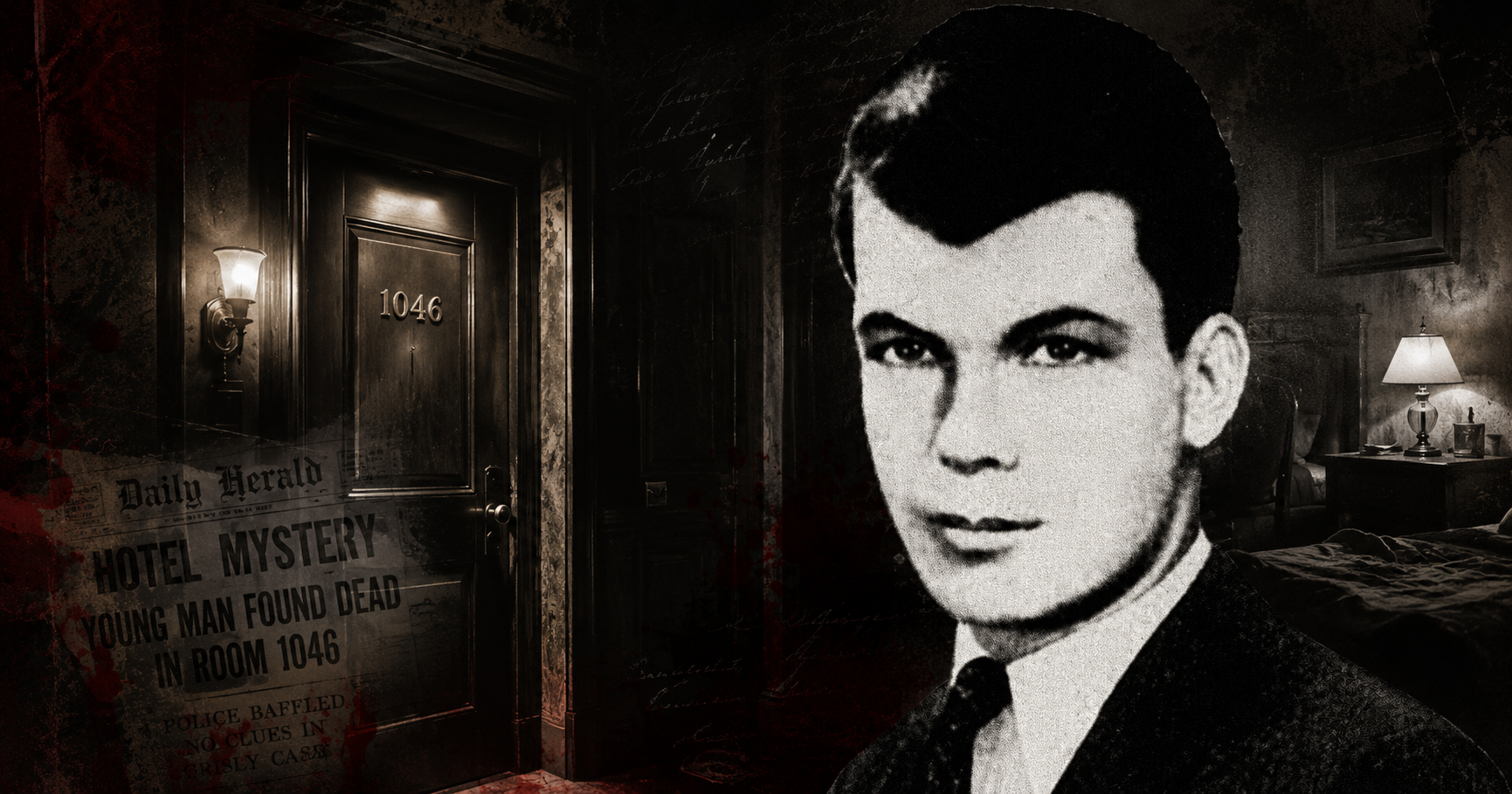
On January 2, 1935, a young man walked into the President Hotel in downtown Kansas City, Missouri, and asked for a room on one of the upper floors. He did not arrive with trunks, suitcases, or the normal belongings of a traveler. Instead, he had only a few personal items: a comb, a hairbrush, and toothpaste.
He registered under the name Roland T. Owen, gave a Los Angeles address, and requested an interior room that did not face the street. That small detail would later feel incredibly haunting. Was he trying to hide from someone? Was he expecting trouble? Or did he simply want privacy?
The bellboy who took him upstairs remembered him as neatly dressed, polite, and well-spoken. He was shown to Room 1046 on the 10th floor. On the way up, Owen reportedly complained about the high price of a neighboring hotel, the Muehlebach, saying he had left because it was too expensive. But almost immediately, things about this guest began to feel unusual.
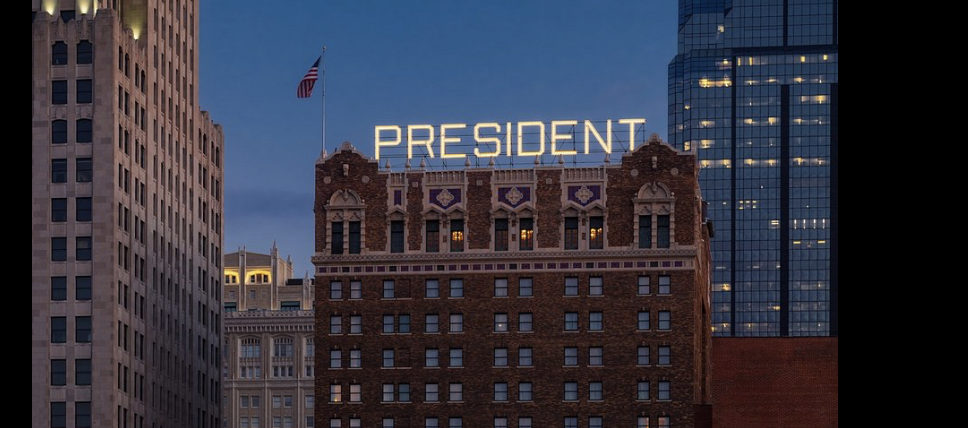
The President Hotel itself was no ordinary building. It stood in the heart of downtown Kansas City and is still recognized today as the Hilton President Kansas City, a historic hotel that has stood in the Power & Light District since 1926. At the time of Owen’s stay, Kansas City was also known for its wild nightlife, political corruption, organized crime, gambling, prostitution, and a “wide-open” atmosphere where vice was very visible.
That setting matters, because the mystery of Room 1046 has never felt like a random hotel tragedy. From the very beginning, it felt like someone had lured Roland T. Owen into a situation he could not escape.
The Dark Room, The Locked Door, And The Mysterious Note
Hotel maid Mary Soptic was one of the first people to notice how strange Owen’s behavior was.
When she entered Room 1046 to clean, she found the room almost completely dark. The shades were pulled tightly closed, and only a dim lamp gave off any light. Owen was inside, but he did not seem relaxed. According to later police accounts, Soptic felt he appeared worried or afraid.
As she cleaned, Owen told her not to lock the door because he was expecting a friend. That request would soon become one of the most unsettling details in the case.
Later that afternoon, Soptic returned with towels. The door was still unlocked. Inside, she found Owen lying fully clothed on the bed. Nearby was a note that read:
“Don, I will be back in 15 minutes...wait.”
Who was Don? Why did Owen leave the note in his room? Was Don the friend he had been expecting? Or was “Don” the person Owen feared?
The next morning, January 3, Soptic returned again. This time, the door was locked from the outside. Thinking Owen had left, she used her key and entered. But Owen was inside, sitting quietly in the dark.
That detail is chilling. If the door was locked from the outside, then someone else may have locked Owen inside Room 1046.
While Soptic cleaned, the phone rang. Owen answered and spoke to someone he called Don, telling him he did not want to eat because he had already had breakfast. The exchange was brief, but it made the mystery even deeper. Don was not just a name on a note anymore. He was someone Owen was actively communicating with.
Later that day, Soptic returned once more with fresh towels. This time, she heard two voices inside the room. One voice belonged to Owen. The other was described as a rough, deep voice. When she announced the towels, the second man told her they did not need any.
But Soptic knew that was not true. She had already removed the towels earlier.
Still, she left. At the time, she had no way of knowing that she might have just heard the voice of a killer.
Strange Noises From The Next Room
That same night, another guest checked into the President Hotel: Jean Owen, who was not related to Roland. She was given Room 1048, right next door.
Jean later told police she heard loud talking, cursing, and commotion on the floor. She considered calling the desk, but decided not to. According to Kansas City Magazine’s review of the police case file, witnesses reported male and female voices arguing and making noise that night.
There was also another strange presence in the hotel that evening. An elevator operator reported seeing a woman known to staff as a “commercial woman,” a term often used at the time for a prostitute. She was searching for a male guest and seemed confused about which room he was in. It was never proven that she had anything to do with Room 1046, but her presence added yet another layer of uncertainty.
Was she there for Owen? For Don? For someone else entirely?
The President Hotel had many guests, and downtown Kansas City had no shortage of nightlife, secrets, and people moving in and out at odd hours. But in hindsight, every voice, every knock, every wrong room, and every shadow on the 10th floor feels important.
The Phone That Kept Coming Off The Hook
On the morning of January 4, the hotel switchboard operator noticed that the phone in Room 1046 had been left off the hook.
A bellboy was sent upstairs. The door was locked, and a “Do Not Disturb” sign hung from the doorknob. When he knocked, a voice inside told him to come in. But the bellboy could not enter because the door was locked. He told the man inside to hang up the phone and left, assuming Owen was drunk or confused.
But the phone stayed off the hook.
Later, another bellboy entered the room with a key. He found Owen lying naked on the bed in the dark, breathing heavily. The bellboy saw what he thought were dark stains, but he believed Owen was intoxicated. He put the phone back on the hook and left.
That moment is one of the most heartbreaking parts of the case. Owen may have already been gravely injured. He may have been trying to call for help but was too weak to speak. Doctors later believed his wounds had been inflicted hours before he was finally rescued.
Then the phone came off the hook again.
When staff returned to Room 1046, they finally realized the truth. This was not a drunk hotel guest. This was a crime scene.
A Bloodbath In Room 1046
When the bellboy entered again, he found Owen on his knees and elbows near the door, blood coming from his head. Blood was on the walls, the bed, and in the bathroom. The room that had once been dark and quiet was now a horrifying scene.
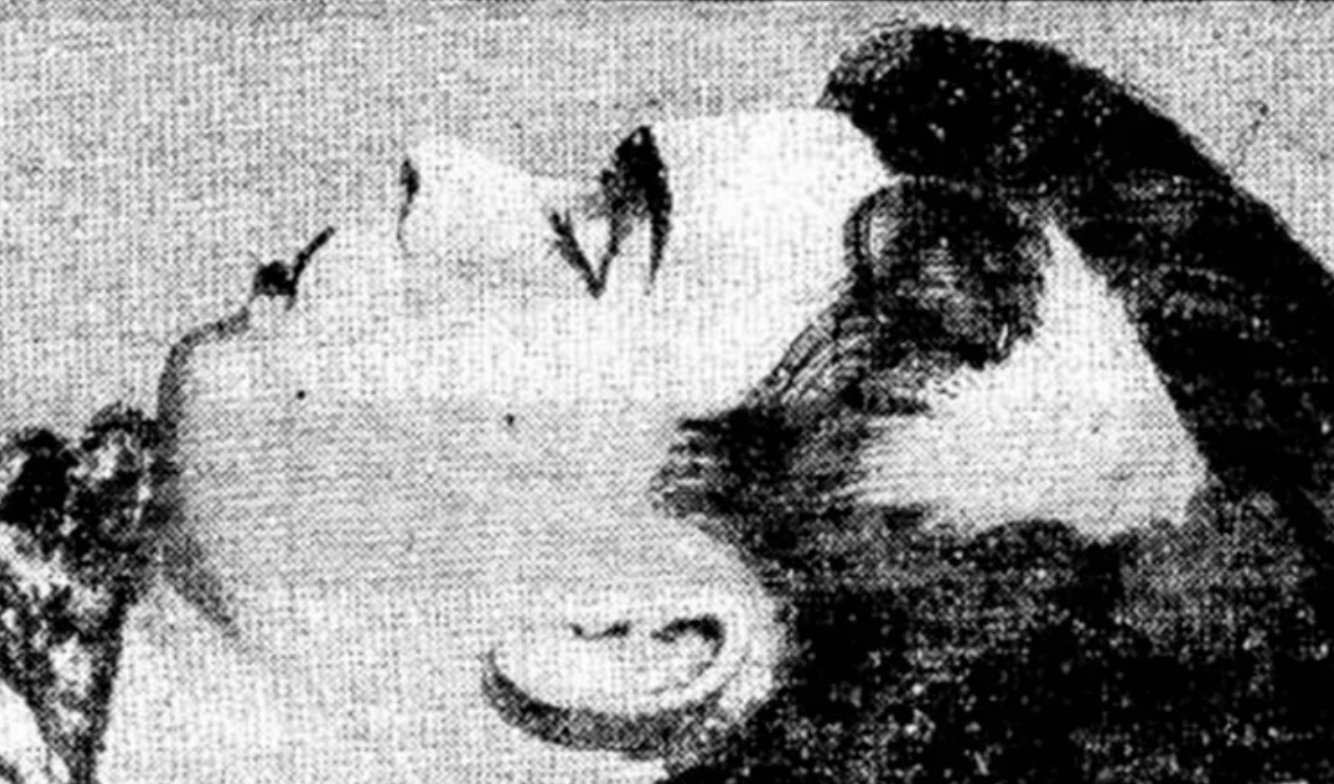
A doctor and police were called. Owen was found badly beaten, stabbed, and bound. According to police records reviewed by Kansas City Magazine, a clothesline had been tied around his neck, wrists, and ankles. He had been stabbed multiple times in the chest, his lung had been punctured, and his skull had been fractured by several blows.
Even more disturbing, he was still alive.
Police and doctors asked him who had done this to him. His answer was not a name. It was not “Don.” It was not a plea for justice.
He reportedly said nobody had hurt him and that he had fallen against the bathtub.
It was an answer that made no sense.
There was no weapon in the room. His injuries were far too severe to be explained away as an accident. His clothing and belongings were missing. Even the hotel’s soap, shampoo, and towels were gone. The room appeared to have been stripped of anything that could help identify him or explain what happened.
Owen was taken to the hospital, but he died shortly afterward. His death was ruled a homicide, and no one has ever been charged.
Roland T. Owen Was Not Roland T. Owen
Once police began investigating, they discovered another twist: Roland T. Owen did not appear to exist.
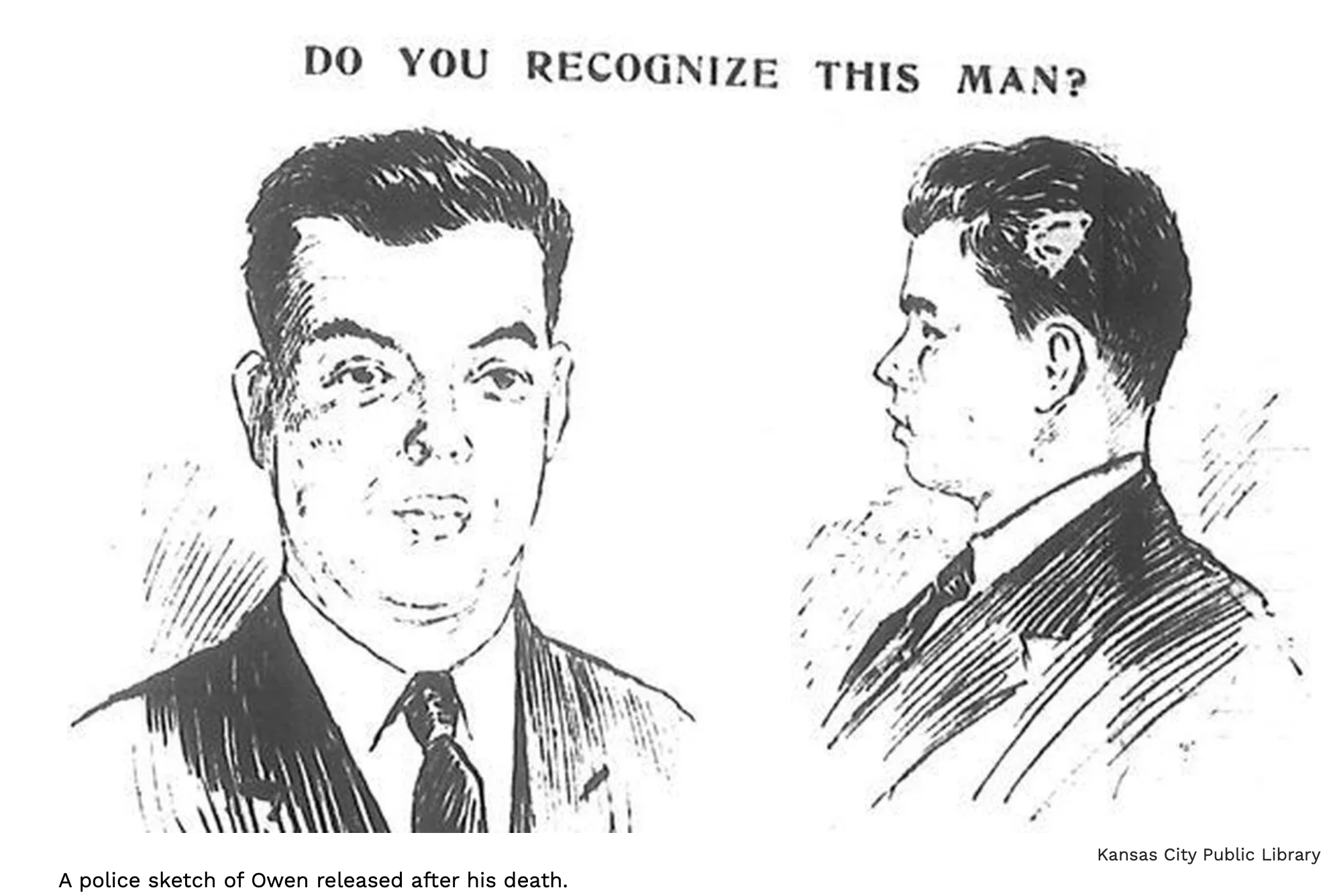
The Los Angeles address he gave did not lead investigators to a real person. His fingerprints were checked, but no match was found. Police appealed to the public, and people came forward with possible identifications, but none stuck at first.
The man had also reportedly stayed at the Muehlebach Hotel under another fake name: Eugene K. Scott. That name also led nowhere.
For weeks, he remained a dead man without a real name.
Then, as police prepared to bury him in a pauper’s grave, the mystery took another strange turn.
An anonymous caller contacted authorities and insisted that Owen should be buried properly. The caller reportedly said that Owen had not “played the game fair” and that cheaters usually got what was coming to them. Money was sent for the burial, and flowers arrived at the funeral.
The arrangement included 13 American Beauty roses and a card reading:
“Love for ever, Louise.”
Who was Louise? Was she a lover? A grieving friend? A guilty participant? Or was the name another fake clue meant to mislead police?
No one knew.
Detectives even watched the grave after the funeral, hoping someone might come by and reveal themselves. No one did.
The Young Man Behind The Alias
The dead man’s real identity was not confirmed until nearly two years later.
He was eventually identified as Artemus Ogletree, a 19-year-old from Birmingham, Alabama. His mother, Ruby Ogletree, recognized him after seeing coverage of the case. She identified him partly by a distinctive scar on his head, caused by a childhood grease burn.
Artemus had left home in 1934 to hitchhike across the country. He was young, adventurous, and apparently searching for something beyond Alabama. According to later records, he had traveled with a friend named Joe Simpson before making his way west and eventually back to Kansas City.
But the cruelest part of the story is what happened after Artemus was already dead.
His mother reportedly received typed letters claiming to be from him after his murder. One letter suggested he was going to New York. Another claimed he was sailing for France. Later, Ruby received a long-distance phone call from a man who claimed to know her son and said Artemus was in Cairo, Egypt.
But Artemus had been dead for months.
That means someone may have been intentionally deceiving his mother, keeping her from knowing the truth while police were still trying to identify the body in Room 1046.
Why?
Was the killer buying time? Trying to cover tracks? Or tormenting a grieving family from a distance?
The “Don Kelso” Lead
One of the most talked-about names in the case is Don or Donald Kelso.
“Don” appeared in the note in Room 1046. Owen spoke to someone named Don on the phone. Police later found that Artemus had been seen at other places with a man who used the name Donald Kelso.
Years later, investigators looked at a convicted killer named Joseph Ogden, who had used several aliases, including Donald Kelso. Because of that, some believed he could be connected to the Room 1046 murder. But according to Kansas City Magazine’s review of the case file, the FBI later concluded that the signature of “Donald Kelso” on a hotel registration card was not written by Joseph Ogden.
So once again, investigators were left with smoke, but no fire.
Ruby Ogletree also had her own suspicions. She reportedly suspected Joe Simpson, the friend who had originally left home with Artemus. According to Kansas City Magazine, Ruby believed Simpson may have been the man who called her from Memphis after her son’s death. But that suspicion never led to charges.
The case file was thick. The leads were many. But the truth never fully surfaced.
Why Room 1046 Still Haunts True Crime Readers
The murder of Artemus Ogletree remains so chilling because almost every clue seems to open another door instead of closing one.
Why did he check in under a fake name?
Why did he request an interior room?
Why was he sitting in the dark?
Who locked him inside the room from the outside?
Who was Don?
Who was Louise?
Why were his clothes and belongings removed?
Why did someone pay for his funeral but refuse to reveal themselves?
And perhaps most haunting of all: why did someone keep sending messages to his mother after he was already dead?
It is easy to imagine Room 1046 as a simple locked-room mystery, but it feels much darker than that. This was not just a murder. It looked like a controlled, personal, deliberate act of violence. Someone had power over Artemus in those final hours. Someone may have watched him suffer. Someone may have known exactly how to disappear into Kansas City’s nightlife and never be seen again.
In the end, the man who checked into the President Hotel as Roland T. Owen was not Roland T. Owen at all. He was Artemus Ogletree, a 19-year-old young man far from home, traveling under an alias, caught in a mystery that still has no clean ending.
Nearly 90 years later, Room 1046 still raises the same question it did in 1935:
Did Artemus Ogletree walk into that hotel expecting to meet a friend, or did he unknowingly walk into a trap?
What do you think happened in Room 1046? Was “Don” the killer, a witness, or another victim of the same shadowy scheme? And who do you think sent the roses signed “Love for ever, Louise”?