He Resigned One Day After the Ethics Probe Began: Inside the Sexual Misconduct Allegations That Ended Eric Swalwell’s Career in Congress
Eric Swalwell went from a leading candidate for California governor to a former member of Congress in a matter of days. Multiple women accused him of sexual assault or other misconduct, the House Ethics Committee opened an investigation, and Swalwell resigned while fiercely denying the allegations. Months later, the controversy remains far from resolved.
 Marie NovakMarie Novak is a crime news writer for Crimehowl, covering true crime, missing persons cases, court updates, and stories that leave communities searching for answers. She focuses on writing with empathy, clarity, and a deep respect for victims and their families while encouraging readers to think critically about the cases that shape the headlines.
PUBLISHED AUG 08, 2026 · 08:00 | 10 MIN READ | LONG READ | FILED UNDER POLITICAL CRIME
*** Content warning: This article discusses allegations of rape, sexual assault, workplace misconduct and abuse of power.
For years, Eric Swalwell was one of the most recognizable Democratic members of Congress.
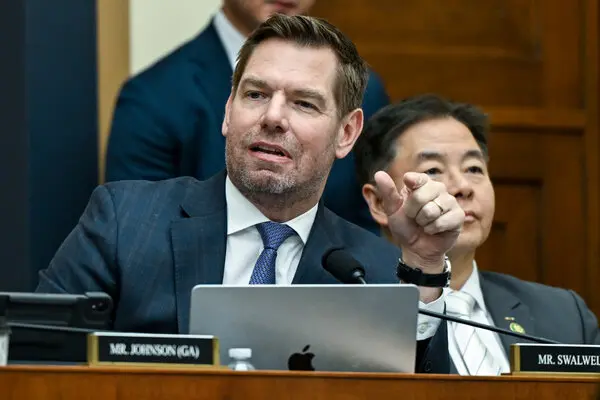
The former prosecutor built a national profile through televised congressional hearings, outspoken criticism of Donald Trump and a brief 2020 presidential campaign. By early April 2026, he was also emerging as a leading contender in the crowded race to become California’s next governor.
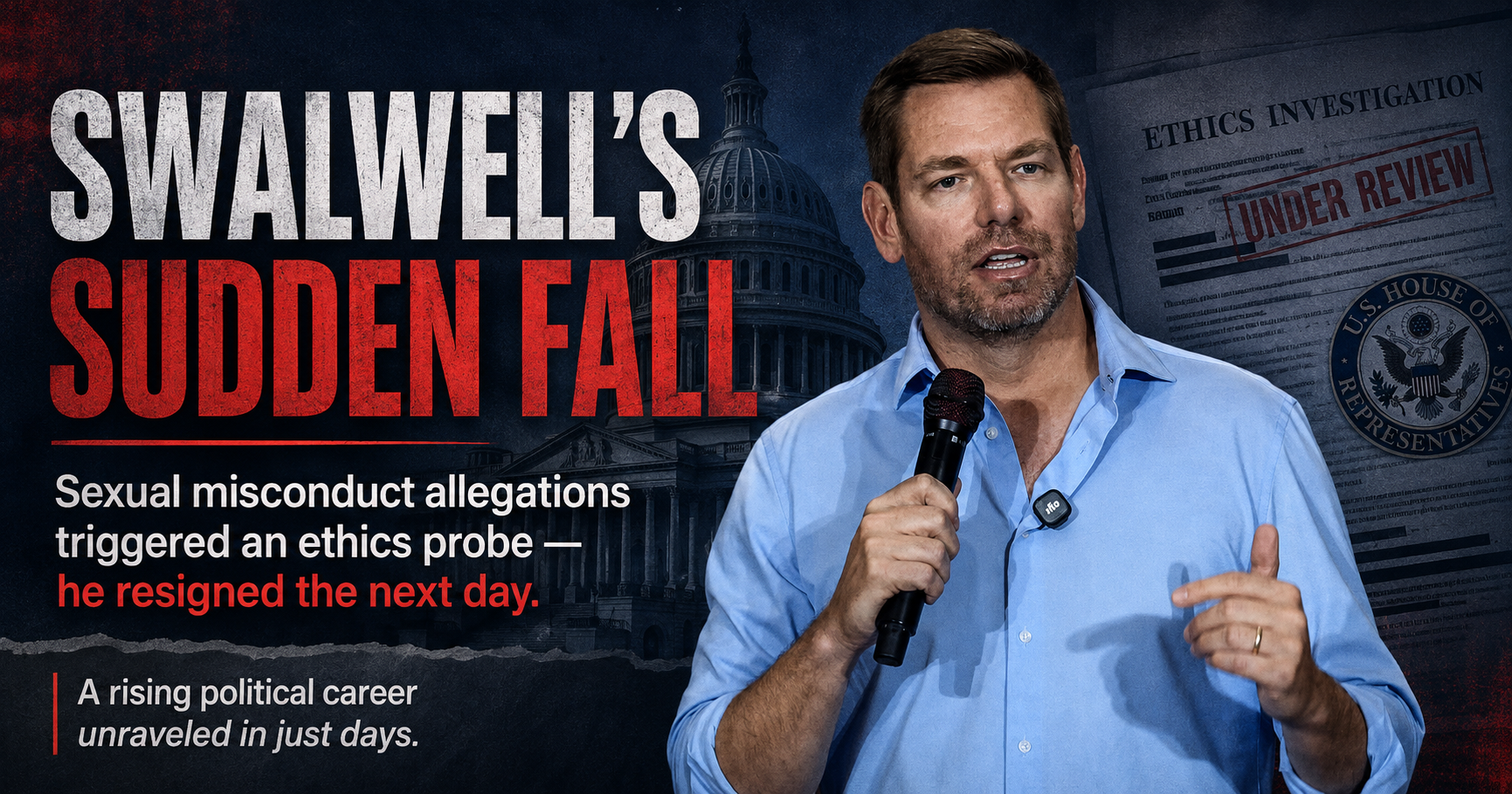
Then, in less than a week, his political career collapsed.
On April 10, a former congressional staff member accused Swalwell of sexually assaulting her on two occasions. CNN later reported allegations from three additional women who described conduct ranging from unsolicited explicit communications to unwanted sexual contact.
Swalwell denied the accusations, initially vowed to remain in the governor’s race and described the claims as politically timed lies.
His support nevertheless disappeared almost immediately.
Major endorsements were withdrawn. Campaign employees left. Former staff members demanded that he step down. Swalwell suspended his gubernatorial campaign, and the House Committee on Ethics announced it was investigating whether he had engaged in sexual misconduct, including misconduct involving an employee under his supervision.
One day after the Ethics Committee made its investigation public, Swalwell formally resigned from Congress on April 14, 2026. The House Clerk now lists California’s 14th Congressional District seat as having become vacant through his resignation.
However, resignation did not resolve the underlying accusations.
Swalwell has not been convicted of a crime, and the allegations remain disputed. He continues to deny sexually assaulting anyone. Meanwhile, law-enforcement investigations and additional questions surrounding his legal expenses have continued beyond his departure from public office.
A Former Staff Member Accused Swalwell of Two Sexual Assaults
The scandal erupted on April 10 when the San Francisco Chronicle reported allegations from a woman who had worked in Swalwell’s congressional district office for nearly two years.
The former employee said she had consensual sexual encounters with Swalwell while he was her boss. However, she alleged that two other encounters occurred when she was too intoxicated to give consent.
One alleged incident reportedly occurred in California in 2019 while she was still employed by Swalwell. The second allegedly happened at a New York City hotel in 2024 after she had left his staff.
The woman told CNN that she considered the 2024 encounter rape. The Manhattan District Attorney’s Office subsequently began examining the allegation connected to New York.
Swalwell did not admit to the alleged assaults.
In a public statement, he called the accusations false and said they emerged shortly before an election in which he had become a gubernatorial frontrunner. He cited his years as a prosecutor and congressman and said he had always worked to protect women.
“I will defend myself with the facts and where necessary bring legal action,” Swalwell said in the statement.
Three More Women Described Alleged Misconduct
CNN’s reporting widened the controversy beyond the former employee.
Three additional women reportedly accused Swalwell of various forms of sexual misconduct, including sending unsolicited explicit messages or nude photographs and engaging in behavior they considered unwanted or inappropriate.
Some of the allegations involved women who encountered Swalwell through politics or professional circles, intensifying questions about whether his public position gave him power or access that could make it harder for women to challenge his behavior.
The reports initially centered on four accusers: the former staff member alleging two sexual assaults and three other women describing different forms of misconduct.
The existence of several allegations does not itself establish criminal guilt. Each account would have to be evaluated separately, and any prosecution would require admissible evidence capable of proving a specific offense beyond a reasonable doubt.
Politically, however, the cumulative effect was immediate.
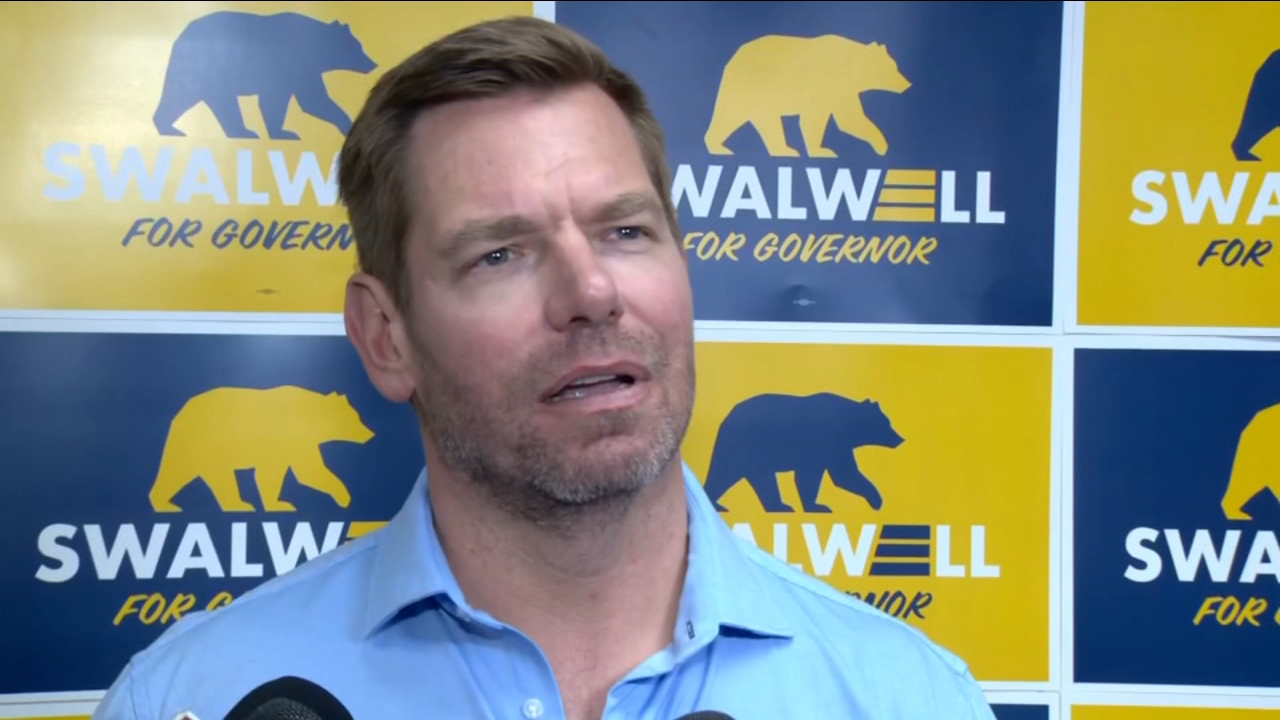
Swalwell Initially Refused to Leave the Governor’s Race
Swalwell’s first response was defiant.
He released a video calling the accusations “flat false” and suggested they had been strategically published to damage his campaign. He also acknowledged unspecified past “mistakes in judgment,” for which he apologized to his wife and others, but insisted those mistakes did not include sexual assault.
For a brief period, Swalwell appeared determined to remain a candidate for California governor.
That position quickly became impossible to maintain.
Prominent supporters withdrew endorsements, campaign staff members resigned and Democratic politicians publicly urged him to drop out. More than 50 former employees reportedly signed a letter calling for his resignation from Congress.
On April 12, just two days after the first major report, Swalwell suspended his campaign for governor.
“I will fight the serious, false allegations that have been made—but that’s my fight, not a campaign’s,” he said when announcing his withdrawal.
Only days earlier, he had been considered one of the leading candidates to replace term-limited California Gov. Gavin Newsom.
The collapse took roughly 48 hours.
The House Ethics Committee Opened an Investigation
The controversy reached Capitol Hill on April 13.
House Ethics Committee Chairman Michael Guest and ranking member Mark DeSaulnier announced that the committee had begun investigating whether Swalwell violated the Code of Official Conduct or another applicable law, rule or professional standard.
The committee specifically cited allegations that Swalwell may have engaged in sexual misconduct, including conduct involving an employee working under his supervision.
The announcement also contained an important warning: the opening of an investigation did not mean the committee had concluded that a violation occurred.
That distinction is crucial.
A congressional ethics investigation is a fact-finding process, not a declaration of guilt. Investigators can examine official records, interview witnesses and determine whether a member violated House rules even when the conduct does not lead to criminal charges.
In Swalwell’s case, however, the committee had almost no time to complete that work.
Swalwell Resigned From Congress the Following Day
Swalwell announced his intention to resign on April 13 and officially left the House on April 14.
He had represented the East Bay in Congress since January 2013 and was serving his seventh term. His resignation ended more than 13 years in federal office.
His departure also ended the House Ethics Committee’s jurisdiction over him as a sitting member.
The committee’s historical summary now lists the outcome of the Swalwell misconduct matter as a “loss of jurisdiction,” meaning the investigation could not proceed against him in the same way once he was no longer a member of Congress.
That does not mean the Ethics Committee cleared Swalwell.
It also does not mean investigators substantiated the accusations.
The committee simply lost its ability to reach a formal conclusion because the person under investigation resigned before the process was completed.
Describing the ethics case as “resolved” could therefore be misleading. It ended procedurally, but the factual questions behind it remain contested.
A Fifth Woman Came Forward as Swalwell Left Office
On the same day Swalwell officially resigned, another woman publicly accused him of rape.
Lonna Drewes, described in reports as a former model and technology entrepreneur, alleged that Swalwell drugged and sexually assaulted her in a Southern California hotel in 2018.
Drewes said she consumed one glass of wine before becoming severely incapacitated. She alleged that she later lost consciousness while Swalwell was assaulting her.
Through her attorney, Drewes said she intended to provide journals, communications and other material to investigators. The Los Angeles County Sheriff’s Department confirmed that it had opened a preliminary investigation into her account.
Swalwell categorically denied Drewes’ allegation as well.
His representatives described the accusations against him as a coordinated political attack and indicated that he intended to defend himself through legal action.
With Drewes’ account, the number of publicly reported accusers rose to five.
The allegations also meant Swalwell was facing scrutiny involving incidents reportedly occurring on both coasts, including inquiries connected to Los Angeles and Manhattan.
Was Swalwell Charged With a Crime?
As of August 6, 2026, the publicly available sources reviewed for this article do not establish that Swalwell has been criminally charged or convicted over the sexual misconduct allegations.
That is an important legal fact.
An accusation, even a detailed and serious accusation, is not the same as a criminal charge. An investigation is not a conviction. Swalwell is entitled to the presumption of innocence in any criminal proceeding.
At the same time, a lack of charges does not prove that every allegation is false.
Sexual-assault investigations can take months, particularly when the alleged conduct occurred years earlier. Detectives may need to review electronic communications, travel records, hotel documentation, witness accounts, therapy records or other contemporaneous evidence.
Some investigations also end without charges because prosecutors believe the available evidence cannot meet the high burden required in criminal court, not necessarily because they can prove that an accuser lied.
The public currently has allegations, denials and incomplete investigations, not a final judicial answer.
The Ethics Investigation Ended, but Other Scrutiny Continued
Swalwell’s resignation protected his former constituents from having a distracted representative remain in office, but it also prevented the House Ethics Committee from completing its investigation.
That outcome has renewed a familiar criticism of congressional accountability: members can resign before an ethics panel issues findings, leaving the public without a complete official report.
The Ethics Committee’s own records show other sexual-misconduct investigations that ended through the same loss of jurisdiction after a member resigned.
Months later, separate questions emerged about Swalwell’s use of campaign funds for attorneys.
Recent financial disclosures reportedly showed that his former gubernatorial campaign paid nearly $150,000 in legal fees during May and June, in addition to earlier legal expenditures. California’s Fair Political Practices Commission has been examining whether those payments complied with campaign-finance rules.
California law may permit campaign money to cover legal expenses connected to campaign activity, but not every personal or criminal-defense expense qualifies. Swalwell’s representatives have continued defending his actions and denying the sexual-misconduct accusations.
No finding of campaign-finance wrongdoing should be assumed unless the commission reaches one.
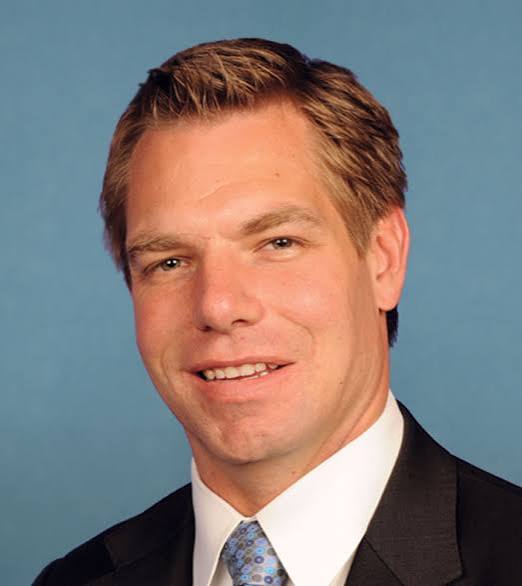
His Resignation Triggered a Special Election
Swalwell’s departure left California’s 14th Congressional District without an elected House member.
The Clerk of the House placed the district office under its supervision so constituent services could continue during the vacancy. A special election was scheduled for August 18, 2026, to select someone to serve the remainder of Swalwell’s term.
Democratic candidates Aisha Wahab and Melissa Hernandez advanced to the special general election after a June contest. The district includes communities such as Fremont, Hayward and Livermore and has generally favored Democratic candidates.
The winner will inherit a district abruptly placed into political uncertainty by a scandal that had nothing to do with its voters.
A Career That Unraveled in Four Days
The speed of Swalwell’s downfall was extraordinary.
On April 10, he was a sitting congressman and serious candidate for California governor.
By April 12, he had suspended his gubernatorial campaign.
On April 13, the House Ethics Committee opened an investigation, and Swalwell announced that he would leave Congress.
On April 14, his resignation became official, the committee lost jurisdiction and a fifth woman publicly accused him of rape.
The timeline demonstrates how quickly political support can disappear when multiple serious allegations emerge.
It also shows the limitations of political consequences.
Resignation removed Swalwell from power, but it did not determine whether the women’s accounts were true. The House Ethics Committee never reached findings. Law-enforcement investigations have not produced a publicly reported trial or verdict.
Swalwell says he resigned because the controversy would prevent him from effectively serving his constituents, not because he was admitting guilt. His accusers say his departure does not provide accountability for what they allege happened.
Both realities now exist at once: his congressional career is over, while the central legal and factual questions remain unsettled.
Resignation Is Not the Same as Resolution
It may be tempting to treat the Eric Swalwell scandal as a closed chapter because he is no longer in Congress.
It is not closed for the women who came forward.
It is not closed for investigators reviewing allegations in different jurisdictions.
It is not closed for former constituents who never received a final House Ethics report explaining what evidence the committee found.
And it is not closed for Swalwell, who continues to deny the accusations and faces lasting reputational damage without having had the claims tested in a criminal courtroom.
The case raises a broader question about how Congress handles serious misconduct allegations. When a lawmaker resigns immediately after an investigation begins, should the House still be permitted to complete its work and release findings?
Doing so could protect accusers and the public from powerful officials who use resignation as an escape route. It could also protect wrongly accused former members by producing a factual report rather than leaving allegations permanently unresolved.
For now, Swalwell’s official congressional record ends with a single stark entry:
Resigned April 14, 2026.
The story behind that entry is far more complicated.
Do you believe Congress should continue ethics investigations after a lawmaker resigns, or does its authority properly end when the person leaves office? And should Swalwell’s resignation be viewed as accountability when no ethics finding or criminal verdict was ever reached?