“We’re Going to Beat Up the Haole Boys”: California Family Says Maui Vacation Ended in a 30-Person Resort Attack
A California family says its luxury Maui vacation turned into a nightmare when a confrontation near a resort pool erupted into a violent brawl involving about 30 people. Relatives claim they were threatened as “haole boys” before chairs were used as weapons, leaving one man with a head wound requiring 13 staples.
 Marie NovakMarie Novak is a crime news writer for Crimehowl, covering true crime, missing persons cases, court updates, and stories that leave communities searching for answers. She focuses on writing with empathy, clarity, and a deep respect for victims and their families while encouraging readers to think critically about the cases that shape the headlines.
PUBLISHED AUG 06, 2026 · 06:00 | 11 MIN READ | LONG READ | FILED UNDER CURRENT CRIMES
***Content warning: This article discusses a violent assault and serious injuries.
A California family expected ocean views, warm weather and a peaceful escape when its members traveled to one of Maui’s most popular resort areas.
Instead, their vacation ended with blood on the ground, multiple relatives needing medical treatment and detectives trying to determine how an evening near a luxury condominium pool exploded into a sprawling brawl involving approximately 30 people.
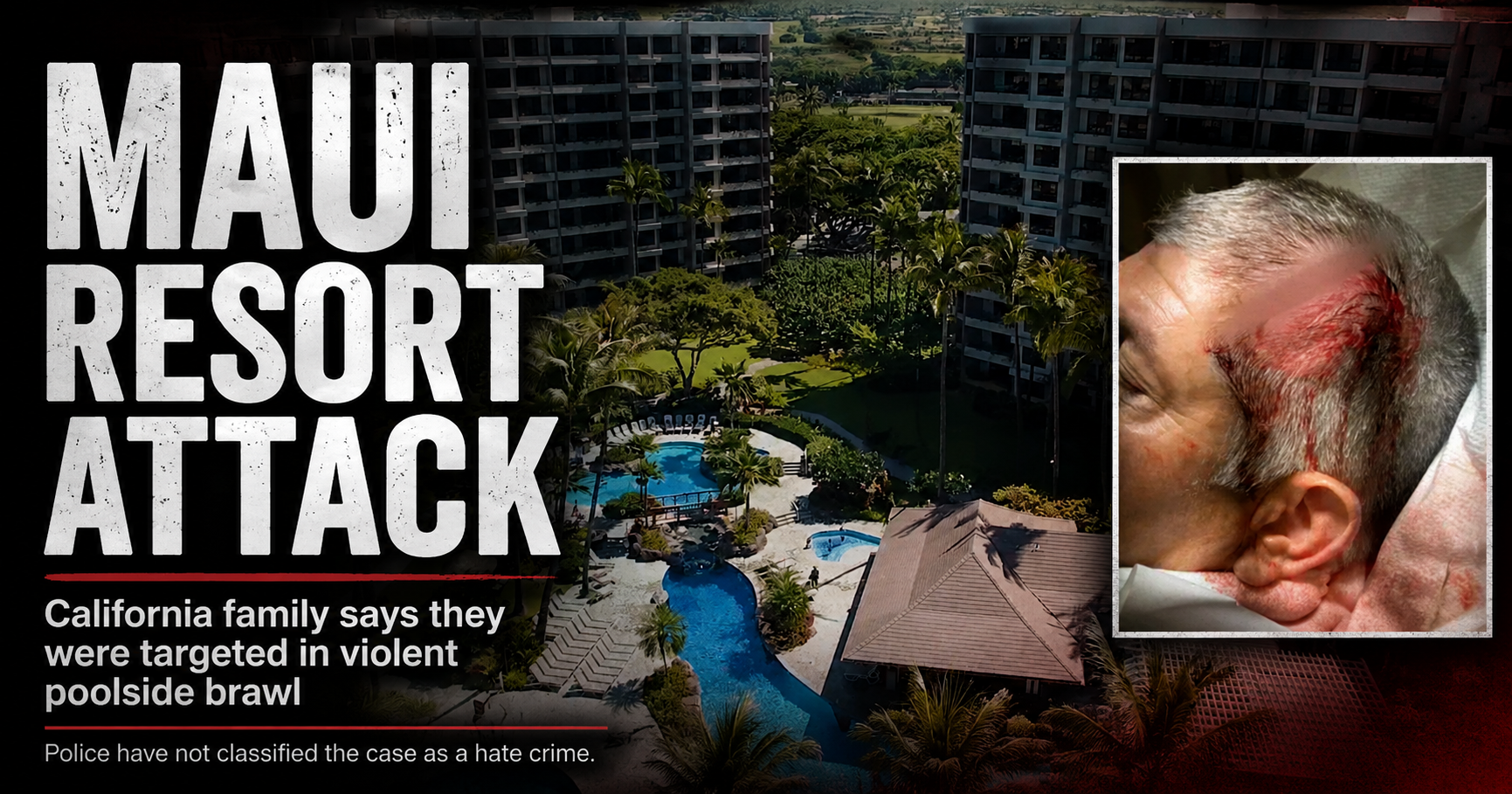
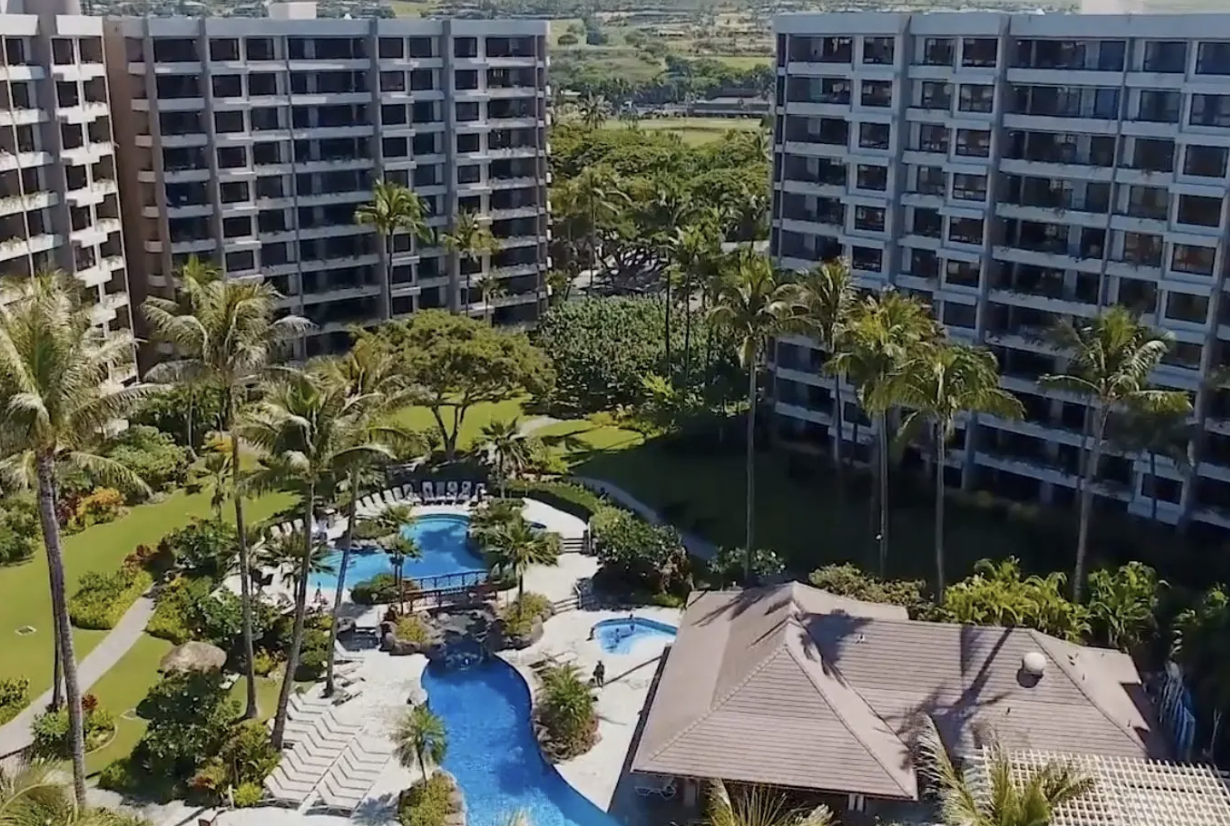
The violence erupted at about 10 p.m. on July 17, 2026, at the Kaanapali Alii resort in West Maui. Seven visiting family members, ranging in age from 17 to 62, told police they had been assaulted near the property’s pool and barbecue areas.
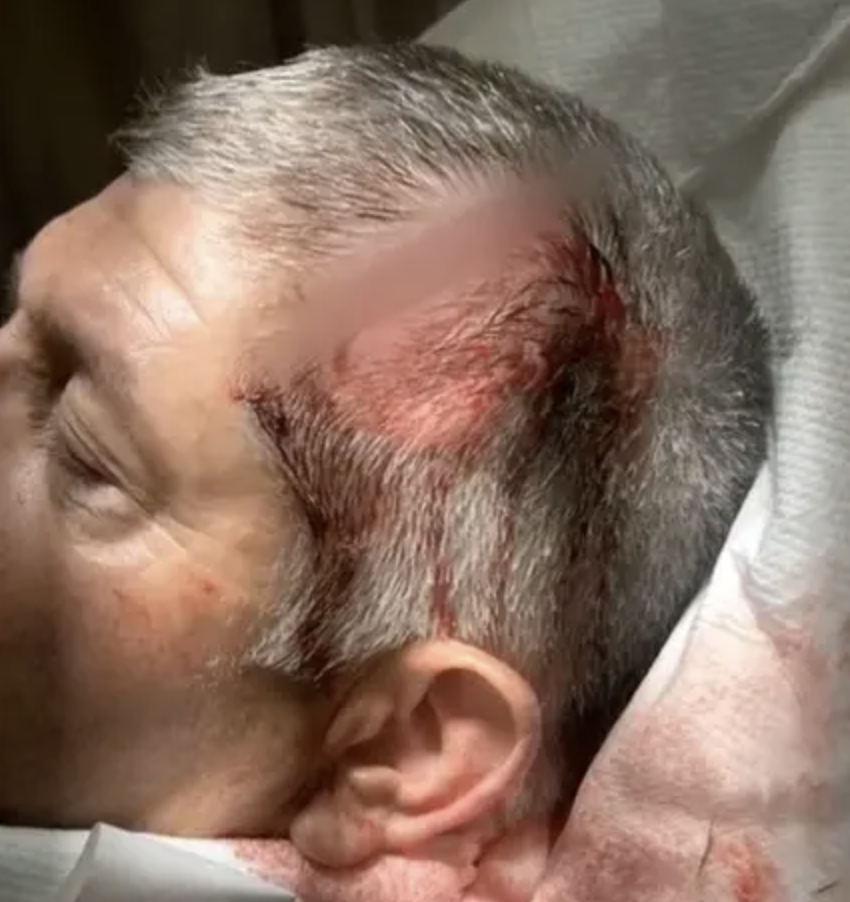
Witnesses reportedly described young people throwing chairs and physically attacking members of the family. At least six people suffered injuries serious enough to require medical attention, and one relative needed 13 staples to close a large wound on his head.
However, the family says the incident was more than a chaotic fight between two groups.
Relatives believe they were deliberately targeted because they are white. They claim a woman threatened the family by saying her group was going to “beat up the haole boys” before the violence began.
Maui police have not publicly classified the case as a hate crime, and investigators have not announced that the evidence supports the family’s interpretation of the attack.
One 20-year-old Maui man was arrested on suspicion of assault, but he was later released as detectives continued interviewing witnesses and reviewing the conflicting accounts surrounding the confrontation.
Police Were Called to a Disturbance Involving About 30 People
The first official reports described a disorderly incident at the Kaanapali Alii, an oceanfront condominium resort in the Kaanapali Beach area of Lahaina.
When Maui Police Department officers arrived, the largest portion of the crowd had already dispersed. Approximately 10 to 15 people remained, several of whom had visible injuries.
Police said seven visitors told investigators they had been assaulted by a group of young people who left before officers arrived.
The initial police account included an important detail that may help explain how the confrontation began.
One victim told officers that he and his family were near the pool when an unknown male ran toward them asking for help. Several juvenile males were reportedly chasing him.
Witnesses said the pursuing group then began throwing chairs and physically attacking people gathered around the pool and barbecue area.
Medical personnel were called to the resort. Some injured people accepted treatment, while others declined additional care. Early police statements did not disclose the full extent of every person’s injuries.
The California family later offered a more detailed version of the events, alleging that tensions had been building throughout the evening and that the attack included explicitly racial language.
“We’re Going to Beat Up Your Boys Tonight”
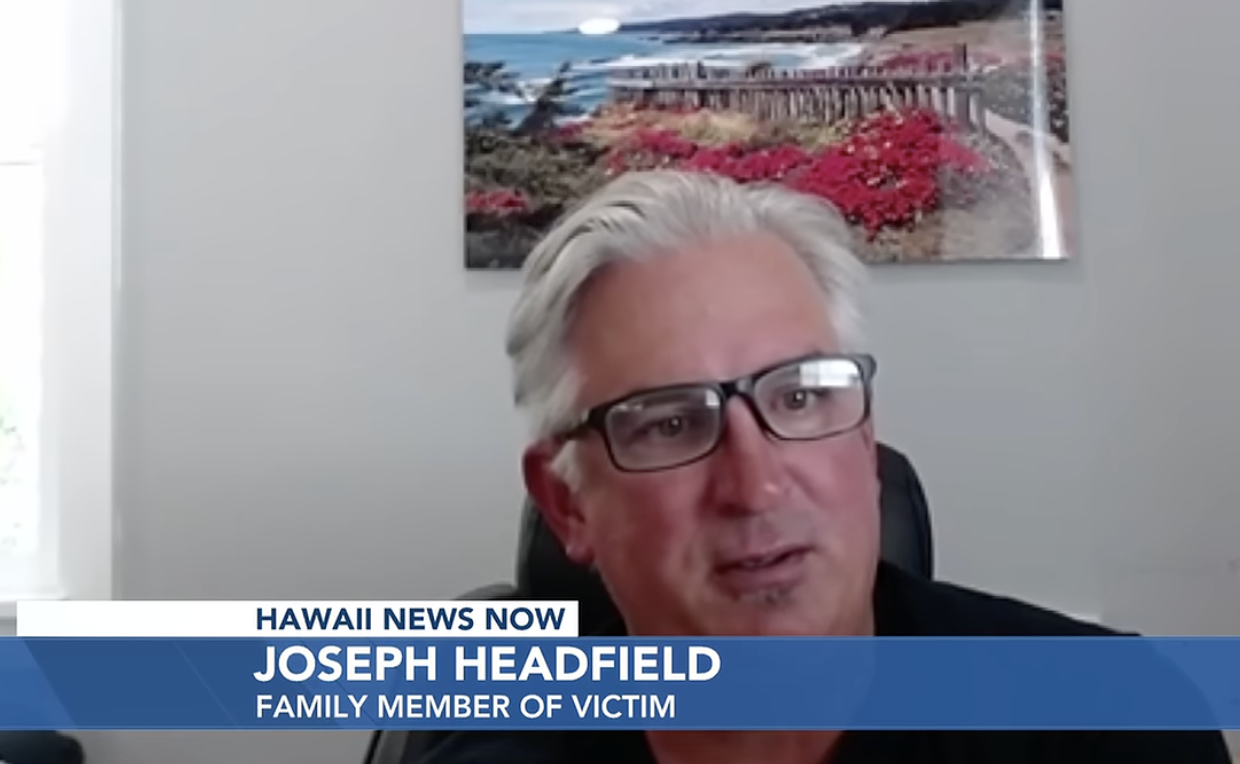
Family member Joseph Headfield told Hawaii News Now that three young women were involved in the confrontation, including one he described as the apparent ringleader.
According to Headfield, the woman approached members of the family and issued a direct threat.
“We’re going to beat up your boys tonight,” she allegedly said. “We’re going to beat up the haole boys.”
Headfield said the confrontation quickly spiraled beyond verbal hostility.
“The kids were beating people with the chairs,” he told the outlet.
The family claims patio furniture was lifted and swung as a weapon while relatives attempted to protect one another. One man was reportedly struck in the head with a chair as he tried to shield other members of the group.
Photographs shared with local media showed a significant wound across the man’s head. He was taken for treatment and received 13 staples.
The victims described themselves as completely overwhelmed by the number of people involved. What may have started as a confrontation with a smaller number of individuals rapidly became a large and confusing melee, making it difficult to identify who struck whom once the violence escalated.
The Trouble May Have Started Away From the Resort
The family alleges that the violence did not begin with a random encounter at the pool.
Relatives told reporters that a group of Maui youths had been harassing visitors earlier in the evening near Whalers Village, the open-air shopping and dining complex located within walking distance of the Kaanapali resort area.
The groups eventually crossed paths at the Kaanapali Alii.
It remains unclear whether everyone involved at Whalers Village later participated in the resort confrontation, whether the unidentified male who sought help had been part of the earlier tension or how many separate disputes became mixed together during the brawl.
Those details matter.
In a large fight, witnesses positioned only a few feet apart can see dramatically different portions of the same incident. One person may witness the first punch, while another sees only a later attempt at retaliation. Some participants may have been aggressors, some may have been defending relatives and others may have joined the chaos without understanding how it began.
Police must now separate those actions using witness statements, available security recordings, phone videos, physical evidence and medical documentation.
The family insists that the racial threat occurred before the violence and demonstrates that its members were selected for attack.
Investigators have not publicly confirmed that statement or identified the woman accused of making it.
What Does “Haole” Mean?
The word “haole” has a long and complicated history in Hawaiʻi.
It traditionally refers to someone who is not descended from the Native Polynesian inhabitants of Hawaiʻi. In modern use, it is frequently applied to white people, mainland visitors or people perceived as outsiders.
The word is not automatically an insult in every setting. Its meaning can depend heavily on tone, context and the language used around it. Scholars have also explained that “acting haole” can refer to conduct viewed as entitled or disrespectful toward local customs rather than simply describing a person’s race.
However, a neutral word can become part of a racial threat depending on how it is used.
Calling someone a “haole” in ordinary conversation would not, by itself, establish that a crime was motivated by racial hostility. Allegedly promising to “beat up the haole boys” immediately before an attack could carry far greater evidentiary significance.
Detectives would still need to determine whether the statement was actually made, who heard it, who said it and whether the people accused of assaulting the family were acting because of the victims’ race or perceived outsider status.
That is why the family’s claim is potentially important but does not automatically settle the legal question.
Why Police Have Not Called It a Hate Crime
Hawaiʻi defines a hate crime as a criminal act in which an offender intentionally selected a victim because of hostility toward that person’s actual or perceived race, religion, disability, ethnicity, national origin, gender identity or expression, or sexual orientation.
Under that standard, detectives must examine more than whether a racial or ethnic term was spoken during an altercation.
They must determine whether bias motivated the selection of the victim.
For example, there is a legal difference between a fight that begins over an unrelated dispute and later includes an offensive insult, and an assault that begins because attackers deliberately selected someone based on race. Both incidents may be serious, but only the second necessarily satisfies the motive requirement of a hate crime.
The California family believes the alleged statement about the “haole boys” makes the motive clear.
Police have so far taken a more cautious position.
Maui Police Department spokesperson Alana Pico said investigators were committed to conducting a thorough, fair and impartial investigation. Detectives have contacted and interviewed the involved parties and are continuing to gather and review additional information.
No final determination has been announced.
A 20-Year-Old Man Was Arrested and Released
During the initial investigation, officers arrested a 20-year-old man from Makawao on suspicion of assault.
Some local reporting identified the suspected offense as second-degree assault. Police later released the man while the case remained under investigation.
Being released does not necessarily mean that investigators cleared him. Depending on the circumstances, police may release a person while detectives continue developing evidence for prosecutors, especially in a case involving numerous participants and conflicting witness accounts.
The man’s name has not been widely released, and no criminal conviction has been established.
At this stage, it also remains unclear how many additional people could face arrest. Although approximately 30 individuals were reportedly involved in the overall disturbance, the number does not mean 30 people committed assaults.
Some may have been witnesses, intended targets, relatives attempting to intervene or people who arrived after the confrontation began.
Investigators will have to establish individual responsibility rather than treating the crowd as one unit.
The Family Wants More Arrests and Accountability
For the injured family members, the pace of the investigation has been frustrating.
They say several people participated in the violence, yet only one person was initially arrested and that man was later released.
Their demand for accountability is complicated by the scale of the disturbance. With people running, shouting and swinging furniture in a poorly controlled scene, identifying each participant may depend on video evidence.
Luxury resorts commonly maintain surveillance cameras around entrances, common areas and parking facilities, but not every portion of a pool deck is necessarily recorded. Investigators may also need footage from guests’ phones, nearby properties or the earlier alleged encounter near Whalers Village.
The family is urging anyone who witnessed the attack to come forward.
Maui police have similarly asked people with information to contact the department’s Criminal Investigation Division at 808-244-6425.

The Resort Says It Is Cooperating
Kaanapali Alii is known for upscale privately owned condominium rentals near Kaanapali Beach.
The resort’s management said it is cooperating with the police investigation and supporting those affected by the incident.
Steven Rose, managing director for CoralTree Residence Collection, said the safety and well-being of guests, residents and employees remained the property’s highest priority. He added that the resort takes incidents of this nature seriously.
The resort has not publicly provided a detailed account of its security response, including when staff first became aware of the confrontation, whether private security personnel attempted to intervene or how quickly police were contacted.
Those questions may become important as the family seeks answers.
Guests staying at a luxury resort reasonably expect management to maintain control of its shared spaces. At the same time, a confrontation involving dozens of people can escalate faster than security personnel can safely contain it.
Maui Has Seen a Previous Federal Hate-Crime Prosecution
The family’s demand that investigators examine racial bias is not without legal precedent in Maui.
Two Native Hawaiian men were previously convicted in federal court for a racially motivated assault on a white man who was attempting to move into the remote Maui village of Kahakuloa.
The victim in that 2014 attack was punched, kicked and struck with a shovel. Prosecutors argued that the men would not have attacked him had he not been white, and a federal jury agreed that racial hostility motivated the assault.
The case was widely described as a rare federal hate-crime prosecution involving Native Hawaiian defendants.
That case does not prove anything about the Kaanapali Alii confrontation. Different people, evidence and circumstances are involved.
It does demonstrate that white victims can legally be recognized as victims of racial hate crimes when prosecutors establish the required motive.
It also highlights why investigators in the current case must carefully evaluate the alleged use of “haole,” rather than dismissing the word as ordinary local slang or automatically treating it as proof of racial hatred.
Context will be everything.
A Violent Incident Should Not Be Used to Condemn an Entire Community
The allegations have already provoked heated discussion online about tensions between Hawaiʻi residents and mainland tourists.
Those conversations can quickly become unfair in both directions.
If members of the California family were selected and attacked because they were white or viewed as outsiders, the conduct should be investigated and prosecuted accordingly.
That does not make an entire island, ethnic group or local community responsible.
Maui’s residents are still recovering from the devastating 2023 Lahaina wildfire, a disaster that intensified existing concerns about housing, tourism, displacement and the economic pressure placed on local families. Frustration surrounding tourism and outside ownership is real, but it does not excuse threatening or attacking individual visitors.
Likewise, the behavior of those involved in this fight should not be used to portray Native Hawaiians or Maui residents collectively as hostile toward tourists.
The suspects’ backgrounds have not all been publicly established, and “local” does not necessarily mean Native Hawaiian.
Accountability must remain individual.
The Most Important Evidence May Be Video
For now, there are at least two layers to the case.
The first is the physical assault.
Several people were injured. Chairs were allegedly used as weapons. One man suffered a serious head wound. Police found visible injuries when they arrived.
The second is motive.
Were members of the California family attacked because they attempted to help an unidentified person being chased? Were they drawn into an existing dispute? Did the confrontation grow from tensions earlier at Whalers Village? Were they singled out as white mainland visitors?
More than one factor could have contributed.
Security footage and cellphone recordings may reveal which group approached first, whether the alleged racial threat was recorded and who used chairs or other objects as weapons.
Video may also expose claims that do not match the physical sequence of events. In a chaotic fight, every side may sincerely believe it was acting defensively.
The camera does not always explain motive, but it can establish a timeline.
A Dream Vacation Leaves Lasting Trauma
The family members eventually returned to California carrying injuries and memories far removed from the vacation they expected.
A wound requiring 13 staples will heal, but the psychological impact of being surrounded and attacked by a much larger group may last much longer.
The family also appears determined not to allow the case to disappear once tourists leave the island.
They want the people who threw chairs, issued threats and injured their relatives identified. They want police to determine whether racial hostility motivated the attack. Most of all, they want an explanation for how a night at a luxury resort became a scene involving dozens of people before law enforcement arrived.
Maui police say the investigation remains active and impartial.
Until detectives complete that work, the family’s description of a racially motivated attack remains an allegation rather than a final legal finding. The violence itself, however, is not in dispute.
Multiple people were injured. A large police response followed. One man was arrested, and investigators are still trying to identify who was responsible for turning a resort gathering into a terrifying poolside melee.
Do you believe the alleged threat to “beat up the haole boys” is enough for police to investigate this as a possible hate crime, or should investigators wait until the entire confrontation is reconstructed? And should the resort be required to explain what security measures were in place when a disturbance involving approximately 30 people erupted on its property?