“I Killed 83 People”: Carlos the Jackal’s Chilling Prison Boast and the OPEC Raid That Made Him Terrorism’s First Global Celebrity
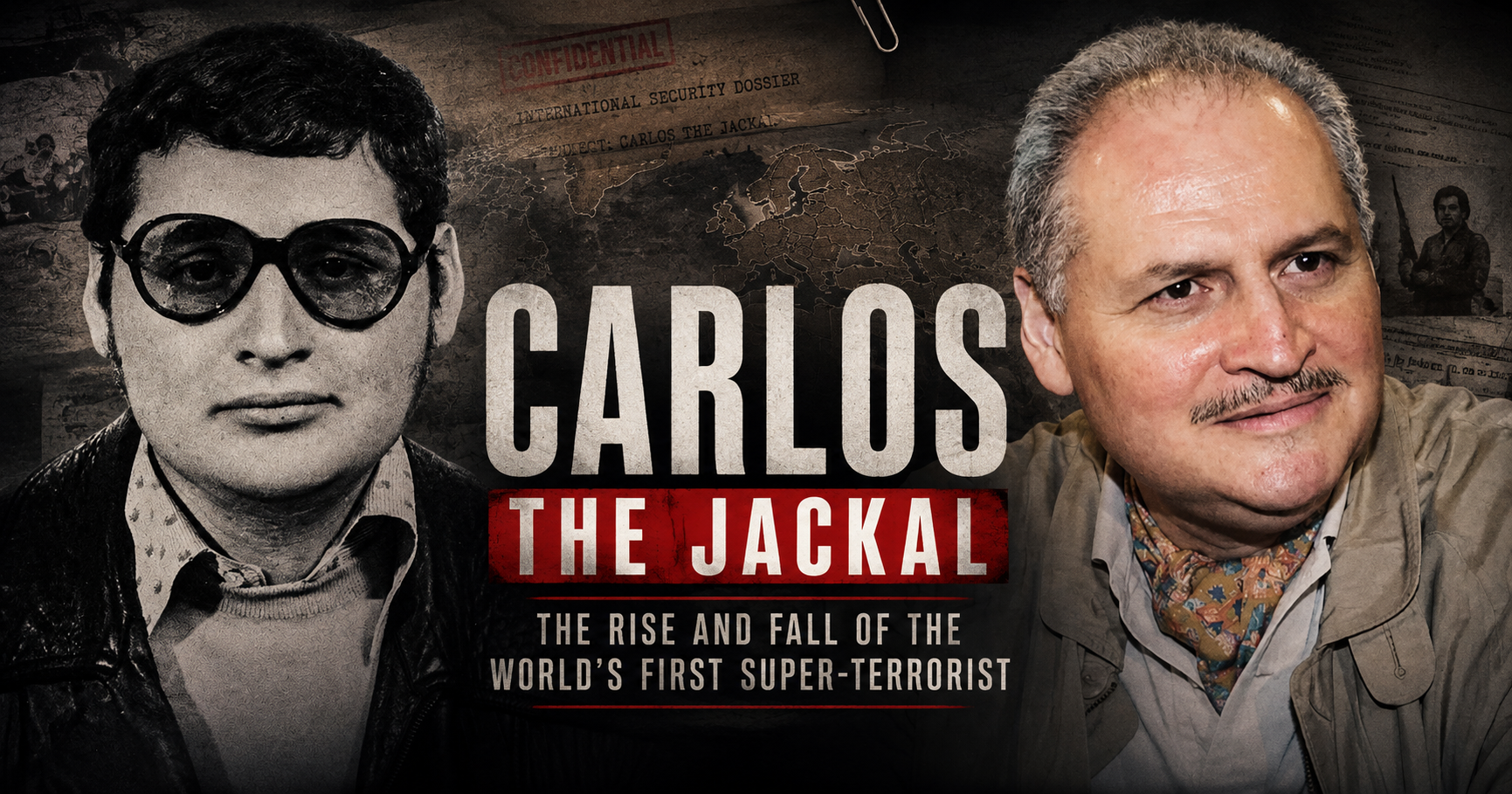
Fifty years after Carlos the Jackal stormed an OPEC meeting in Vienna, killed three people and took dozens hostage, the notorious terrorist remains unapologetic behind bars in France. A new book built from declassified intelligence files and a rare prison interview reveals how Ilich Ramírez Sánchez became one of the world’s most wanted men—and how an ordinary medical procedure finally left him vulnerable enough to capture.
 Marie NovakMarie Novak is a crime news writer for Crimehowl, covering true crime, missing persons cases, court updates, and stories that leave communities searching for answers. She focuses on writing with empathy, clarity, and a deep respect for victims and their families while encouraging readers to think critically about the cases that shape the headlines.
PUBLISHED AUG 17, 2026 · 06:30 | 14 MIN READ | LONG READ | FILED UNDER POLITICAL CRIME
**Content warning: This article discusses terrorism, murder, bombings and hostage-taking.
On a snowy Sunday morning just before Christmas 1975, six strangers stepped off a tram in Vienna carrying heavy sports bags.
Within minutes, three people were dead.
More than 60 others, including some of the most powerful oil officials in the world, were being held at gunpoint.
And a relatively unknown Venezuelan militant in a black beret was about to introduce himself to the world.
“I am the famous Carlos!” he reportedly announced to his terrified hostages.
Most of them had little idea who he was.
That was about to change.
The December 21, 1975 OPEC hostage crisis in Vienna transformed Ilich Ramírez Sánchez, better known as Carlos the Jackal, into one of the most recognizable terrorists of the 20th century. His six-person team killed an Austrian police officer, an Iraqi OPEC employee and a member of the Libyan delegation before seizing more than 60 hostages at the Organization of the Petroleum Exporting Countries headquarters.
What followed was an extraordinary international hostage drama involving negotiations, an Austrian-provided aircraft, stops in Algeria and Libya and a plan to execute two of the world’s most influential oil ministers.
Yet everyone ultimately taken aboard the plane survived.
Carlos escaped.
And instead of disappearing into obscurity, he became a global celebrity.
Now, more than half a century later, Pulitzer Prize-winning journalist Joby Warrick is revisiting the story in The Jackal: The Rise and Fall of Carlos, the World’s First Super-Terrorist, scheduled for publication on August 18, 2026.
The biography draws on newly declassified archives, secret-police files, eyewitness accounts and a rare face-to-face interview Warrick conducted with Carlos in prison. Publisher Scribner describes the book as an examination of how Carlos helped pioneer highly publicized, international terrorism deliberately designed to capture the attention of television audiences around the world.
And if Carlos himself is to be believed, his body count was staggering.
During Warrick’s prison interview, the aging militant reportedly volunteered an extraordinary claim:
He said he had personally killed 83 people and that approximately another thousand had died on his orders.
Those numbers have never been independently established and may be exaggerated. What is not disputed is that Carlos was convicted in connection with multiple murders and terrorist attacks and is serving three life sentences in France.
Perhaps even more chilling than the claim itself is what appears to be missing from Carlos’ account.
Remorse.
Before “Carlos the Jackal,” He Was Ilich Ramírez Sánchez
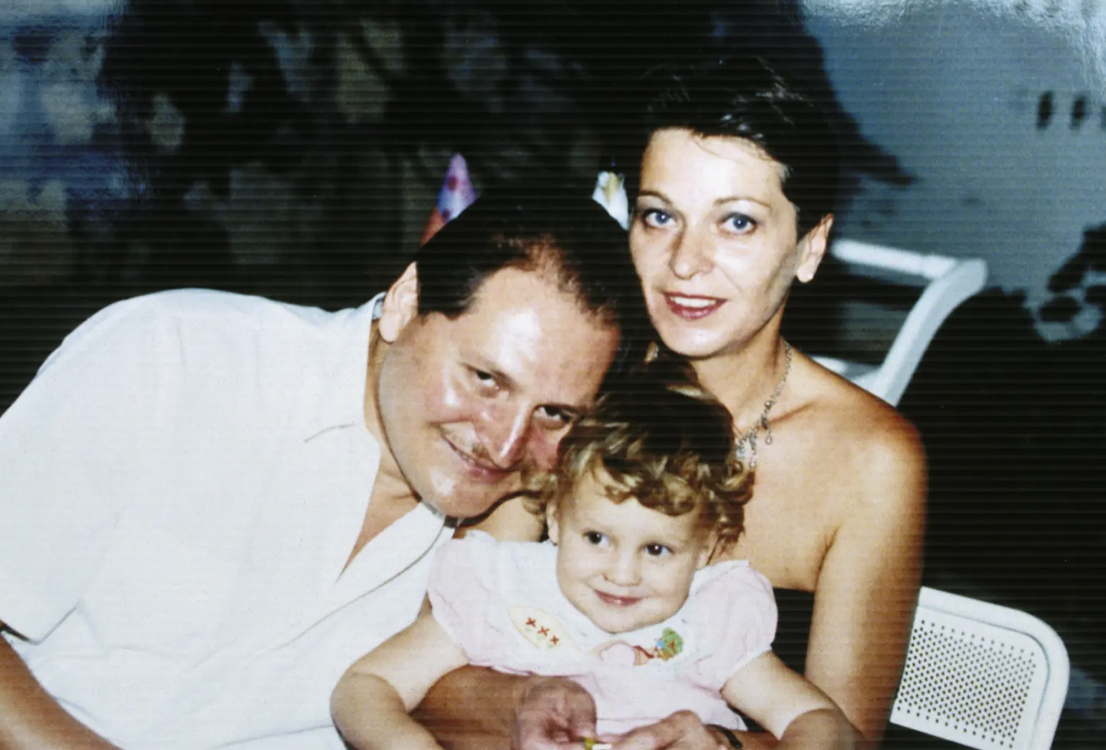
The man who would become one of the world’s most notorious fugitives was born Ilich Ramírez Sánchez in Venezuela in 1949.
His father was a wealthy lawyer and committed communist who was so devoted to Vladimir Ilyich Lenin that he gave his sons names honoring the Soviet revolutionary.
Ilich would eventually find his own way into revolutionary politics.
After studying in Moscow and being expelled from university, he traveled to the Middle East in 1970 and sought out the Popular Front for the Liberation of Palestine, or PFLP, one of the most feared Palestinian militant organizations of the era.
According to Warrick’s account, the privileged young Venezuelan arrived in Beirut at age 20 and wanted to become a revolutionary fighter.
He was given training and an Arabic code name.
But what would eventually make him unusually useful was not simply his ability to handle weapons.
Carlos could blend into wealthy European society.
He dressed well. He spoke multiple languages. He traveled confidently. He cultivated girlfriends across several countries. He could walk through a hotel lobby or border crossing looking less like a clandestine militant than an affluent international businessman.
That ability to move comfortably between violent underground organizations and fashionable European society became one of the defining features of the Carlos the Jackal terrorist network.
Failed Assassinations Came Before His Infamy
Not every early operation attributed to Carlos was successful.
In 1973, he attempted to assassinate Joseph Sieff, a prominent British businessman and chairman of Marks & Spencer. Sieff survived after the gun reportedly malfunctioned.
Carlos was later linked to additional violent operations in Europe, including failed attacks against Israeli aircraft at Orly Airport near Paris.
Then came the September 1974 grenade attack at the Drugstore Publicis in Paris.
Two people were killed and dozens were injured.
Decades later, Carlos was convicted over that attack and received what became his third life sentence. France’s highest court ultimately upheld the life term in 2021.
By 1975, investigators were beginning to understand that one individual might be appearing repeatedly around an alarming collection of international attacks.
Then came the apartment shooting that put his face onto police wanted lists across Europe.
A Paris Apartment Became a Killing Scene
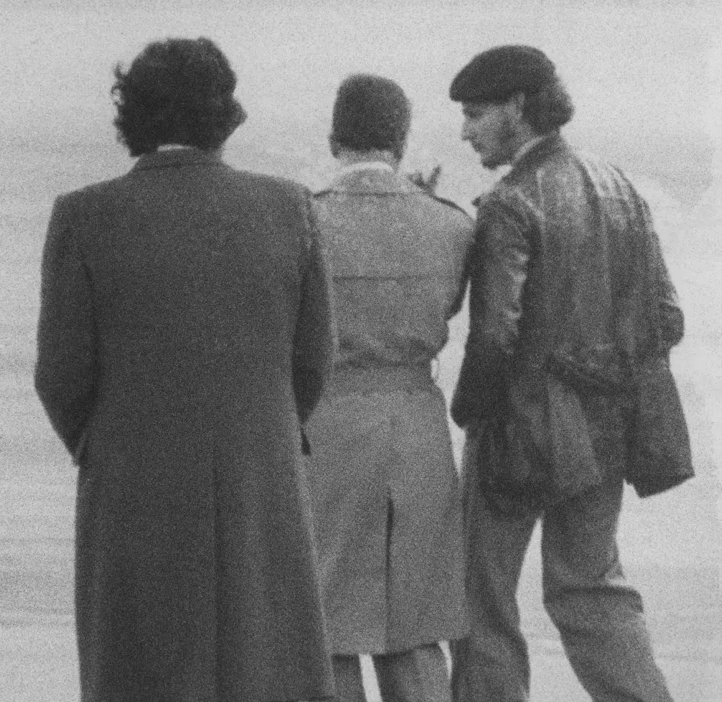
In June 1975, French intelligence officers tracked Carlos to an apartment in Paris.
They were investigating him after information reportedly came from one of his own PFLP contacts.
The encounter turned deadly almost immediately.
Carlos pulled a handgun and opened fire.
Two French intelligence officers were killed. Michel Moukharbal, the PFLP contact who had helped expose him, was also killed.
Another officer was wounded.
Carlos escaped.
The killings eventually became the basis of his first French life sentence following his 1997 conviction.
But another consequence of the manhunt would prove almost as important to Carlos’ public image.
He gained a new name.
How “Carlos the Jackal” Got His Famous Nickname
“Ilich Ramírez Sánchez” was not the name that would dominate headlines.
French authorities discovered documents carrying variations of the name Carlos, including a false passport.
British newspaper coverage then connected the fugitive to a London apartment associated with people in his circle. A copy of Frederick Forsyth’s bestselling assassination novel The Day of the Jackal was reportedly noticed among the belongings or books associated with the location.
The detail was irresistible to newspaper editors.
Before long, Carlos became “Carlos the Jackal.”
The nickname stuck even though there is no evidence that the novel actually belonged to him or that it had anything to do with his operations.
Carlos apparently loved it.
According to accounts later attributed to him, he considered the jackal an attractive predator.
More importantly, the nickname created something almost unheard of in international terrorism at the time: a brand.
Carlos was no longer simply another clandestine militant.
He was becoming a character.
And the next operation would turn that character into an international phenomenon.
The OPEC Attack That Made Carlos Famous
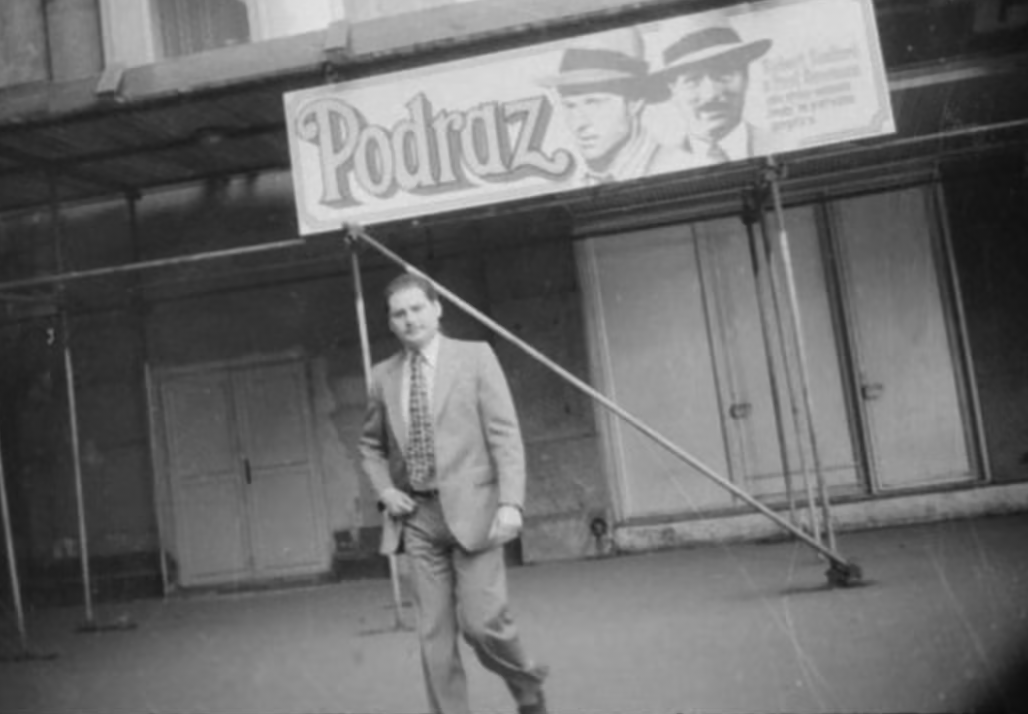
On December 21, 1975, representatives from the world’s major petroleum-exporting nations were meeting at OPEC headquarters in Vienna.
The six militants arrived during heavy winter weather carrying weapons concealed inside sports bags.
Once inside, the attack unfolded quickly.
An Austrian police officer was killed.
An Iraqi OPEC employee was killed.
A Libyan economist was also shot and killed.
Several others were wounded.
The militants then took more than 60 people hostage, including Saudi Arabian Oil Minister Ahmed Zaki Yamaniand Iranian Oil Minister Jamshid Amuzegar.
According to later accounts, those two ministers were never supposed to survive.
Carlos’ team planned to leave Austria with the hostages, travel through the Middle East and ultimately kill Yamani and Amuzegar.
Warrick’s new book and other historical accounts say the operation was financed or encouraged by Libyan leader Muammar Gaddafi, who was furious with Saudi Arabia and Iran over oil policy. Former militants have also made similar claims, though the full chain of command behind the operation has remained the subject of historical debate.
For Carlos, the siege became something else.
A stage.
The Killer Who Wanted to Be a Celebrity
One of the most unsettling elements of the Carlos the Jackal OPEC attack was his ability to move between extreme violence and calculated charm.
According to Warrick’s reconstruction, shortly after shooting one victim, Carlos was distributing cigarettes and speaking calmly to the hostages.
He reportedly flirted with women inside the building.
He reassured some captives.
At least one hostage later asked him for an autograph.
The transformation was surreal: an armed militant who had just participated in three killings behaving almost like the host of an event.
Warrick characterizes Carlos as a type of “terrorist emcee,” acutely aware that the world’s news media was following every move. Contemporary accounts similarly describe Carlos enjoying the attention and even reacting proudly when people appeared to recognize his name.
This may be the most important part of the Carlos story.
Terrorism had existed long before him.
What Carlos helped demonstrate was how terrorism could be turned into international spectacle.
Television cameras could magnify one violent operation into a worldwide political event.
The terrorist himself could become famous.
And fame could become part of the objective.
Austria Gave the Militants a Plane
The Austrian government faced a nightmare.
The militants had dozens of captives, explosives and weapons. Carlos threatened additional killings if his demands were not met.
Authorities ultimately agreed to provide transportation.
After negotiations and the release of some hostages, Carlos and his group were taken to Vienna International Airport and given access to a DC-9 aircraft.
Approximately 42 hostages traveled with them as the ordeal moved outside Austria.
The plane flew first to Algiers.
Some captives were released.
The group later traveled toward Libya before eventually returning to Algeria.
Throughout the journey, Yamani and Amuzegar remained in extraordinary danger.
According to historical accounts, Carlos had been instructed to kill them.
Yet he ultimately did not.
Did Carlos Receive a $50 Million Ransom?
This is where the 1975 OPEC hostage crisis becomes even murkier.
Carlos later claimed enormous sums of money changed hands before the remaining hostages were released.
He reportedly placed the amount at roughly $50 million.
Former militants and other sources have also alleged that tens of millions of dollars were paid, although accounts differ over the exact amount and where the money ultimately went.
Warrick’s new book reportedly presents additional evidence supporting the claim that ransom money was transferred.
Carlos has been accused of keeping much of it himself.
Whatever actually occurred, the final hostages—including the Saudi and Iranian ministers who had reportedly been marked for execution—walked away alive.
Carlos and his team escaped.
The operation that should have made him a hero within his militant organization instead created a serious problem.
His bosses believed he had ignored orders.
“You Are an Executioner, Not a Movie Star”
According to accounts repeated in Warrick’s biography, PFLP operations chief Wadie Haddad was furious.
Carlos had failed to execute the two oil ministers.
He also appeared to be enjoying his new celebrity far too much.
Haddad reportedly accused him of acting like a movie star rather than a revolutionary fighter and removed him from the organization’s operations.
For many militants, being expelled from a major organization might have ended a career.
For Carlos, it opened another chapter.
He essentially became a freelance terrorist.
A Terrorist for Hire
Over the next several years, Carlos built relationships with governments and intelligence services willing to protect, finance or use him.
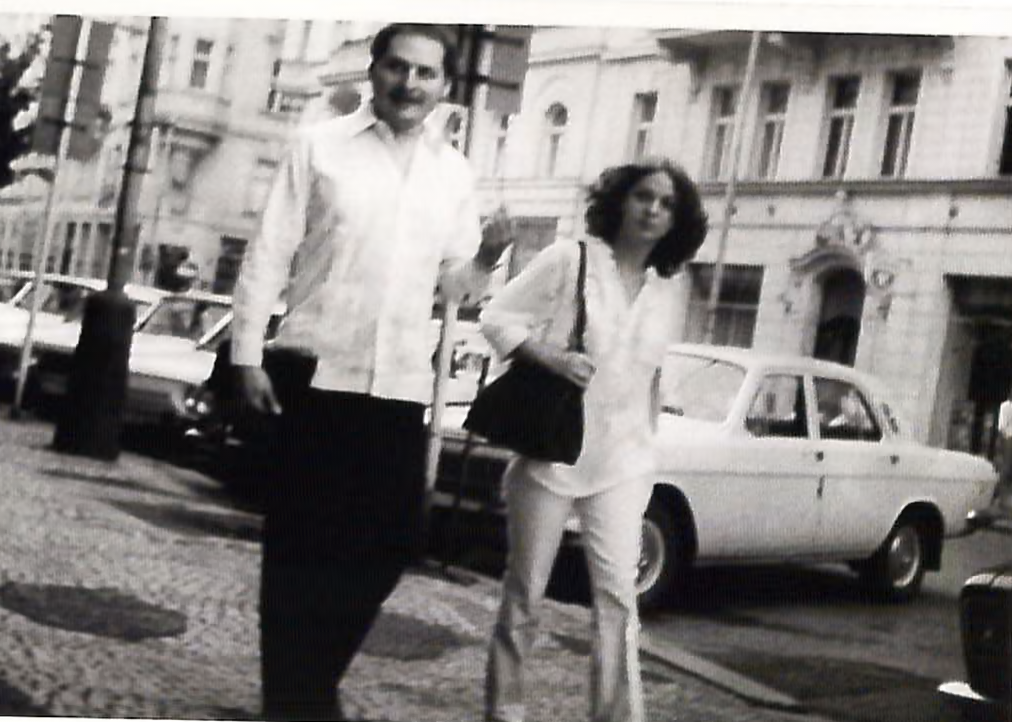
He spent time in cities including East Berlin, Budapest and Damascus, operating in the shadow world created by the Cold War.
East German Stasi records later revealed the remarkable extent to which militant organizations and state governments sometimes cooperated.
Carlos’ network was linked to a series of bombings during the 1980s.
French prosecutors later successfully held him responsible for attacks carried out in 1982 and 1983 that killed 11 people and injured scores more. He received another life sentence for those crimes in 2011.
By then, however, the political world that had kept Carlos safe was beginning to disappear.
Communist governments in Eastern Europe collapsed.
Former state sponsors no longer wanted the international attention that came with harboring a famous terrorist.
One refuge after another became unavailable.
Eventually, Carlos found himself in Sudan.
And by 1994, the world’s most famous fugitive had become vulnerable.
Intelligence Agencies Finally Found Him in Sudan
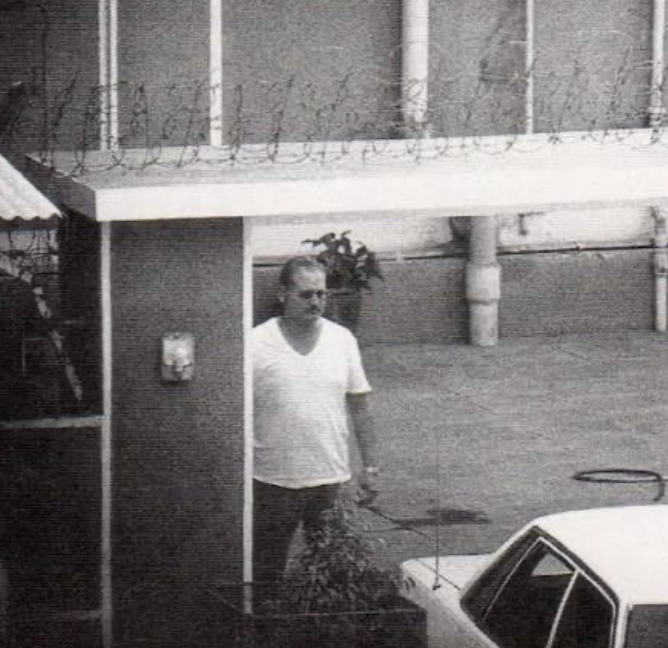
Carlos settled in Khartoum, where he attempted to live discreetly while the United States and France continued hunting him.
CIA surveillance played an important role in locating him, while French intelligence worked to secure cooperation from Sudanese authorities.
For years, Carlos had survived because capturing him presented governments with enormous logistical and diplomatic problems.
Then his own body created an opportunity.
He needed surgery.
The Medical Procedure That Helped Bring Down Carlos the Jackal
By August 1994, Carlos was suffering from a varicocele, an enlargement of veins around the testicle that can affect fertility.
He reportedly wanted to have another child with his wife and underwent corrective surgery in Khartoum.
The operation required sedation.
That meant one of the world’s most hunted fugitives, normally surrounded by weapons, bodyguards and layers of security, would temporarily be physically compromised.
French and Sudanese officials seized the opportunity.
Shortly after the surgery, Carlos was taken into custody, restrained and ultimately placed aboard an aircraft bound for France. Historical accounts differ on some of the precise mechanics of his transfer, but he was captured in Sudan in August 1994 and delivered to French authorities to stand trial.
The man who had once escaped Austria aboard an aircraft supplied by the government now found himself being flown toward prison.
His years as an international fugitive were over.
Three Trials, Three Life Sentences
France eventually secured three major life sentences against Ilich Ramírez Sánchez.
In 1997, he was convicted for the 1975 Paris killings of two French intelligence officers and Michel Moukharbal.
In 2011, he received another life sentence for organizing bombings in France during the early 1980s that killed 11 people.
Then, in 2017, he received a third life sentence for the September 1974 grenade attack at the Drugstore Publicis in Paris. That conviction was ultimately upheld.
Carlos has continued disputing various accusations while also boasting broadly about his violent career.
Those two positions are not necessarily consistent.
But consistency has never seemed especially important to the persona he constructed.
Carlos the Jackal Is Still Alive and Still Unrepentant
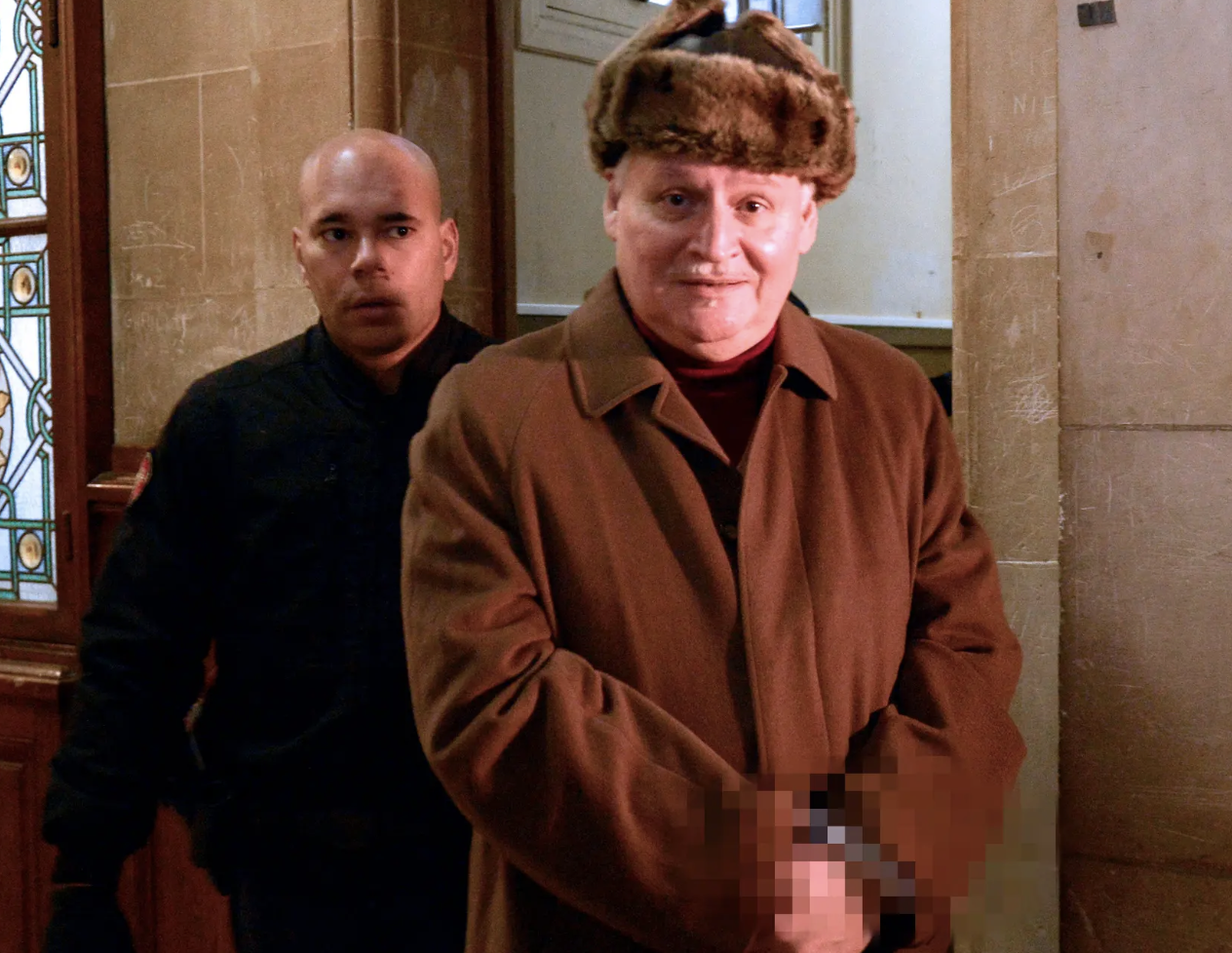
Carlos is now 76 years old and remains imprisoned in France.
The flamboyant young militant in the leather jacket and black beret has become an elderly prisoner living under the authority of the government he spent decades attacking.
Yet Warrick’s rare 2025 interview suggests prison has done little to change how Carlos views himself.
He continues making extraordinary claims about the number of people he killed.
He continues presenting himself as a revolutionary.
And according to Warrick, he expresses remarkably little remorse.
Perhaps the most disturbing remark described in the book concerns his capture.
Carlos reportedly told Warrick that his regret was not the violence that defined his career.
His regret was leaving people alive who could eventually help authorities find him.
The sentiment provides a disturbing conclusion to a life spent transforming violence into personal mythology.
The Victims Can Get Lost Behind the “Jackal” Myth
There is an uncomfortable problem with telling the story of Carlos the Jackal.
Carlos wanted this attention.
He cultivated the clothes, women, aliases and press coverage that turned him into an international celebrity.
Even the nickname “the Jackal” gave him exactly the kind of larger-than-life identity he enjoyed.
Popular culture followed.
Books, films and television productions repeatedly turned him into a mysterious criminal mastermind.
But behind that image were real victims.
The Austrian police officer killed at OPEC had a family.
The Iraqi employee and Libyan economist killed during the raid were not characters in Carlos’ mythology.
Neither were the people killed on French trains, inside shops or during other attacks attributed to his organization.
That distinction becomes particularly important as a new generation discovers the Carlos the Jackal true storythrough books, documentaries and streaming productions.
The fascinating part of Carlos’ story is not that terrorism made him glamorous.
It is that he understood how easily the media could make a terrorist famous.
Was Carlos Really the “World’s First Super-Terrorist”?
Scribner describes Carlos as the world’s first “super-terrorist,” while Warrick portrays him as one of the earliest examples of a borderless terrorist operator who deliberately combined international violence with media spectacle.
The term is descriptive rather than a formal historical category.
Carlos certainly did not invent terrorism.
Nor was he the first person to carry out international political violence.
What made him different was the combination.
He crossed borders constantly.
He worked with militant organizations and governments.
His operations unfolded across multiple continents.
He understood television.
He embraced celebrity.
And unlike many militants who tried to remain anonymous, Carlos seemed to enjoy seeing his photograph in newspapers.
That model would become increasingly familiar in the decades that followed.
He Once Crossed Paths With a Teenage Osama bin Laden
One of the strangest details reportedly uncovered in Warrick’s research involves another name that would eventually become synonymous with global terrorism.
According to the new book, Carlos was once evaluating wealthy Saudi targets at a Lebanese mountain resort during the 1970s when he observed members of the wealthy bin Laden family.
Among them was a teenager named Osama bin Laden.
There is no suggestion that the two men formed a partnership or that the young bin Laden participated in Carlos’ activities.
The encounter is notable because of what each would later represent.
Carlos belonged to the secular, Marxist-inspired revolutionary terrorism that dominated many headlines during the 1970s.
Bin Laden would eventually become the face of the religious extremist terrorism that reshaped international security decades later.
For a brief moment, according to Warrick’s account, their paths crossed before either could have known how infamous the younger man would become.
Fifty Years Later, the OPEC Raid Still Defines Him
Carlos participated in numerous attacks.
He spent years working for governments and militant organizations.
He evaded intelligence agencies for nearly two decades.
He ultimately received three life sentences.
Yet the image most closely associated with him remains that snowy December morning in Vienna.
Six people entering the headquarters of the world’s most powerful oil organization.
Gunfire.
Three people killed.
Dozens of hostages.
A hijacked international journey.
And a young terrorist declaring himself famous before most of the world had ever heard his name.
In one sense, Carlos was correct.
By the time the hostages returned home, practically everyone knew who he was.
But the mythology may have obscured the uglier truth.
Behind the tailored suits, expensive hotels, girlfriends and carefully cultivated outlaw image was a man repeatedly convicted of murders and bombings.
Joby Warrick’s The Jackal: The Rise and Fall of Carlos, the World’s First Super-Terrorist arrives August 18, promising new details from intelligence records and from Carlos himself.
Perhaps the most revealing conclusion is also the simplest.
The man who wanted to be remembered as an international revolutionary may have cared just as much about being remembered at all.
What do you think made Carlos the Jackal so difficult to capture for nearly two decades: his intelligence, protection from governments, Cold War politics, or the mythology that grew around him? And do you think documentaries and books about infamous terrorists risk giving them exactly the celebrity they wanted, or is examining their history necessary to understand how modern terrorism developed? Let us know what you think in the comments.