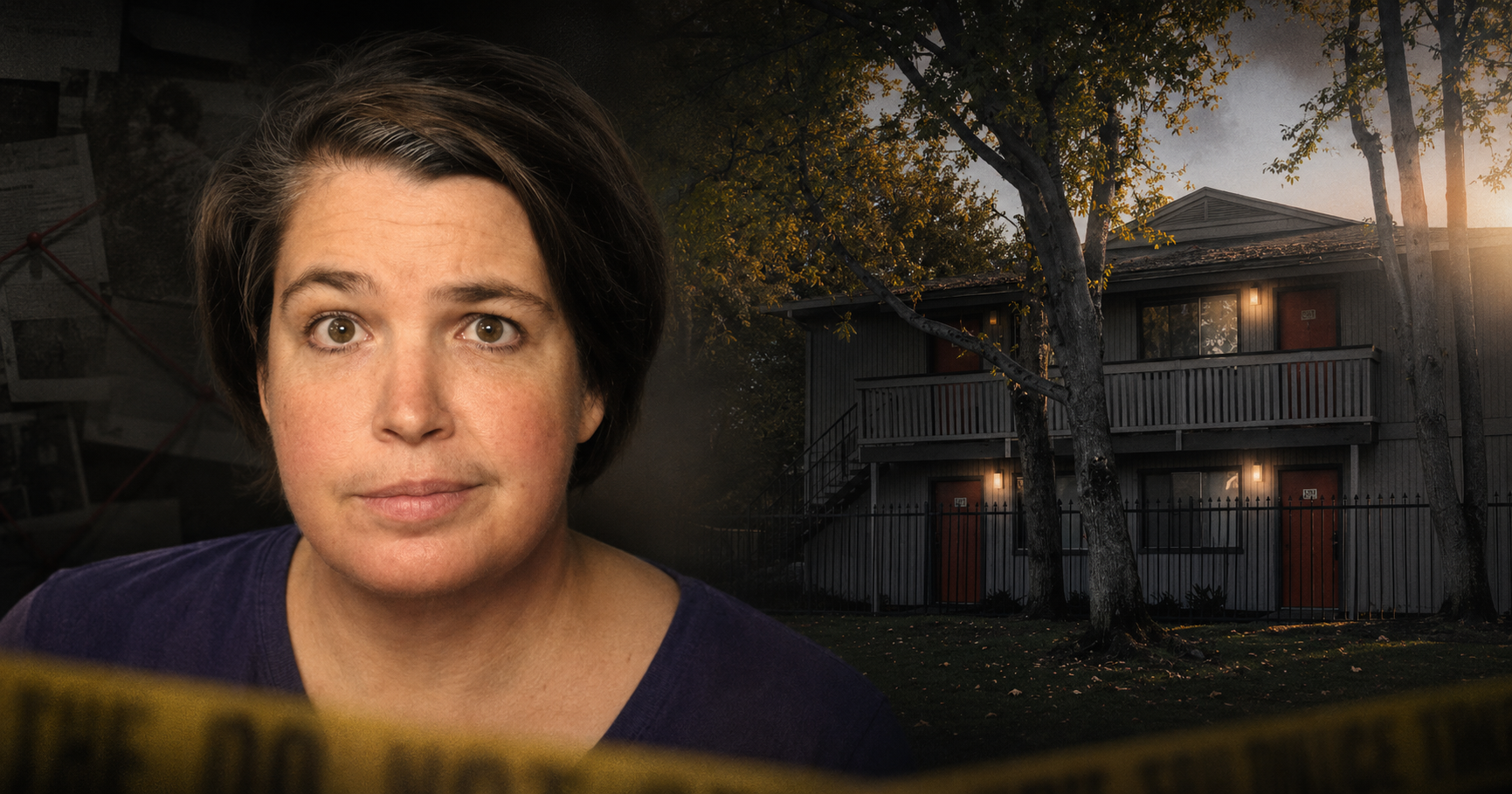
She Ran Barefoot and Handcuffed From a Serial Killer: How 17-Year-Old Cindy Paulson Brought Down Alaska’s “Butcher Baker”
Seventeen-year-old Cindy Paulson was shackled, bleeding and moments away from being flown into the Alaskan wilderness when she made a desperate run for her life. Her escape not only saved her, but also exposed Robert Hansen, the seemingly ordinary baker who admitted to murdering 17 women.
 Marie NovakMarie Novak is a crime news writer for Crimehowl, covering true crime, missing persons cases, court updates, and stories that leave communities searching for answers. She focuses on writing with empathy, clarity, and a deep respect for victims and their families while encouraging readers to think critically about the cases that shape the headlines.
PUBLISHED JUL 27, 2026 · 06:00 | 10 MIN READ | LONG READ | FILED UNDER SOLVED CASES
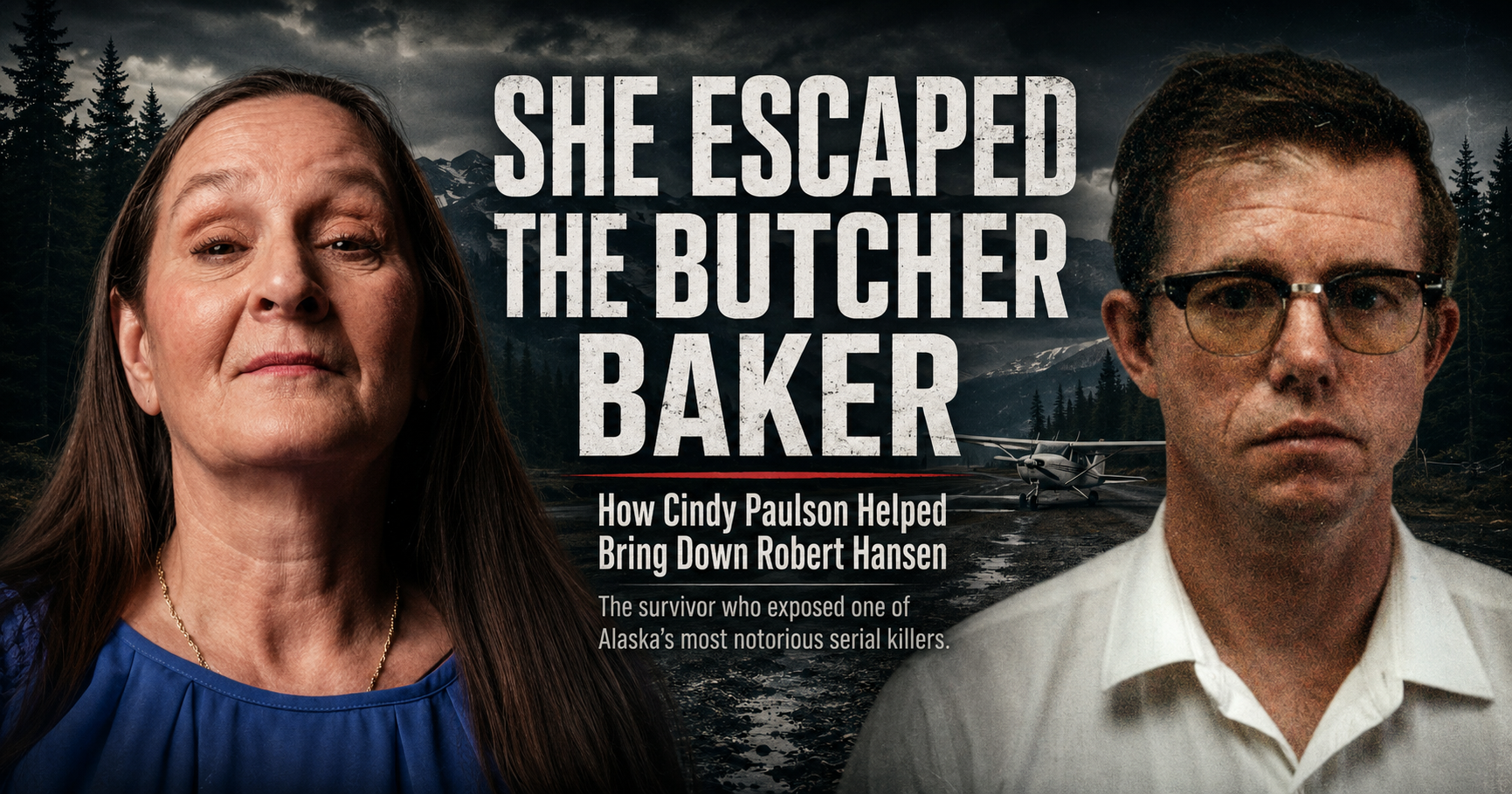
Content warning: This article discusses sexual assault, torture and murder.
More than four decades later, Cindy Paulson still cannot fully explain how she managed to open the back door of Robert Hansen’s Buick.
Her wrists were handcuffed. She was barefoot, bleeding and terrified. Nearby, Hansen was loading his private plane at Merrill Field in Anchorage, Alaska, preparing to take her into the remote wilderness.
Paulson was only 17 years old, but she understood exactly what was about to happen.
If she got on that plane, she would never return.
“I heard voices in my head telling me, ‘Run, bitch. Run,’” Paulson recalled years later.
On the morning of June 13, 1983, she somehow forced open the car door and ran across the gravel runway. Hansen, carrying a .357 Magnum, was not far behind her. Paulson sprinted toward a busy road and desperately waved down a passing pickup truck.
“This guy is trying to kill me,” she told the driver.
She was right. What Paulson did not yet know was that Hansen had already spent years abducting, sexually assaulting and murdering women across Alaska. Her decision to run would become the turning point in one of the most horrifying serial-murder investigations in American history.
The Ordinary Baker Hiding a Terrifying Secret
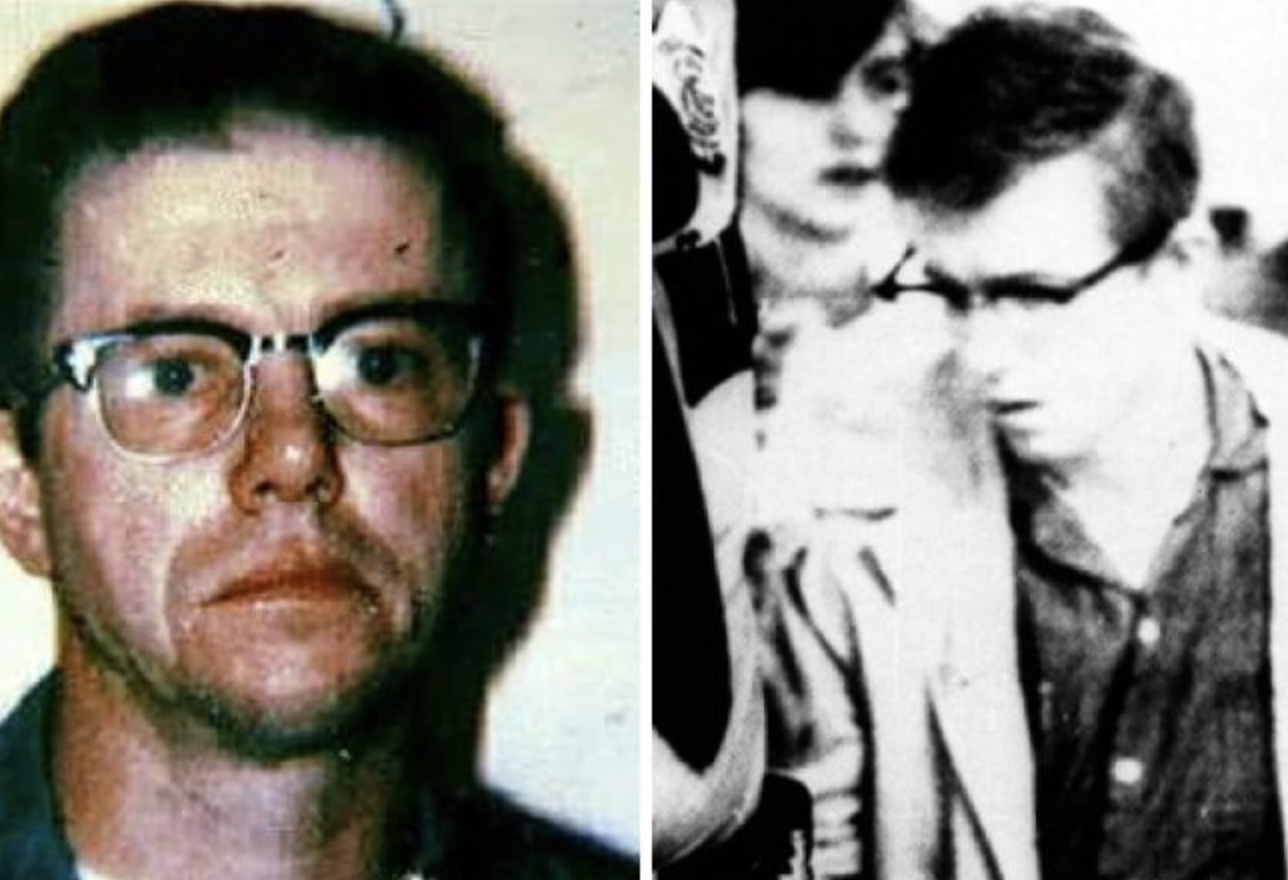
To many people in Anchorage, Robert Hansen did not look like a monster.
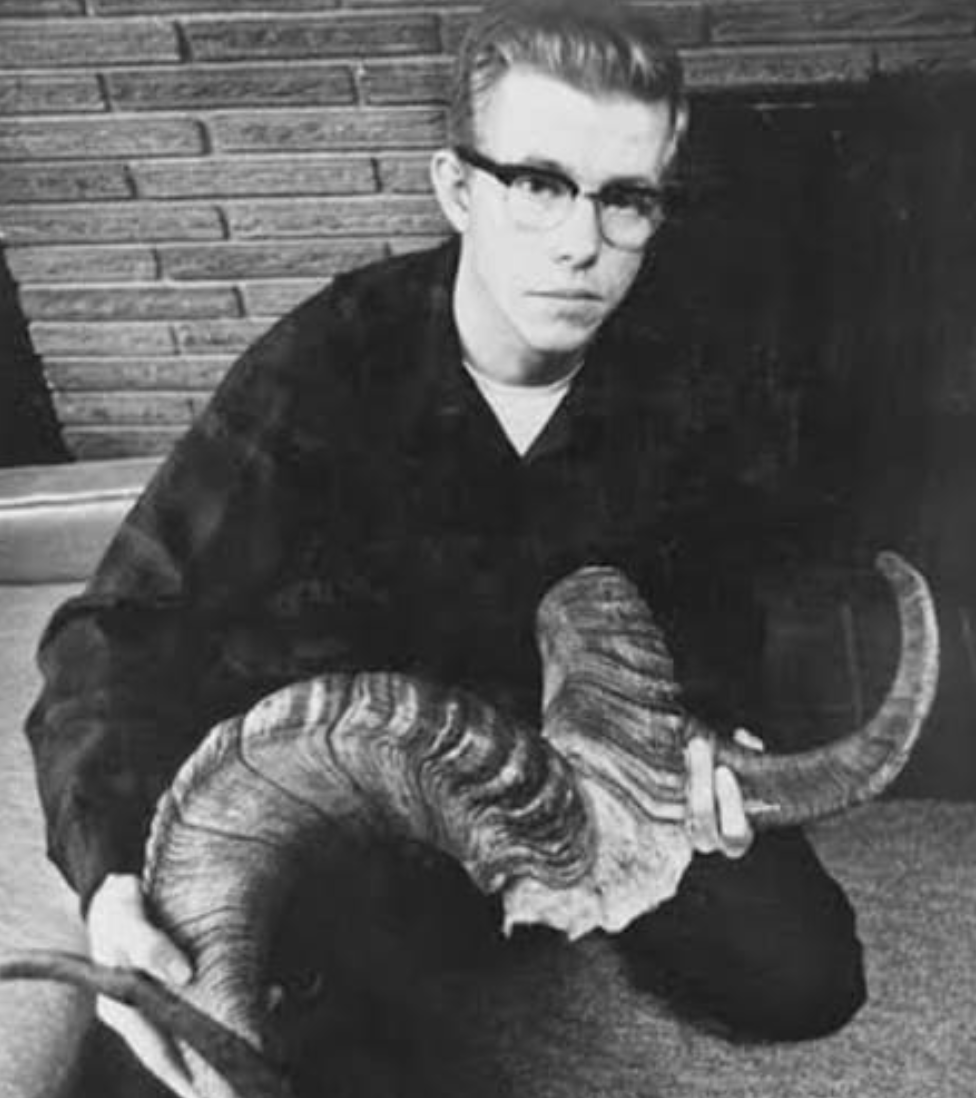
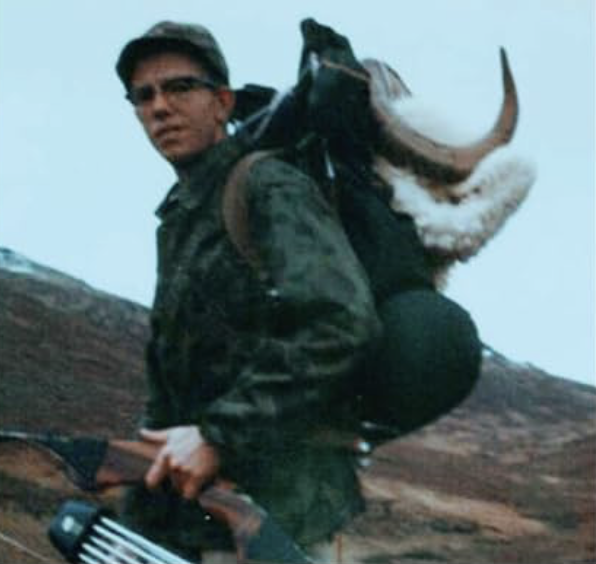
He was a husband, a father of two and the owner of a popular bakery. Police officers reportedly stopped at his business for coffee and doughnuts. He was also an experienced hunter, a licensed pilot and a respected outdoorsman who had earned recognition for his hunting abilities.
That ordinary public image concealed a violent criminal history.
Hansen had previous arrests involving abduction, sexual violence and theft before Paulson encountered him. In 1971, he was accused of abducting and attempting to rape one woman and sexually assaulting another. He ultimately served only a small portion of a five-year sentence after pleading to an assault charge in one of the cases. Years later, prosecutors noted that several murders connected to him occurred during a period when he might still have been incarcerated had he completed that sentence.
Behind his bakery-counter persona, Hansen was targeting women he believed society would be less likely to protect. Many were sex workers, dancers, teenage runaways or women living on the margins.
He would pick them up in Anchorage, overpower them and transport them to secluded locations. In some cases, he used his Piper Super Cub aircraft to reach remote areas that were nearly inaccessible by road.
Investigators determined that Hansen sometimes released his victims into the wilderness before pursuing them with a firearm or hunting knife. The women were not simply murdered. They were treated as human prey.
Women Were Disappearing Across Alaska
Anchorage was rapidly changing during the 1970s and early 1980s.
The Trans-Alaska Pipeline and North Slope oil boom brought thousands of workers and large amounts of money into the city. Nightclubs and adult-entertainment businesses flourished, and young women arrived from across the country hoping to make money.
Paulson was one of them.
She had experienced a painful family revelation as a child and began running away from home. By age 15, she was living in Anchorage and working in the sex trade. She later recalled that the money could be enormous, but so was the danger.
Women were vanishing from Anchorage’s streets, yet some were not immediately reported missing. Others received little public attention because they were sex workers or living unstable lives.
Bodies eventually began appearing in isolated areas.
In 1980, construction workers found the remains of a woman who became known as “Eklutna Annie.” Her identity remains unknown. The body of Joanna Messina was later discovered near Seward. In September 1982, off-duty Anchorage detective John Daily found the remains of 23-year-old dancer Sherry Morrow near the Knik River.
A .223-caliber cartridge casing was discovered close to Morrow’s body, providing investigators with a possible connection to the person responsible.
Authorities increasingly believed that someone was deliberately targeting women, but they did not yet know who the killer was or how many victims had disappeared.
The Night Cindy Paulson Met Robert Hansen
Paulson was working along an Anchorage street when Hansen approached her in June 1983.
He reportedly offered her $200 for oral sex. Nothing about his appearance immediately frightened her. He looked harmless, almost grandfatherly.
Instead of taking Paulson to the agreed location, Hansen drove her to his home on the outskirts of Anchorage. His wife and children were away visiting relatives, leaving the house empty.
Once inside, he pulled a gun, handcuffed Paulson and took her into his basement. Animal trophies covered the walls, grim evidence of Hansen’s obsession with hunting.
Paulson later said Hansen raped and tortured her before chaining her to a post. Throughout the ordeal, she prayed for a chance to survive.
Hansen told her he planned to fly her to a remote cabin, have sex with her again and then release her.
Paulson did not believe him.
She realized that the plane was not taking her to a cabin where she would eventually be freed. It was taking her to a place where no one would hear her scream and where her body might never be found.
The Escape That Changed Everything
Hansen eventually placed Paulson inside his car and drove her to Merrill Field.
While he loaded supplies into his plane, Paulson worked desperately to free herself from the vehicle. She had intentionally left her sneakers behind in Hansen’s car, hoping they would provide evidence if she reached the police.
When she finally managed to open the door, she ran.
A driver named Robert Yount saw the terrified teenager and stopped. Paulson was still handcuffed and visibly injured. He helped her reach safety and contacted authorities.
A security guard at the airfield had also noticed suspicious activity and recorded information connected to Hansen’s vehicle. That independent observation helped support Paulson’s account.
She gave investigators an extraordinarily detailed description of her attacker, his house, the basement, his car and the aircraft. She identified the location of his home from the air and reportedly picked Hansen out of a photographic lineup.
Yet her story was not immediately enough to put him behind bars.
Hansen denied everything. He portrayed Paulson as a sex worker attempting to cause trouble because of a payment dispute. A friend also supplied him with an alibi.
His reputation as a quiet baker and family man appeared more credible to some investigators than the account of a traumatized teenage sex worker.
Hansen was released.
That decision could have ended Paulson’s involvement in the case. Instead, the details she provided remained in the investigative file and would soon become impossible to ignore.
A Psychological Profile Pointed Back to Hansen
As more women were discovered dead, Alaska State Trooper Glenn Flothe began looking for connections among the cases.
Flothe sought assistance from FBI behavioral specialist John Douglas. Based on the available crime-scene information, Douglas developed a profile suggesting that the killer was likely an experienced hunter who understood the Alaskan wilderness, had difficulty with women, might have a speech impediment and could keep jewelry or other items as souvenirs.
Hansen fit many elements of the profile.
He was an accomplished hunter. He owned a plane. He had a stutter and a documented history of violence toward women. Most importantly, he had been accused by Paulson of nearly carrying out the exact type of abduction investigators now believed was connected to the murders.
The profile did not prove Hansen was guilty, but combined with Paulson’s account and the continuing discovery of bodies, it gave investigators a clearer direction.
The Evidence Hidden Inside Hansen’s Home
In September 1983, the body of 30-year-old Paula Goulding was discovered near the Knik River. She had been shot with a .223-caliber weapon.
The investigation intensified.
On October 27, authorities searched Hansen’s home, vehicles and aircraft. What they found transformed Paulson’s horrifying accusation into a serial-murder case.
Investigators discovered jewelry belonging to missing or murdered women. They found firearms, including a .223-caliber rifle linked through ballistics evidence to the killings. They also recovered an aviation map marked with numerous locations throughout the Alaskan wilderness.
Many of those markings corresponded with places where bodies had already been discovered. Others pointed investigators toward remains that had not yet been found.
The trophies and souvenirs predicted by the behavioral profile were there. The weapon was there. The map was there.
And Paulson’s sneakers were still inside Hansen’s car.
The teenage survivor had deliberately left behind the evidence that helped prove she had been telling the truth.
Hansen Admitted to Killing 17 Women
Faced with mounting physical evidence, Hansen initially continued to deny responsibility.
He eventually entered a plea agreement and pleaded guilty in 1984 to the murders of Sherry Morrow, Joanna Messina, Paula Goulding and the unidentified woman known as Eklutna Annie. He was also held responsible for abducting and raping Paulson.
Although he was convicted of four murders, Hansen admitted killing 17 women and sexually assaulting more than 30.
As part of the agreement, he helped authorities interpret markings on his aviation map and led investigators to several burial locations. However, not every woman connected to Hansen was found, and questions remain about whether the true number of victims was higher than he admitted.
He was sentenced to 461 years in prison without the possibility of parole. Hansen spent decades incarcerated before dying at Alaska Regional Hospital on August 21, 2014. He was 75 and had reportedly been experiencing declining health.
The Women Behind the Number
True-crime stories often reduce victims to statistics.
Seventeen women murdered.
More than 30 women sexually assaulted.
Numerous burial sites.
But each number represented a person with a name, a family and a life that mattered. Among the women Hansen admitted killing were Sherry Morrow, Joanna Messina, Paula Goulding, Sue Luna and Tami Pederson. Others remain unidentified or missing.
Some women may never be recovered from the vast Alaskan wilderness.
The case also raises difficult questions about whose reports are believed and whose disappearances are treated as urgent. Hansen repeatedly targeted women he believed could be discredited. Paulson’s occupation and troubled life were used against her when she first reported what had happened.
Her account was detailed. Her injuries were visible. She was still wearing handcuffs.
Yet Hansen’s appearance as a married businessman with a bakery and a family initially helped him avoid immediate consequences.
Had investigators fully dismissed Paulson, Hansen could have continued killing.
Cindy Paulson Reclaimed the Life Hansen Tried to Take
Paulson lived for years fearing that Hansen might arrange for someone to harm her.
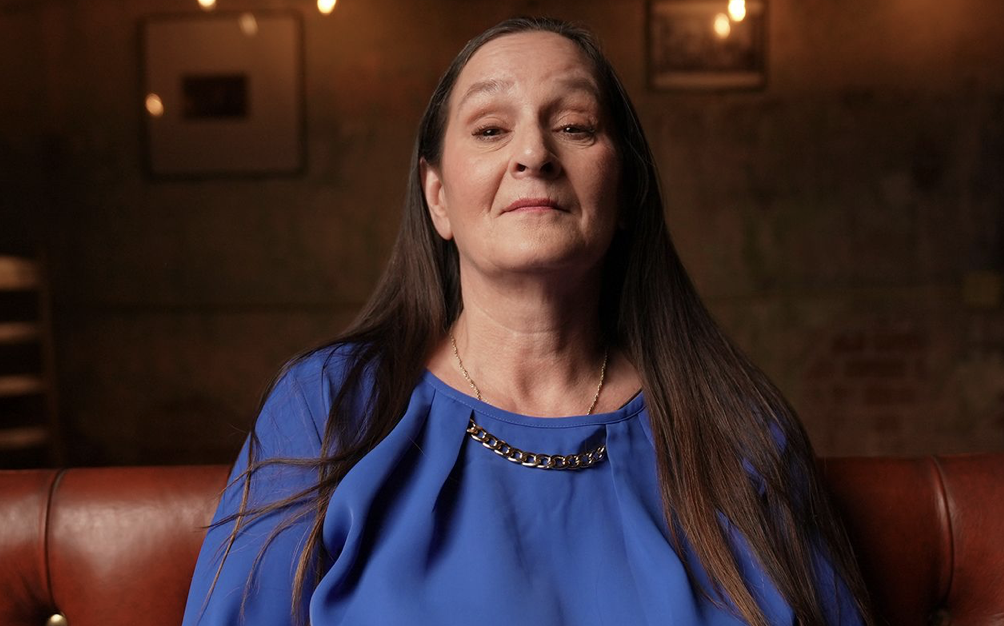
His death in 2014 finally gave her a sense of relief. Since surviving the attack, she has become a mother of three sons and a grandmother. She has also spoken publicly about addiction, recovery and rebuilding her life.
Paulson recently shared that she has been clean and sober for 10 years and now regularly sees her children and grandchildren. She no longer views herself solely as a frightened teenager running barefoot from an armed man.
She understands that she stopped him.
“Somebody had to make him stop,” Paulson said. “I was that somebody.”
Her story is featured in “Surviving the Butcher Baker,” the second-season premiere of People Magazine Investigates: Surviving a Serial Killer. The episode aired June 2, 2026, on Investigation Discovery and is available to stream on HBO Max.
She Was Never “Just” a Runaway
Cindy Paulson survived because she trusted the warning inside her head, found an opening and ran even though she was barefoot, bleeding and restrained.
She survived because a stranger stopped his truck.
She helped expose Hansen because she remembered the details, left evidence behind and kept telling the truth even when the man who attacked her was initially treated as more believable.
Paulson’s life was nearly reduced to another mark on Hansen’s map. Instead, she became the witness who helped detectives understand what had been happening to women across Alaska.
Her survival did not erase the damage Hansen caused, and it could not return the women he murdered to their families. But her courage ended his freedom and may have prevented countless future attacks.
For years, Hansen depended on society looking away from women like Paulson.
He underestimated what would happen when one of those women escaped and refused to remain silent.
What do you think finally brought Robert Hansen down: Cindy Paulson’s incredible courage, the physical evidence she deliberately left behind, or the investigators who eventually recognized that she had been telling the truth all along? And why do you think her accusations were not taken seriously enough when she first came forward?