They Called It a “Satanic” Murder. He Spent 22 Years in Prison — Now He’s Won $24M and the Killer Is Still Unknown
Jeffrey Clark spent more than 22 years in prison for a Kentucky murder prosecutors once described as “satanic.” Now, after DNA testing helped overturn his conviction and a jury awarded him more than $24 million, the case remains deeply unsettling for another reason: Rhonda Sue Warford’s real killer has still never been convicted.
 Marie NovakMarie Novak is a crime news writer for Crimehowl, covering true crime, missing persons cases, court updates, and stories that leave communities searching for answers. She focuses on writing with empathy, clarity, and a deep respect for victims and their families while encouraging readers to think critically about the cases that shape the headlines.
PUBLISHED JUN 22, 2026 · 18:41 | 4 MIN READ | FILED UNDER UNSOLVED CASES
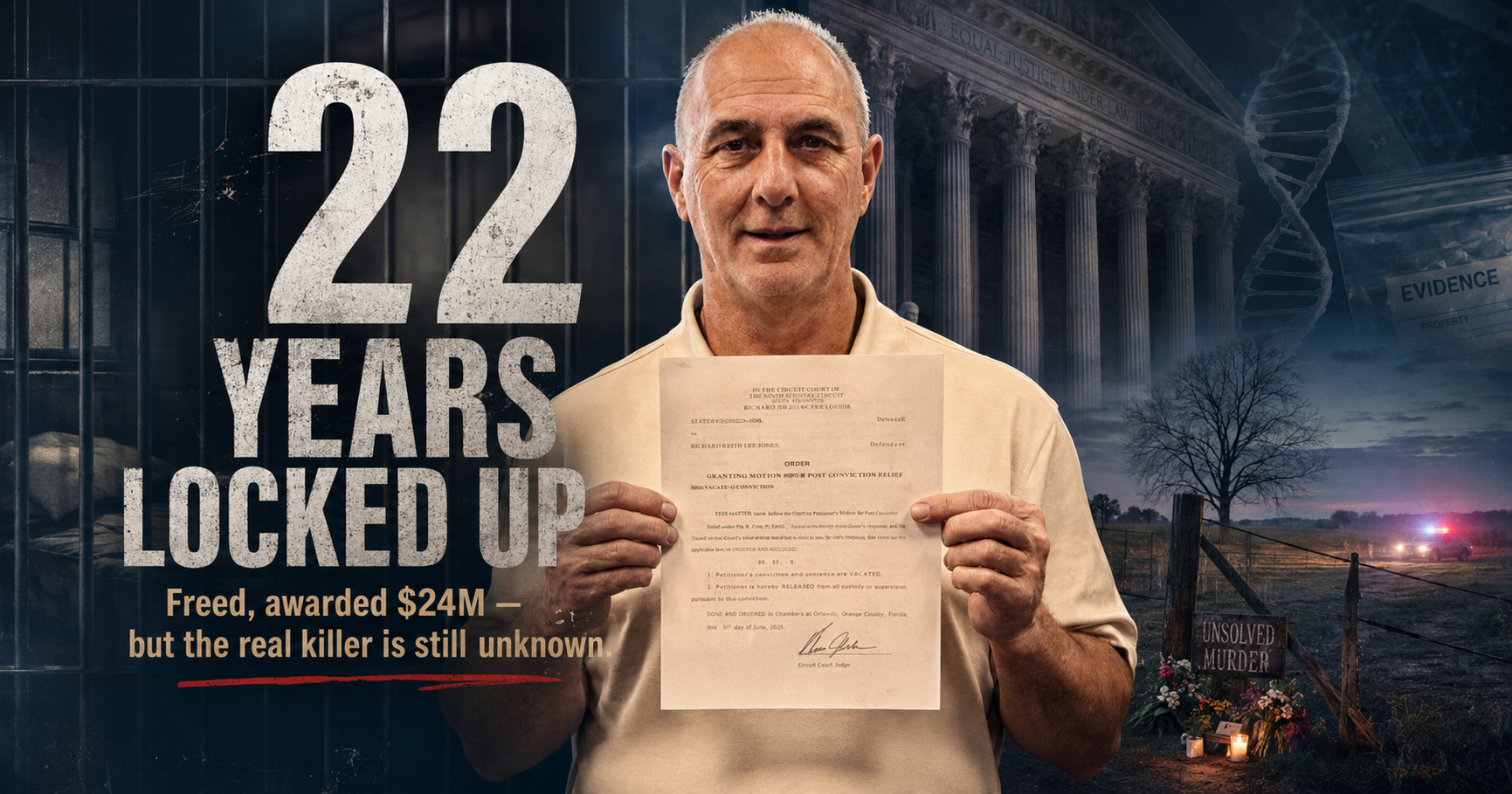
A Kentucky man who spent more than two decades in prison for a murder he always said he did not commit has now been awarded more than $24 million.
But the case is far from over.
Jeffrey Clark was only 21 years old when he and his friend, Keith Hardin, were convicted in the 1992 murder of 19-year-old Rhonda Sue Warford. Warford had disappeared from her Louisville home, and days later, her body was found in a field in Meade County.

At the time, prosecutors pushed a disturbing theory. They argued that Warford’s killing was connected to some kind of “satanic” or ritualistic motive.
That claim became one of the most shocking parts of the case. It also became one of the most heavily disputed.
Clark spent more than 22 years behind bars before new DNA testing helped unravel key parts of the prosecution’s case. His conviction was vacated in 2016, and the charges against him were formally dismissed in 2018.
After a civil jury awarded him millions, Clark said he finally felt like he was waking up from a “34-year nightmare.”
And honestly, it is hard to read this case without asking the same question over and over again: how does someone lose more than 20 years of their life if the evidence was not as solid as the jury was led to believe?
According to Clark’s lawsuit, investigators built the case against him through misconduct, including fabricated statements, pressured witnesses, and evidence that was allegedly withheld from the defense.
The lawsuit claimed detectives attributed statements to Hardin that suggested the killing had a ritualistic motive, even though Clark’s legal team argued there was no independent evidence to support that theory.
That matters because once a case gets labeled as “satanic,” “ritualistic,” or tied to some kind of dark motive, it can change the way the public, the jury, and even investigators view the people accused. Instead of looking only at the physical evidence, the story itself can become powerful.
And in this case, Clark’s legal team argued that the story was deeply flawed.
Another major issue involved testimony from a jailhouse informant. According to the lawsuit, the informant received benefits in exchange for cooperating, but information that could have hurt his credibility was allegedly not properly disclosed.
An ex-girlfriend’s testimony was also challenged. She had portrayed Clark as someone involved in satanic practices, but the lawsuit alleged her statements conflicted with earlier accounts.
Then there was the forensic evidence.
The Innocence Project later became involved in the case and said newer DNA testing discredited important parts of the original prosecution theory. Hair evidence that had been presented at trial as consistent with Hardin was later found not to belong to Hardin, Clark, or Warford.
Additional testing also showed that blood found on a handkerchief belonged to Hardin, which was consistent with his own account at trial, rather than proof of some ritualistic activity.
Clark’s legal team also pointed to another troubling part of the investigation: authorities allegedly failed to fully pursue another potential suspect who had reportedly confessed to the killing.
On top of that, the lead detective in the original case was later convicted in an unrelated matter involving perjury and evidence tampering. For Clark’s attorneys, that raised even more questions about the reliability of the investigation that sent him to prison.
The timeline of Warford’s death also became a major issue.
According to the lawsuit, investigators initially believed Warford was killed days after she disappeared. Clark and Hardin reportedly had alibis for that timeframe. But the lawsuit alleged authorities later shifted the timeline to an earlier window that better fit their case against the two men.
That is the kind of detail that makes wrongful conviction cases so unsettling. When the timeline changes, when witness statements are challenged, when forensic evidence is later undermined, and when another possible suspect is not fully pursued, it raises serious questions about how the case was handled from the beginning.
A jury ultimately sided with Clark in his civil lawsuit and awarded him $24.35 million in compensatory damages, along with additional punitive damages.
Meade County officials said the verdict is under review and that they are evaluating their next steps.
But even with the massive award, this case does not have a clean ending.
Rhonda Sue Warford was murdered in 1992. Jeffrey Clark lost more than two decades of his life in prison. Keith Hardin was also convicted in the same case. And after all these years, no one else has been convicted of Warford’s killing.
That means the central question still remains unanswered.
Who killed Rhonda Sue Warford?
This case is about more than one wrongful conviction claim. It is about how quickly a sensational theory can take over a murder investigation. It is about what happens when witnesses, forensic evidence, and police work are later called into question. And it is about the painful reality that even when a conviction is overturned, the victim’s family may still be left without the truth.
Do you think cases built around sensational claims like “satanic” motives should face extra scrutiny in court? And if someone spends decades in prison for a conviction later thrown out, is any amount of money ever enough?