LA Gang Accused of Branding Women and Trafficking Girls as Young as 14 on “The Blade”
Los Angeles authorities say Operation Broken Blade exposed a violent sex trafficking network tied to the Hoover Criminals gang along the Figueroa Corridor, known locally as “the Blade.” Prosecutors allege victims, including girls as young as 14, were branded, beaten, threatened, and forced into commercial sex as officials continue identifying victims and pursuing more arrests.
 Marie NovakMarie Novak is a crime news writer for Crimehowl, covering true crime, missing persons cases, court updates, and stories that leave communities searching for answers. She focuses on writing with empathy, clarity, and a deep respect for victims and their families while encouraging readers to think critically about the cases that shape the headlines.
PUBLISHED JUL 06, 2026 · 06:00 | 4 MIN READ | FILED UNDER CURRENT CRIMES
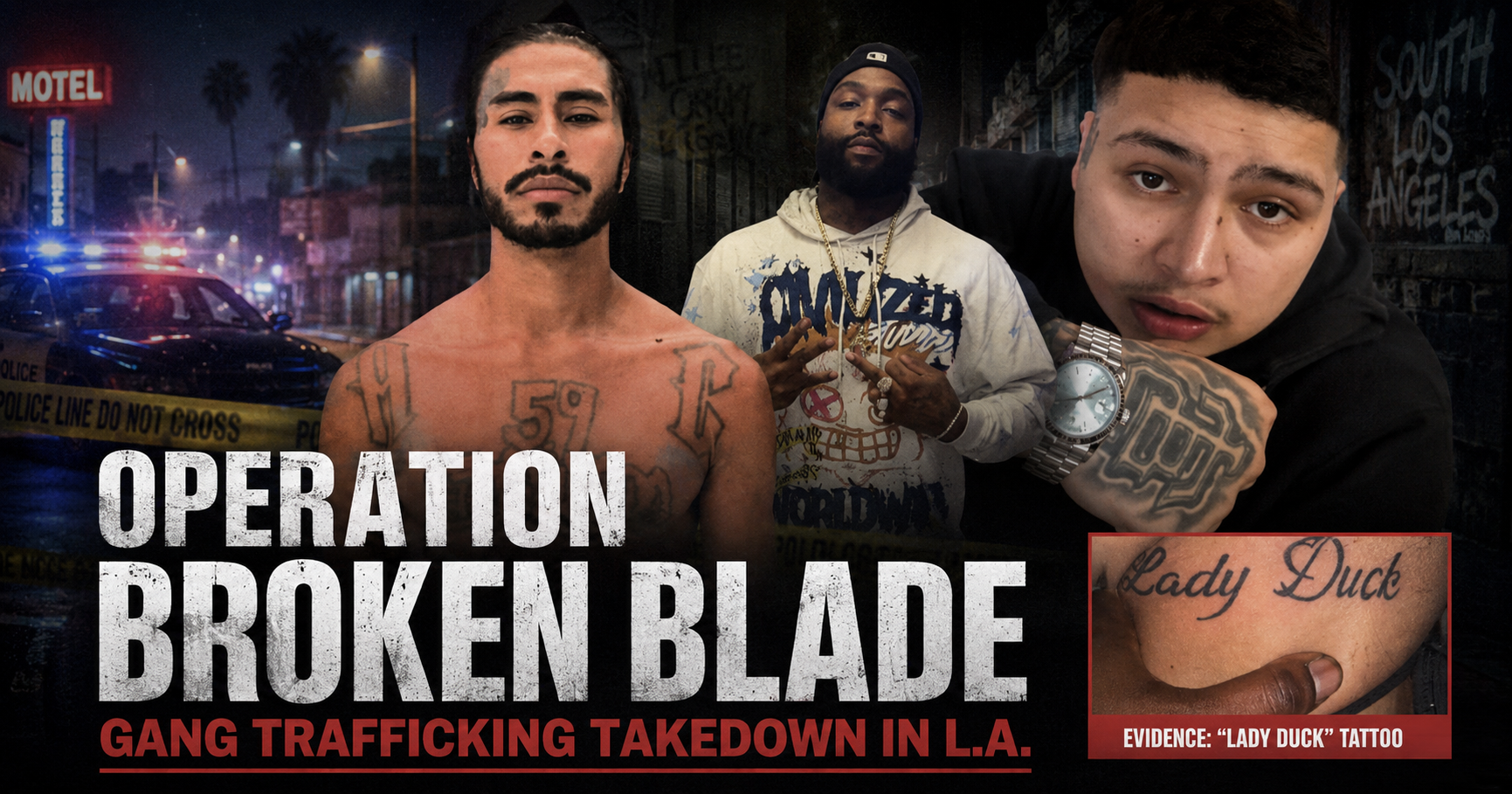
Authorities in Los Angeles say a major gang takedown has exposed a horrifying sex trafficking operation where women and girls were allegedly branded, beaten, threatened, and forced to sell sex along one of the city’s most notorious corridors.
The investigation, called Operation Broken Blade, targeted alleged members and associates of the Hoover Criminals gang, a powerful Los Angeles street gang accused of controlling prostitution activity along the Figueroa Corridor in South Los Angeles.
The area is known locally as “the Blade,” a stretch of road long associated with commercial sex activity, exploitation, and violence.
According to police and prosecutors, the alleged operation was not simply about prostitution. Authorities say it involved coercion, violence, intimidation, addiction, and psychological control over vulnerable women and girls, some as young as 14.
Los Angeles prosecutor Bill Essayli said traffickers used coercion first, then violence, to maintain control.
“It’s horrific,” he said.
Authorities Say Vulnerable Girls Were Targeted
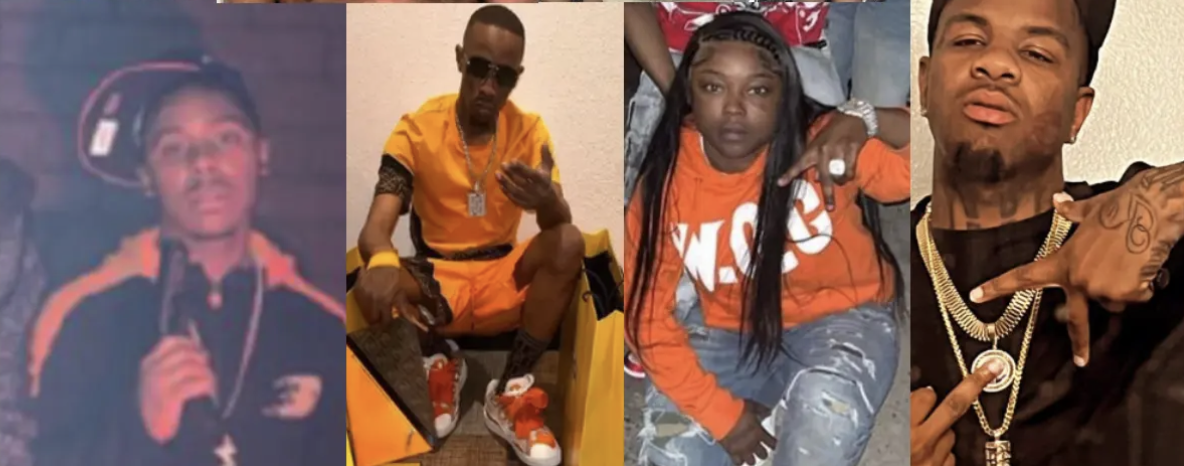
LAPD Chief Jim McDonnell said the Hoover gang allegedly preyed on victims who had little or no support.
According to authorities, traffickers targeted young people from unstable homes and foster care, luring them with promises of money, expensive clothing, affection, shelter, and protection.
Then, police say, those promises turned into control.
“They lure young children with promises of money, expensive clothes, affection, and a place to sleep,” McDonnell said. “Then they trap them through violence, intimidation, addiction, and fear.”
That is one of the most disturbing parts of this case. Trafficking does not always begin with a stranger grabbing someone off the street. Sometimes, according to investigators, it begins with someone pretending to offer love, safety, or a way out.
For vulnerable teens, especially those without stable family protection, that kind of manipulation can be incredibly dangerous.
Branding, Beatings, and Control
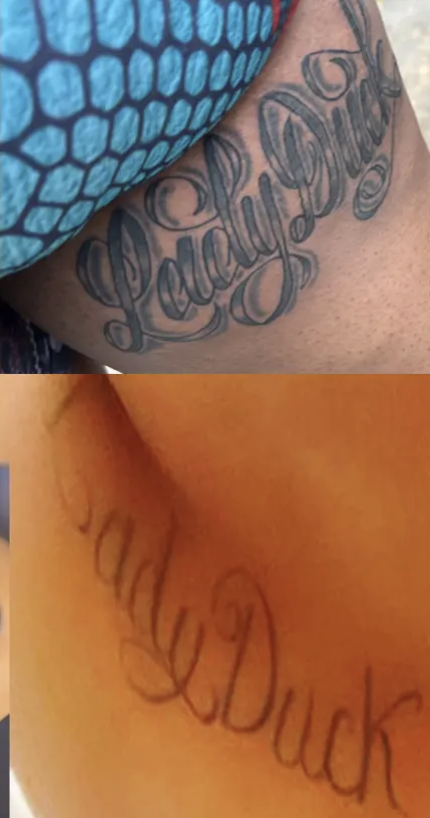
Prosecutors say some victims were branded with tattoos showing the names or nicknames of their alleged traffickers.
One accused Hoover-linked trafficker, Amaya Armstead, known as “Lady Duck,” allegedly had her nickname tattooed on several victims. Authorities described that as a method of ownership and control.
Eddy Wang, Special Agent in Charge for Homeland Security Investigations Los Angeles, said branding victims was a way for traffickers to mark them as property and signal who was profiting from them.
The alleged physical violence described in court documents is just as disturbing.
Authorities accused one alleged Hoover pimp, Cameron Lockett, of beating victims and biting a chunk from one girl’s cheek so severely that she needed stitches. According to court papers, Lockett allegedly gave the victim a Percocet, sent her to the emergency room, then took a photo of the wound and texted it to another alleged gang member.
Essayli said the wound went down to the cartilage.
In another case, authorities alleged that Caleed Mouton forced a 16-year-old girl to get an abortion, then ordered her to engage in commercial sex the same day afterward, threatening to “fire” her if she refused.
These allegations show why prosecutors are describing the operation as a violent trafficking conspiracy rather than simply street-level prostitution.
The Hoover Criminals and the Figueroa Corridor
The Hoover Criminals gang has been active in Los Angeles for decades. Authorities say the gang originated in the late 1960s and early 1970s and became more powerful during the crack epidemic of the 1980s.
Over time, officials say the group expanded into multiple criminal enterprises, including narcotics and prostitution.
In the Figueroa Corridor, prosecutors allege Hoover-linked traffickers controlled victims who were forced to walk the sidewalks, attract buyers, and bring money back to their exploiters.
Authorities also said some motels along the corridor were used as part of the sex trade, with sex buyers allegedly directed to rooms where trafficked victims were exploited.
What makes this especially hard to read is the age of some of the alleged victims.
Court documents reportedly describe girls as young as 14 being trafficked.
At that age, a child should be worrying about school, friends, and family, not being manipulated by adults, controlled by gang members, or forced into sexual exploitation.

Operation Broken Blade
According to prosecutors, 25 alleged sex traffickers have been arrested and charged as part of Operation Broken Blade, with more arrests expected.
Officials said at least 50 victims have been identified so far.
Essayli said investigators are not done.
“We’re not gonna stop,” he said.
That matters because trafficking cases are often much larger than the first round of arrests. Victims may be afraid to speak. Evidence can take time to gather. And people involved in the operation may still be unidentified.
Authorities say the goal is not only to arrest traffickers, but also to locate victims and get them help.
The Bigger Question
This case raises a question Los Angeles has been wrestling with for years: how does a corridor become so openly associated with exploitation that children can allegedly be trafficked there in plain sight?
If prosecutors are right, this was not hidden deep underground. It was happening along sidewalks, in motels, and in a known area of the city.
That should concern everyone.
Sex trafficking thrives when victims are isolated, buyers are enabled, and traffickers believe no one will stop them. It also thrives when vulnerable children are seen as disposable instead of protected.
Now, with Operation Broken Blade, authorities say they are trying to dismantle part of that system.
But the real test will be what happens next.
Will victims receive long-term support? Will buyers and enablers face consequences? Will motels and businesses accused of turning a blind eye be investigated? And will the city keep pressure on traffickers once the headlines fade?
What do you think needs to happen to truly shut down trafficking on places like the Figueroa Corridor; more arrests, more victim services, harsher penalties for buyers, or all of the above?