He Admitted “Mistakes Outside My Marriage”—Then a Woman Told House Ethics His Conduct Wasn’t Consensual
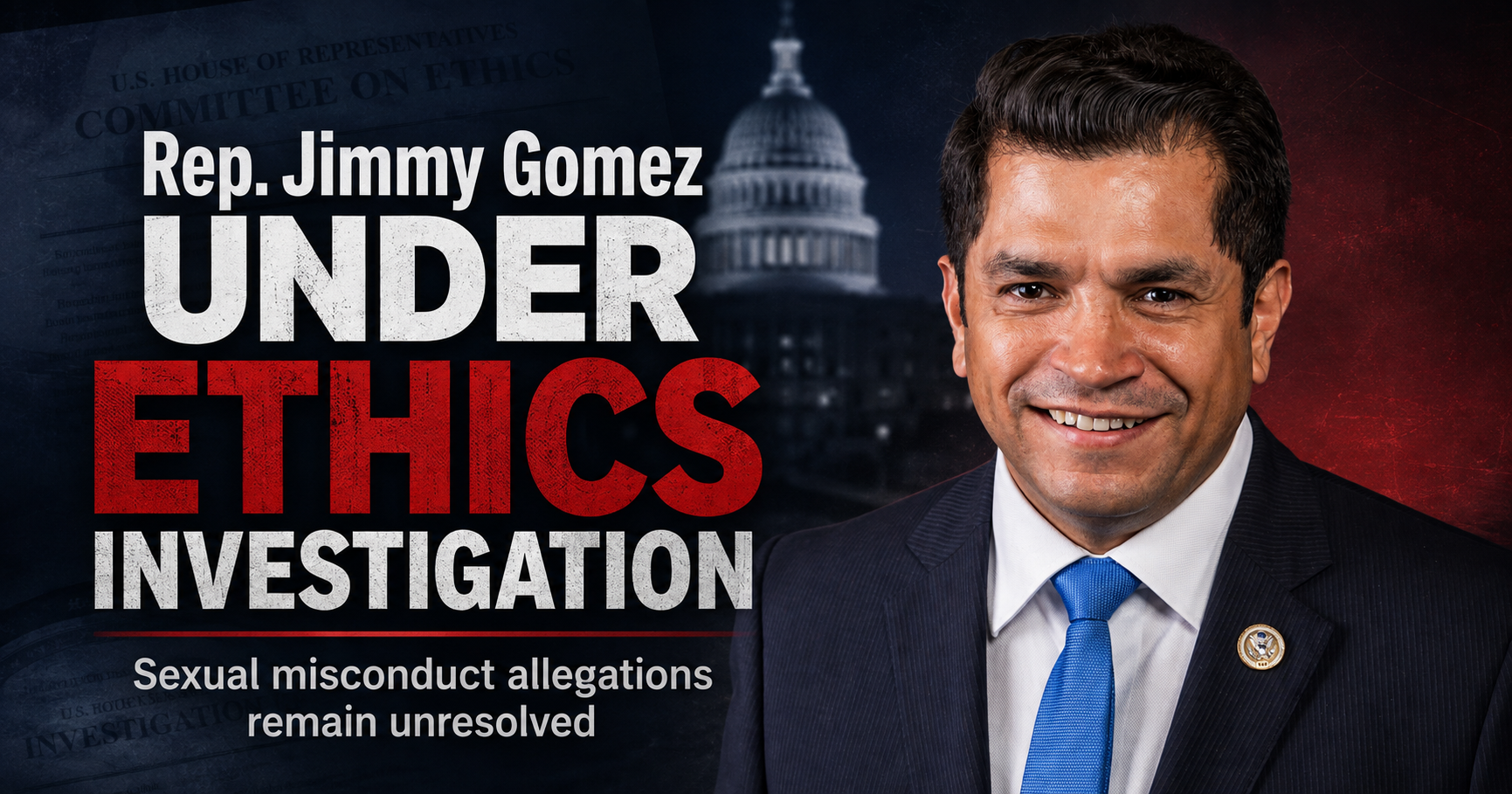
California Rep. Jimmy Gomez acknowledged making “personal mistakes” outside his marriage while insisting every encounter was consensual. Days later, attorneys for an unnamed woman said she told House Ethics investigators that Gomez sexually harassed and assaulted her. Now the five-term Los Angeles congressman is facing a formal ethics investigation, growing political fallout and an unresolved scandal just months before voters decide whether to send him back to Congress.
 Marie NovakMarie Novak is a crime news writer for Crimehowl, covering true crime, missing persons cases, court updates, and stories that leave communities searching for answers. She focuses on writing with empathy, clarity, and a deep respect for victims and their families while encouraging readers to think critically about the cases that shape the headlines.
PUBLISHED SEP 02, 2026 · 15:30 | 13 MIN READ | LONG READ | FILED UNDER POLITICAL CRIME
***Content warning: This article discusses allegations of sexual harassment and sexual assault.
For months, California Rep. Jimmy Gomez tried to draw a line between infidelity and misconduct.
The married Democratic congressman acknowledged that he had made what he called “personal mistakes outside my marriage,” apologized to his wife and family and said he had sought professional help to repair the damage.
But Gomez was equally clear about something else.
Whatever mistakes he made, he insisted, the sexual encounters were consensual.
Then an unnamed woman who had already spoken with House investigators publicly challenged that account.
Her attorneys say their client told the House Committee on Ethics that she experienced both sexual harassment and sexual assault by Rep. Jimmy Gomez and that, contrary to Gomez’s statement, his conduct toward her was not consensual.
That allegation has transformed what initially appeared to be a Washington story about an extramarital relationship into something far more serious.
On August 17, 2026, the bipartisan House Ethics Committee formally announced that it was investigating whether Gomez engaged in sexual misconduct, specifically including allegations of “inappropriate sexual contact with a House staffer.” The committee emphasized that opening an investigation does not mean Gomez violated any rule or committed any crime.
As of September 2, the Jimmy Gomez sexual misconduct investigation remains unresolved. Gomez has not been criminally charged, the anonymous woman’s allegations have not been proven in court, and the Ethics Committee has not announced any findings against him.
But the controversy has already created political consequences and the timing could hardly be worse for a congressman facing voters in November.
The Jimmy Gomez Scandal Began With an Alleged Kiss
The public controversy surrounding Gomez dates back to April.
The New York Post reported that witnesses claimed Gomez had been seen during the summer of 2023 kissing a considerably younger congressional staff member who worked for another House office.
The alleged encounter reportedly occurred near a party hosted by then-Rep. Eric Swalwell celebrating the beginning of the August congressional recess.
One source described seeing Gomez and the woman kissing near a vehicle.
At the time, a representative for Gomez denied the incident entirely, saying the account was “not true” and that it “didn’t happen.”
If that had been the end of the story, it might have remained another Washington rumor.
It wasn’t.
While looking into the 2023 allegation, House ethics investigators reportedly became aware of additional sexual misconduct allegations involving Gomez.
CNN reported in June that the committee had begun making inquiries, although the Ethics Committee itself did not publicly confirm its investigation until August.
That was when Gomez’s explanation changed.
He no longer simply denied that anything had happened.
Instead, he acknowledged that he had been unfaithful.
Gomez Admitted “Personal Mistakes Outside My Marriage”
When reports of the ethics inquiry emerged, Gomez issued a statement acknowledging behavior that had hurt his family.
“Years ago, I made personal mistakes outside my marriage,” Gomez said.
He maintained, however, that those actions were consensual and did not violate the law or House rules.
Gomez said he took responsibility for the pain caused to the people closest to him and had sought professional assistance while working to repair his family relationships.
He also apologized specifically to his wife.
“I am deeply sorry to my wife for the pain and embarrassment that I have brought into our lives,” Gomez said in a longer statement following the formal announcement of the ethics probe. He said he was prepared to cooperate fully and provide investigators with whatever information they requested.
That response appeared designed to separate two very different issues.
Gomez was essentially admitting adultery while denying misconduct.
Having an extramarital affair may be personally devastating, but it is not automatically illegal or a violation of House ethics rules.
Sexual assault or unwelcome sexual conduct involving a congressional employee would be another matter entirely.
Two days after the Ethics Committee announced its investigation, that distinction became the heart of the controversy.
An Unnamed Woman Says Gomez’s Conduct Was Not Consensual
On August 19, attorneys Lisa J. Banks and Sarah E. Nesbitt revealed that one of their clients had already been interviewed by the House Ethics Committee.
They did not publicly identify the woman.
They also did not provide detailed allegations describing exactly when or where the alleged conduct occurred.
What they did say was significant.
“We represent one of the women who was interviewed by the House Committee on Ethics about her experience of sexual harassment and assault by Representative Jimmy Gomez,” the attorneys said.
They specifically disputed Gomez’s assertion that his conduct had been consensual, saying that was not true when it came to their client.
The attorneys said they expected the House Ethics Committee to reach the same conclusion after completing its investigation.
CBS News and CNN both noted that they had not independently verified the woman’s accusations.
That is important.
The attorneys’ statement is an allegation, not an official finding of fact.
Gomez has not been charged with sexual assault, and it remains unclear whether law enforcement is conducting a separate criminal investigation.
It is also not publicly known whether the woman represented by Banks and Nesbitt is the same staff member connected to the reported 2023 incident.
CNN reported that Gomez did not immediately respond to the attorneys’ new allegations.

What Exactly Is the House Ethics Committee Investigating?
The official wording from the House Ethics Committee is carefully constructed.
On August 17, Chairman Michael Guest, a Mississippi Republican, and ranking Democratic member Mark DeSaulnier of California announced that the committee was reviewing allegations that Gomez “may have engaged in sexual misconduct” in violation of the House Code of Official Conduct or other applicable standards.
The statement specifically referenced allegations of “inappropriate sexual contact with a House staffer” under Clause 18(b) of House Rule 23.
That rule matters.
House Rule 23, Clause 18(b), states that a member, officer or employee of the House may not engage in unwelcome sexual advances or conduct toward another House member, officer or employee.
A separate subsection prohibits members from having sexual relationships with employees who work directly under their supervision or employees of committees on which they serve.
That creates an important distinction in the Gomez case.
A consensual relationship between Gomez and someone working for an entirely different congressional office might not automatically violate the House rule prohibiting relationships with subordinates.
But if investigators conclude that sexual conduct toward a House employee was unwelcome, the situation would potentially fall directly under Clause 18(b).
That appears to be one of the issues investigators are now trying to resolve.
The Ethics Committee Says an Investigation Does Not Mean Gomez Is Guilty
The committee included a warning in its announcement that deserves emphasis.
“The mere fact that it is investigating these allegations, and publicly disclosing its review, does not itself indicate that any violation has occurred,” the committee said.
Congressional ethics investigations can involve interviews, electronic communications, employment records and other evidence before members determine whether sufficient evidence exists to support a violation.
Possible outcomes range from closing an inquiry without action to releasing a report documenting violations and recommending disciplinary action.
That discipline can include a reprimand, censure or—in extraordinarily serious cases—expulsion from the House.
Gomez remains a sitting member of Congress while the investigation continues.
Democratic Leaders Called the Allegations “Serious and Disturbing”
Once the unnamed woman’s attorneys publicly alleged sexual assault, some of the most powerful Democrats in Congress responded.
House Minority Leader Hakeem Jeffries, Minority Whip Katherine Clark and Democratic Caucus Chairman Pete Aguilar issued a joint statement calling the accusations “serious and disturbing.”
They urged the Ethics Committee to conduct a thorough and rapid investigation.
The Democratic Women’s Caucus similarly pushed for answers.
Its leaders called for the committee to move quickly enough that voters could learn the status of the investigation before the congressional ethics system enters its traditional 60-day period of limited public activity ahead of Election Day.
The caucus said that if the allegations were substantiated, they should result in “clear and meaningful consequences.”
The emphasis on timing is understandable.
Jimmy Gomez is not retiring.
He is asking voters to return him to Congress.
Jimmy Gomez Is Running for Reelection While the Investigation Continues
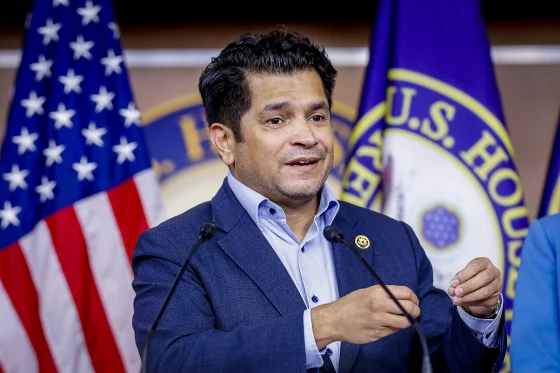
Gomez has represented California’s 34th Congressional District, centered in Los Angeles, since 2017.
He originally entered Congress after winning the special election triggered when Xavier Becerra left the House to become California attorney general.
Gomez is now serving his fifth full term and sits on the influential House Ways and Means Committee. His official biography also lists him as a Democratic deputy whip and a deputy whip in the Congressional Progressive Caucus.
In the June 2026 primary, Gomez received approximately 46% of the vote, while fellow Democrat Angela Gonzales-Torres received roughly 30%, sending both to the November contest under California’s top-two election system.
That means voters in California’s 34th Congressional District could be asked to make their decision while the Jimmy Gomez House Ethics investigation is still active.
Gonzales-Torres has already made the scandal part of her argument against the incumbent.
After the formal probe was announced, she sharply criticized Gomez and argued that voters deserve a representative focused on policy rather than scandal.
The “Dads Caucus” Has Made the Fallout Even More Awkward
There is another part of Gomez’s public image that has made the allegations particularly uncomfortable politically.
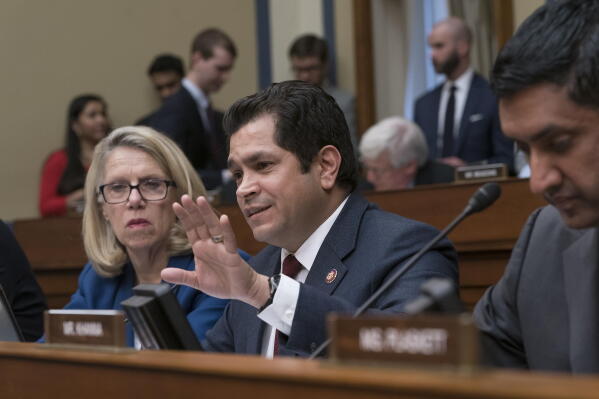
Gomez founded the Congressional Dads Caucus in January 2023.
The group was created after Gomez drew attention by bringing his infant son, Hodge, onto the House floor during the prolonged election for House speaker.
Its stated mission is to encourage fathers in Congress to advocate for policies helping families, including paid family leave, affordable childcare and an expanded Child Tax Credit.
Gomez remains identified on the caucus website as its founder and chair.
But the scandal has already begun affecting the organization.
Massachusetts Democratic Rep. Jake Auchincloss left the Dads Caucus in late August following the public disclosure of the assault allegation against Gomez.
His departure was reportedly the first resignation from the caucus connected to the investigation.
The symbolism is difficult to miss.
A group founded around fatherhood and family policy is now being led by a congressman who has publicly acknowledged betraying his wife while simultaneously facing an allegation of sexual assault that he has not admitted.
Those two issues should not be confused.
Gomez’s admission of infidelity is established through his own words.
The allegation that he sexually assaulted someone remains unproven.
Congress Is Considering Changing Its Rules Because of Cases Like This
The Jimmy Gomez sexual misconduct allegations are unfolding during a much larger debate about relationships and power on Capitol Hill.
Current House rules prohibit lawmakers from having sexual relationships with their own employees or with staff members on committees where they serve.
But they do not impose the same blanket prohibition on consensual relationships between lawmakers and employees working in entirely unrelated congressional offices.
That could soon change.
Lawmakers have been considering legislation that would prohibit members of Congress from engaging in sexual relationships with any congressional staff member, regardless of whether that employee reports directly to them.
The proposed reform reflects a concern that even when there is no direct supervisor-employee relationship, the enormous difference in institutional power between a member of Congress and a junior staffer can create ethical problems.
The issue extends far beyond Gomez.
Congress has dealt with an unusually large number of sexual misconduct and workplace investigations in 2026, spanning both political parties.
On September 1, for example, the House overwhelmingly censured Republican Rep. Chuck Edwards of North Carolina after the Ethics Committee found that his conduct toward two younger female staff members created an inappropriate workplace environment. Edwards disputed that his behavior amounted to sexual harassment.
Other lawmakers have resigned, ended campaigns or faced investigations over separate allegations this year.
The accumulation of cases has increased pressure on Congress to strengthen protections for staff members.
Gomez’s Public Response Creates a Difficult Question for Investigators
Gomez’s statement contains both an admission and a denial.
He admits he violated his marital vows.
He says he caused pain and embarrassment.
He says he sought counseling or professional assistance.
But he categorically characterizes his sexual activity outside the marriage as consensual.
The unnamed woman’s attorneys say at least one experience was not.
Both claims cannot fully describe the same alleged encounter.
That is precisely why the Ethics Committee investigation matters.
Investigators will have to determine whether Gomez was referring to the same woman when he described his relationships as consensual, whether multiple relationships are being examined and whether any communications or witness accounts corroborate either version.
The public does not currently have enough information to answer those questions.
Why the Original 2023 Allegation Still Matters
The first public allegation, that Gomez kissed a younger congressional staffer after a 2023 party, may ultimately prove unrelated to the more serious sexual assault claim.
But it appears to have been the event that opened the door.
CNN reported that House investigators began following up on that published account and learned about other allegations of sexual misconduct in the process.
That means an allegation Gomez’s office initially dismissed as something that never happened reportedly led investigators toward information they considered serious enough to warrant a formal public investigation.
Whether the original kissing allegation itself is substantiated remains unknown.
The Ethics Committee has not publicly identified the staff member involved in its investigation or described the specific incidents under review.

Jimmy Gomez Has Built a Career Around Progressive and Family Issues
Before the Jimmy Gomez ethics investigation, the Los Angeles Democrat was known far more for housing, family and economic policy than personal scandal.
Gomez served in the California State Assembly before being elected to Congress in 2017.
His official congressional biography highlights his work on paid family leave, environmental justice, housing and healthcare. He founded both the Congressional Dads Caucus and the Congressional Renters Caucus.
Legislation he has championed includes proposals involving home energy efficiency, Medicare assistance and federal grant transparency. Portions of his Home Energy Savings Act were incorporated into the Inflation Reduction Act.
That record will now compete for attention with an investigation that could dominate the remainder of his reelection campaign.
What Happens Next?
For now, the House Ethics Committee investigation into Jimmy Gomez is open.
The panel has said it will not provide additional public comment except according to its rules.
Gomez says he will cooperate.
The unnamed accuser has apparently already spoken with committee investigators.
Her attorneys say the committee will ultimately conclude that Gomez’s behavior toward her was not consensual.
Gomez says he expects a fair review to vindicate his assertion that he violated neither the law nor House ethics rules.
Neither side has yet been proven right.
The investigation could clear Gomez.
It could substantiate some allegations but reject others.
Or it could conclude that he violated House rules and recommend discipline.
Until investigators release evidence or findings, claims of criminal sexual assault should remain clearly identified as allegations.
The Timing Means Voters May Be Forced to Decide Without an Answer
That may be the most frustrating aspect of the entire case.
Jimmy Gomez’s congressional term expires in January.
The election comes in November.
Ethics investigations can take months or sometimes considerably longer.
Unless the committee finishes quickly, people in California’s 34th Congressional District may have to vote without knowing whether investigators believe their representative sexually assaulted or harassed a House employee.
That explains why Democratic lawmakers are asking for speed.
It also highlights a recurring problem with congressional investigations: accountability often moves much slower than politics.
For Gomez, the stakes are enormous.
An affair could be something voters consider a private moral failure.
Sexual harassment by a congressman toward a staff member would raise questions about abuse of workplace power.
Sexual assault would be exponentially more serious.
At this moment, the publicly available evidence does not allow those categories to be collapsed into one another.
Gomez has admitted the first.
He is being investigated over the second.
And an unnamed woman, through her attorneys, has accused him of the third.
The House Ethics Committee now has to determine what actually happened.
What do you think? Should the House Ethics Committee make every effort to finish the Jimmy Gomez sexual misconduct investigation before voters go to the polls in November, or is protecting the integrity of a thorough investigation more important than the election calendar? And do you think Congress should prohibit lawmakers from having sexual relationships with any congressional staff member because of the inherent power imbalance? Share your thoughts in the comments.