Mayor Mamdani & City Hall Are Feeding Talking Points to 200 Influencers: Some Are Getting Taxpayer Money
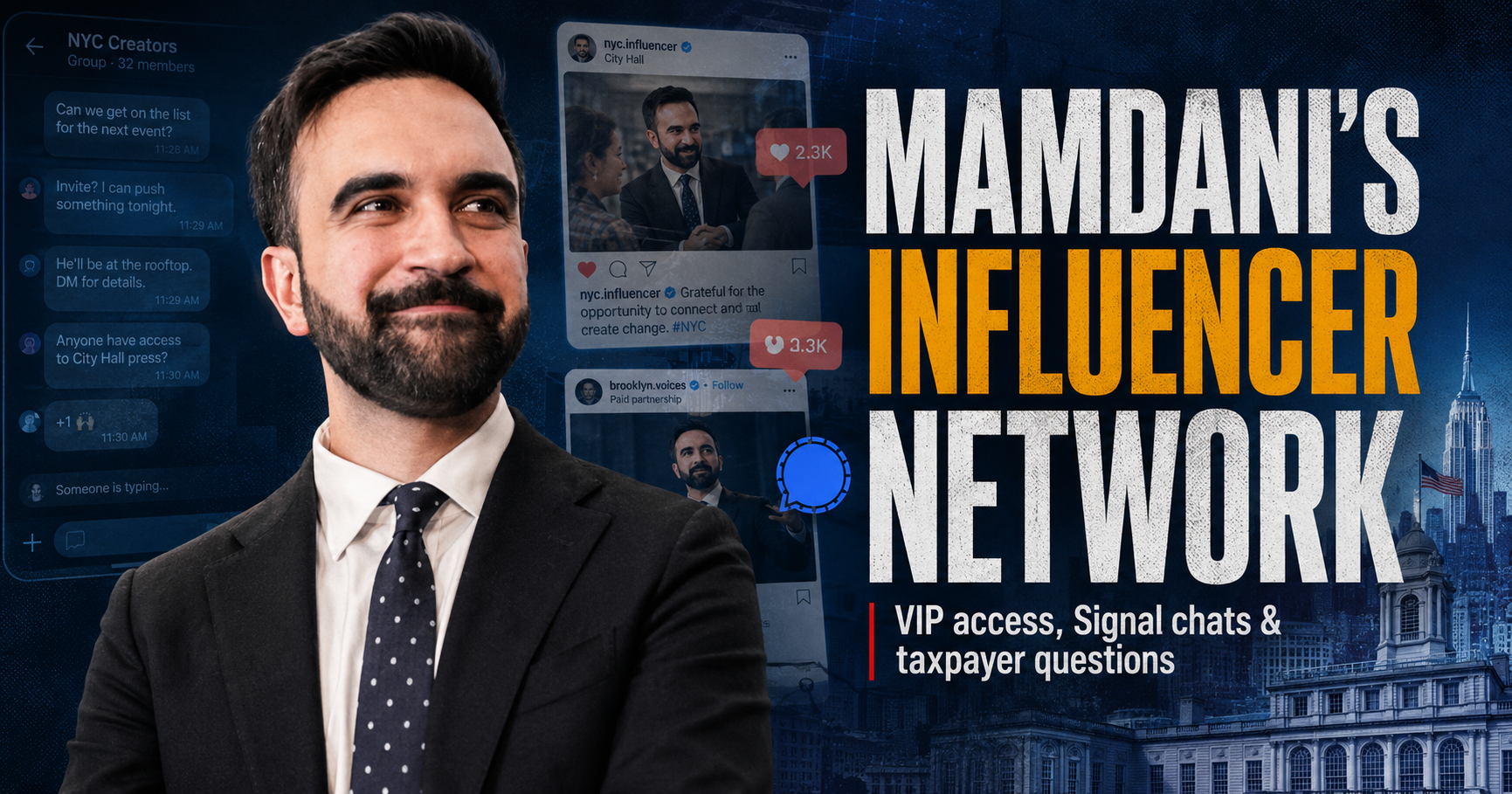
A new Columbia Journalism Review investigation has pulled back the curtain on Mayor Zohran Mamdani’s expanding social media operation, revealing a private Signal group where influencers receive daily City Hall talking points, video clips, event invitations and access to officials. The influencers are not paid for ordinary coverage, but some receive taxpayer-funded contracts for separate city messaging campaigns, raising new questions about disclosure, public records and where government communication ends and political promotion begins.
 Marie NovakMarie Novak is a crime news writer for Crimehowl, covering true crime, missing persons cases, court updates, and stories that leave communities searching for answers. She focuses on writing with empathy, clarity, and a deep respect for victims and their families while encouraging readers to think critically about the cases that shape the headlines.
PUBLISHED SEP 09, 2026 · 06:00 | 14 MIN READ | LONG READ | FILED UNDER POLITICAL CRIME
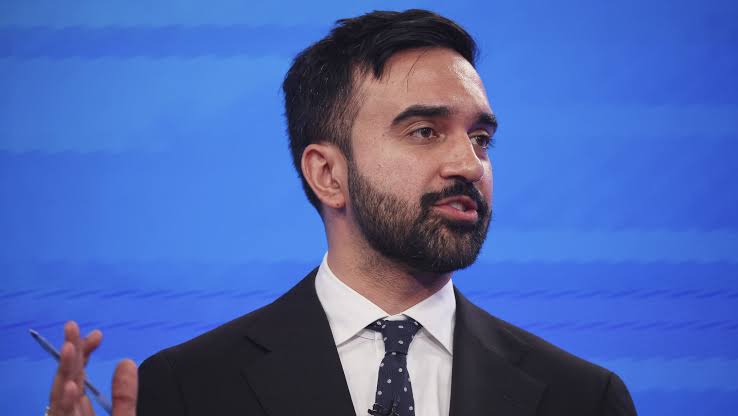
New York City Mayor Zohran Mamdani built much of his political identity online.
His campaign mastered short-form videos, social media storytelling and the kind of polished, personality-driven content capable of reaching younger voters who might never sit through a City Hall press conference or read a traditional newspaper.
Now that Mamdani is mayor, that same digital strategy has moved inside City Hall and on a scale that is beginning to attract serious scrutiny.
A new investigation from the Columbia Journalism Review’s Tow Center for Digital Journalism has identified 189 social media influencers with ties to the Mamdani administration, while participants interviewed for the project say more than 200 creators belong to a private City Hall Signal group.
Inside that encrypted messaging group, influencers receive daily updates, talking points and video clips supplied by the Mayor’s Office, along with invitations to events and opportunities to interview government officials.
Some of those creators also receive taxpayer money for separate campaigns promoting city programs.
That does not mean City Hall is secretly paying 200 influencers to praise Mamdani. CJR specifically found that members of the Signal group are not paid simply for their coverage of the mayor.
But the emerging arrangement has created a far more complicated question:
When someone receives exclusive government access, prepared talking points and potentially lucrative city contracts while producing friendly political content for thousands, or millions of followers, should the audience be told exactly what that relationship looks like?
The Influencer Network Grew Out of Mamdani’s Campaign
The story begins with Creators4Zohran, an informal network of social media personalities that supported Mamdani during his successful mayoral campaign.
After Mamdani took office in January 2026, part of that campaign-era creator network evolved into something more official.
According to CJR, City Hall established a Signal group called NYC Creators Announcements.
The group is administered by Emilia Rowland, New York City’s director of new media and cultural communications, along with other members of the mayor’s communications staff.
Creators who are accepted into the network reportedly complete an intake form identifying where they live and the subjects they cover.
City Hall can then target invitations toward individual creators.
Someone interested in housing could be invited to follow a tenant canvass. A creator covering city government could receive access to an official. Others might receive footage, announcements or policy information relevant to their audiences.
And every day, according to the Columbia Journalism Review investigation, the group receives material directly from the Mamdani administration.
That can include talking points and clips ready to be incorporated into social media posts.
From one perspective, this is simply the modern version of a press email list.
From another, it is something significantly different.
More Than 200 Influencers May Be Inside the Signal Group
City Hall did not give Columbia researchers a membership list despite repeated requests.
Instead, the researchers built their own picture of the Zohran Mamdani influencer network.
They identified 189 creators with some form of connection to the administration, using photographs from an influencer-only January press briefing, social media activity, press coverage and publicly available information about contracts.
Members interviewed by researchers said the actual Signal group contains more than 200 people.
The accounts reportedly range dramatically in size.
Some are micro-influencers with only 5,000 or 10,000 followers.
Others reach audiences numbering in the millions.
That gives City Hall something previous administrations could only dream about:
A decentralized communications network capable of placing government messaging directly into hundreds of social feeds without relying entirely on newspapers, television stations or traditional political advertising.
It is easy to see why an administration would want that.
It is also easy to understand why journalists and government-transparency advocates might want to examine it closely.
Influencers Get Access Traditional Reporters Have Always Wanted
The creators are not simply receiving press releases.
CJR found that members of NYC Creators Announcements can receive invitations to government events and opportunities to interview city officials.
That access has value.
A creator who can suddenly post an exclusive interview with a commissioner or footage from behind the scenes of a mayoral initiative, has content competitors may not have.
Traditional journalism has always had its own version of this problem.
Reporters need sources and access. Politicians want favorable coverage. A journalist who becomes too dependent on a politician for exclusives may become reluctant to risk losing that relationship by asking difficult questions.
Influencers present a newer version of the same dilemma, but without the institutional editorial rules many newsrooms impose.
CJR specifically notes that influencers associated with the Mamdani administration have faced criticism for generally not engaging in the same adversarial questioning or investigative reporting expected from traditional journalists.
Some creators reject that characterization.
Education activist and creator Jose Vilson told researchers that many participants want to ask serious questions because they care about New York rather than simply functioning as Mamdani promoters.
And the researchers themselves make an important distinction:
The Signal group resembles a press list in several ways, and its members remain free to decide what they actually cover.
Receiving talking points does not mean an influencer is required to repeat them.

Some Creators Openly Support Mamdani
Other members of the broader influencer ecosystem make no secret about why they participate.
They like the mayor.
Creator Diego León, known online as Dandy in the Bronx, told CJR that his involvement with Mamdani during the campaign made him even more supportive.
He described Mamdani’s social media presence as making government feel relevant to people who previously paid little attention to what City Hall was doing.
That may help explain why this network is so effective.
A government advertisement looks like a government advertisement.
A favorite TikTok creator enthusiastically discussing free childcare, tenant protections or a new city program feels personal.
Followers often develop relationships with creators based on perceived authenticity.
They may trust them precisely because they do not appear to be politicians or official spokespeople.
That is where the ethical questions become much harder.
Some Influencers Are Paid With Taxpayer Money
The most important distinction in the new report is one that can easily disappear in sensational headlines.
CJR did not find that the Mamdani administration is paying influencers to provide favorable day-to-day coverage of the mayor.
Members of the Signal group are not paid simply for being in the group or posting about Mamdani.
However, some influencers do receive city-funded contracts to participate in particular public-information campaigns.
Those campaigns can promote things such as healthcare, immigration resources, voting, tenants’ rights, participatory budgeting and composting.
And the practice actually predates Mamdani.
New York City agencies were already working with online creators years before he became mayor.
During the COVID-19 pandemic, NYC Health + Hospitals used celebrities and influencers to promote testing and vaccines. The MTA enlisted New York Nico to recruit celebrities for public-service announcements. The Department of Sanitation has used creators in campaigns encouraging composting and discouraging littering.
The NYC Campaign Finance Board also uses influencers to reach voters in neighborhoods and demographic groups that traditional outreach struggles to reach.
What Mamdani appears to have done differently is make influencers a much more central part of the citywide communications strategy.
City Employees Say Influencer Campaigns Can Be Surprisingly Cheap
There is an obvious reason governments like influencer marketing.
It can be inexpensive compared with traditional advertising.
Former city communications official José Bayona told CJR that approximately $50,000 could finance content from around ten influencers, while the same amount spent on traditional television advertising might purchase only a small amount of airtime.
Current city agency employees told researchers that typical payments can range from roughly $5,000 to $20,000 per influencer campaign.
The payments are generally not made directly by the mayor’s office.
Marketing or advertising companies working under city contracts hire individual creators as independent contractors.
Those influencers may then work with a city agency to create content communicating a particular government message.
That can be a completely legitimate public-information strategy.
The more difficult issue is whether viewers know when they are watching taxpayer-funded messaging.
CJR Found Paid Disclosures Are Inconsistent
Some New York City influencer campaigns are clearly labeled.
NYC Health + Hospitals has used labels such as #paidpartnership.
NYC Votes uses #NYCVotesPartner.
Other city programs use agency tags that identify a relationship.
But CJR researchers found that disclosure practices are inconsistent.
One marketing employee interviewed for the investigation acknowledged uncertainty about whether content created through a paid influencer relationship must always be explicitly identified as advertising.
Another communications professional made an unusually revealing observation: creator content can be more effective precisely because a viewer may initially perceive it as an ordinary person's post rather than an advertisement.
Researchers described that blurred distinction as one of the central problems with the new system.
Imagine scrolling Instagram and seeing someone you regularly follow explaining a new city policy.
Are they discussing it because they personally support it?
Because City Hall sent them information through Signal?
Because they received exclusive access to the mayor?
Because a city agency paid them $10,000 to produce that particular video?
Or some combination of the four?
The average viewer may have no way of knowing.
Access Can Be Valuable Even When No Money Changes Hands
Money is only one form of compensation.
Influencers benefit from attention.
An interview with the mayor can generate views.
Being invited inside City Hall can increase a creator’s credibility.
Appearing alongside high-profile public officials can attract new followers.
Those followers can eventually translate into sponsorships and income.
CJR compared that dynamic to the long-standing problem of access journalism, where reporters risk becoming too close to politicians or institutions they cover.
One creator interviewed for the report, Vilson, said he deliberately avoids being paid because he does not want a financial relationship to complicate his ability to criticize the administration.
“I have not received a dime,” he told researchers, explaining that payment could make legitimate criticism of someone more uncomfortable.
It is a revealing concern.
Not every conflict of interest requires an envelope of cash.
Sometimes access itself creates pressure.
The Signal Group Raises a Completely Different Question: Public Records
Then there is Signal.
The encrypted messaging application is popular precisely because it is designed around privacy.
Messages are encrypted, and users can activate disappearing-message functions that automatically delete conversations after a selected period.
Using Signal for government work is not automatically illegal.
But official New York City business conducted through instant messaging can create municipal records that must be preserved.
The New York City Department of Records and Information Services states that instant electronic messages created while conducting official city business are municipal records regardless of whether they are sent through traditional SMS, chat applications or other messaging platforms.
The policy even applies when employees use personal devices for official city communications.
That makes the Mamdani City Hall Signal group particularly interesting.
Daily talking points prepared by mayoral employees, discussions about official events, government communications strategies and interviews with public officials could potentially qualify as city records depending on their substance.
Whether City Hall is properly preserving those communications has not been publicly established.
Simply using Signal does not prove that anyone has violated record-retention law.
City Policy Discourages Government Work on Outside Messaging Apps
New York City's records policy is fairly explicit about third-party communication systems.
City employees are strongly discouraged from using messaging platforms that are not controlled by the city for work-related communications.
When such platforms are used, city records must be transferred and preserved appropriately.
Earlier guidance specifically says substantive messages should be moved into systems that allow them to be retained according to the applicable government records schedule; for example, by saving a screenshot or forwarding material into an official city-controlled system.
New York's Department of Records maintains dedicated policies covering instant electronic messaging, records created on non-city platforms and social media records.
That does not mean Mamdani officials are failing to follow those policies.
The relevant question is whether the Signal communications are being archived elsewhere.
If they are, there may be no records problem at all.
If substantive government messages are disappearing without preservation, that could raise far more serious transparency concerns.
City Hall had not publicly provided CJR with the complete membership list researchers requested, and the administration did not respond to several inquiries about the influencer arrangements before publication of the report.
Two Popular Mamdani Boosters Apparently Don't Even Live in NYC
Separate reporting from the New York Post highlighted another strange wrinkle in the influencer ecosystem.
The outlet pointed to creator Allie O'Brien, who has publicly described Mamdani in extremely enthusiastic terms but appears from online records to live in Connecticut.
Another creator using the Instagram handle bananadotgov reportedly lives in Columbus, Ohio, and has produced multiple highly favorable videos about Mamdani.
However, there is an important limitation to that reporting:
It is not clear that either woman belongs to the private NYC Creators Announcements Signal group.
Both have been highlighted by the Creators4Zohran social media operation, but featuring someone's content does not prove formal membership in City Hall's network.
Their involvement nonetheless raises another question about political influencer culture.
When online praise appears to come organically from “New Yorkers,” how much does the location and relationship of the creator matter?
City Hall’s Influencer Strategy Is Not Necessarily a Scandal
There is a temptation to treat the mere existence of the network as evidence of something improper.
That would go beyond what the available reporting establishes.
Governments advertise.
They hold press conferences.
They send reporters talking points.
They buy television commercials.
They promote public health campaigns.
They use social media.
And New York City agencies were paying influencers long before Zohran Mamdani entered City Hall.
The strongest argument for the program is simple:
A government needs to communicate with its residents.
Many people under 40 get more information through Instagram, TikTok and YouTube than through local television news or newspapers.
If a trusted neighborhood creator can persuade someone to get a vaccination, participate in a city budget meeting, register to vote or learn about tenant protections, City Hall can reasonably argue that the money was well spent.
Some creators interviewed by CJR explicitly view their work that way, as a form of public service filling holes left behind by the decline of local journalism.
The controversy is less about whether influencers should exist.
It is about transparency.
Are You Watching Commentary or Government Messaging?
That may be the most important question raised by the entire report.
People understand what they are seeing when the mayor speaks at a podium marked with the City of New York seal.
They understand what a City Hall press release is.
They understand that a television commercial paid for by a government agency represents government messaging.
Influencer content is different.
It is designed to feel personal.
A creator is usually speaking into a phone from a bedroom, sidewalk, subway platform or coffee shop.
The relationship between the speaker and viewer is built around authenticity.
If government talking points are quietly moving through that relationship without disclosure, the viewer may believe they are seeing independent commentary when they are actually seeing messaging shaped by City Hall.
CJR's forthcoming report argues that New York needs clearer rules governing this growing world of “political relational influencers,” particularly when money changes hands.
Researchers said consistent disclosure could help prevent confusion and protect public trust.
The Mamdani Influencer Network May Become a Model for Other Politicians
The bigger story may extend far beyond New York City.
Mamdani proved during his campaign that social media could be something much more powerful than a place to repost speeches.
It could be the campaign.
Now his administration is testing whether the same infrastructure can become part of governing.
If it works, other mayors, governors and eventually presidential administrations are almost certain to copy it.
Why spend millions trying to persuade people to watch a government commercial when hundreds of creators can place a similar message directly inside the social feeds people already check dozens of times a day?
That future appears increasingly likely.
Which makes the rules being established now unusually important.
Will creators have to disclose taxpayer-funded relationships?
Will government contracts identify the people actually receiving the money?
Will official Signal and WhatsApp groups be preserved as public records?
Will influencers receiving privileged access be expected to tell viewers about that relationship?
And how clearly should governments separate campaign-era political networks from taxpayer-supported communications operations once the election is over?
Those questions do not have easy answers yet.
CJR described the current influencer environment as something resembling the “Wild West,” with even people working inside the industry uncertain about exactly what disclosure standards apply.
Nearly 200 Creators and a Lot of Unanswered Questions
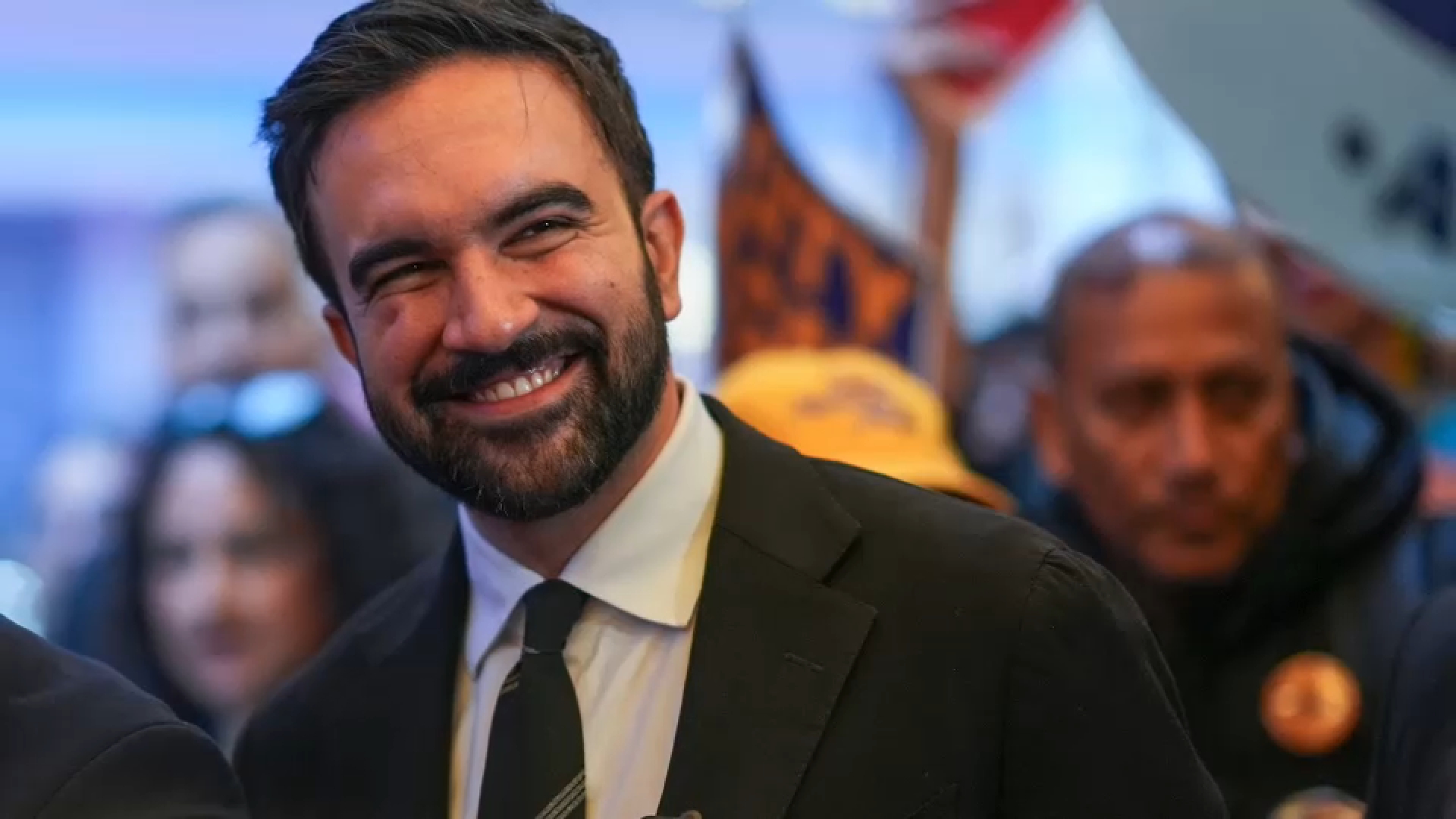
The most surprising part of the Zohran Mamdani influencer controversy may be the sheer scale.
This is not City Hall giving occasional access to three popular TikTok personalities.
Researchers identified 189 creators connected in various ways to the administration.
Members say more than 200 people are inside the dedicated Signal channel.
They receive government information directly.
They can receive access to city officials.
Some participate in paid campaigns.
And they collectively reach audiences potentially numbering in the millions.
Maybe this is simply what government communications will look like from now on.
Maybe Mamdani's administration is merely ahead of everyone else.
But if that is the case, transparency rules probably need to catch up just as quickly.
Residents should not have to conduct their own investigation every time an enthusiastic TikTok video appears to determine whether the person speaking is a fan, a journalist, an invited City Hall creator, a government contractor, or all four.
The technology may be new.
The principle is not.
When public money, government access and political messaging intersect, the public has a right to understand who is talking to them and why.
What do you think about Mayor Mamdani's influencer network? Is City Hall simply using modern tools to reach New Yorkers who no longer consume traditional news, or should every creator receiving talking points, special access or taxpayer-funded contracts be required to clearly disclose that relationship? And would knowing an influencer was receiving material directly from the mayor's office change how much you trusted their political content? Share your thoughts in the comments.