Columbia’s Gates Have Been Locked for Years—Now NYC Is Threatening to Sue Over a 73-Year-Old Deal
New York City has dramatically reversed its position in the long-running fight over Columbia University’s locked campus gates. Mayor Zohran Mamdani says the city will take “prompt legal action” unless College Walk is reopened to the public, while Columbia insists the walkway is private property and says controlling access is necessary to protect students and academic operations. At the center of the dispute is a $1,000 deal dating back to the 1950s and two very different interpretations of what New York City actually gave away.
 Marie NovakMarie Novak is a crime news writer for Crimehowl, covering true crime, missing persons cases, court updates, and stories that leave communities searching for answers. She focuses on writing with empathy, clarity, and a deep respect for victims and their families while encouraging readers to think critically about the cases that shape the headlines.
PUBLISHED OCT 06, 2026 · 07:00 | 10 MIN READ | LONG READ | FILED UNDER POLITICAL CRIME
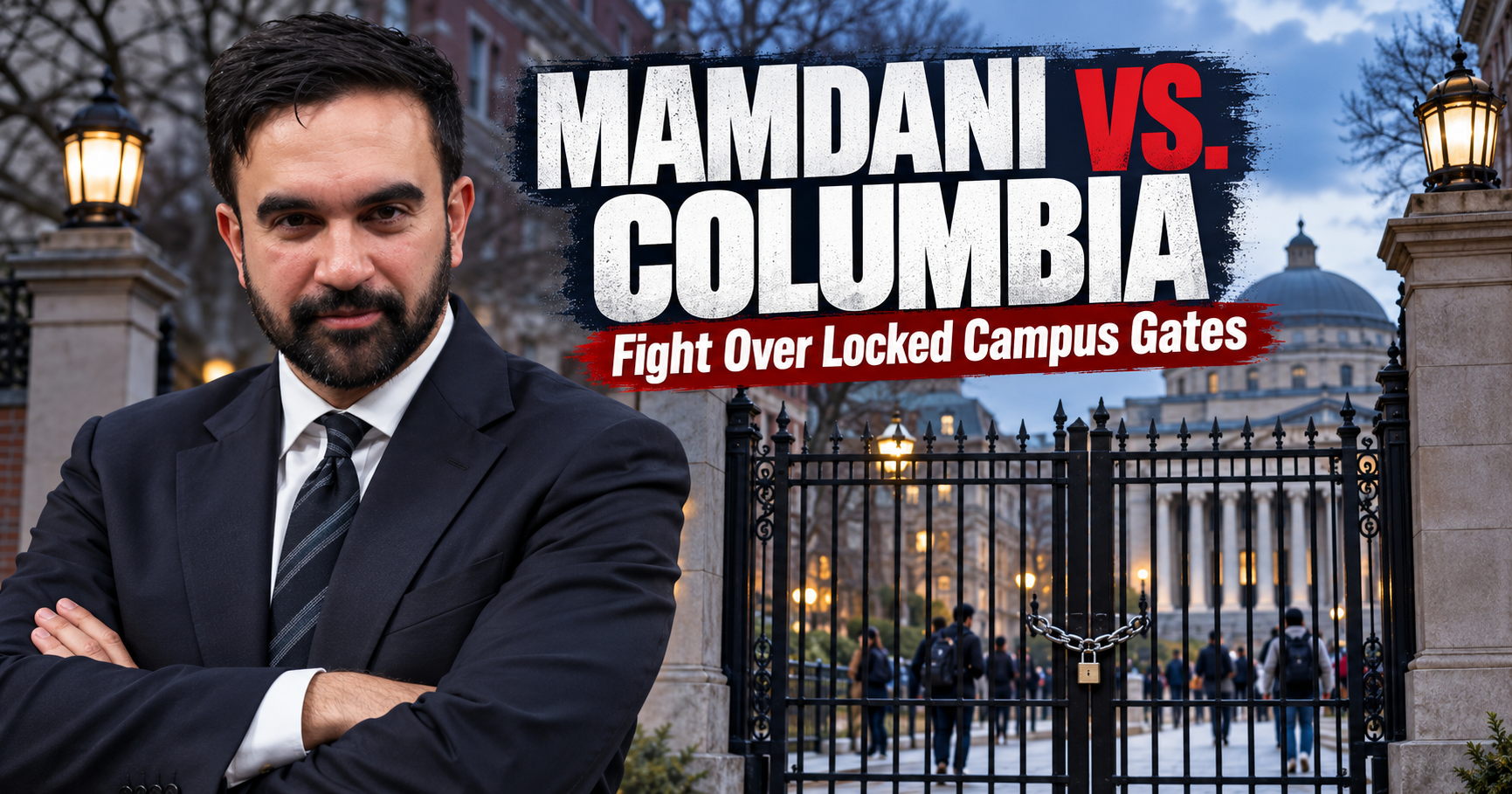
For decades, New Yorkers walking through Morningside Heights could take a familiar shortcut directly through the heart of Columbia University.
Enter at Broadway and West 116th Street.
Walk across the campus.
Come out on Amsterdam Avenue.
For neighborhood residents, students, workers and people trying to reach the subway, College Walk became such a routine part of everyday life that many people probably never stopped to ask a surprisingly complicated question:
Was it actually public?
That question is now at the center of a potentially major court battle between New York City and Columbia University.
Mayor Zohran Mamdani’s administration has warned the Ivy League school that the city intends to take legal action unless Columbia “immediately” reopens College Walk to the public.
The threat represents a significant reversal from the position taken by former Mayor Eric Adams’ administration, which argued in court that Columbia owned the property and that New Yorkers did not have a general legal right to walk through it.
Mamdani’s administration now says the opposite.
And buried beneath decades of neighborhood custom, campus security concerns and political arguments over the protests that led Columbia to tighten access is a real-estate agreement dating back more than 70 years.
College Walk Used to Be an Actual New York City Street
Before Columbia University turned it into the pedestrian pathway people recognize today, the stretch running between Broadway and Amsterdam Avenue was part of West 116th Street.
Vehicles once drove straight through what is now the center of Columbia’s Morningside Heights campus.
That changed in the early 1950s.
The city transferred control of the stretch to Columbia, reportedly for just $1,000, allowing the university to close it to through traffic and turn it into a landscaped pedestrian corridor.
The agreement required Columbia to construct a pedestrian walkway approximately 20 feet wide.
But the language concerning exactly who was entitled to use that walkway is where the modern dispute begins.
A 1953 document referenced in the litigation discusses the city retaining an easement and “free and unhampered access” connected to municipal operations, including city agencies and infrastructure.
Neighborhood residents argue the broader history of the agreement shows that public pedestrian access was also supposed to continue permanently.
Columbia says that interpretation goes too far.
For roughly seven decades, the legal distinction did not seem especially important.
The public generally walked through.
Then Columbia closed the gates.
The Gates Began Closing During the Gaza War Protests
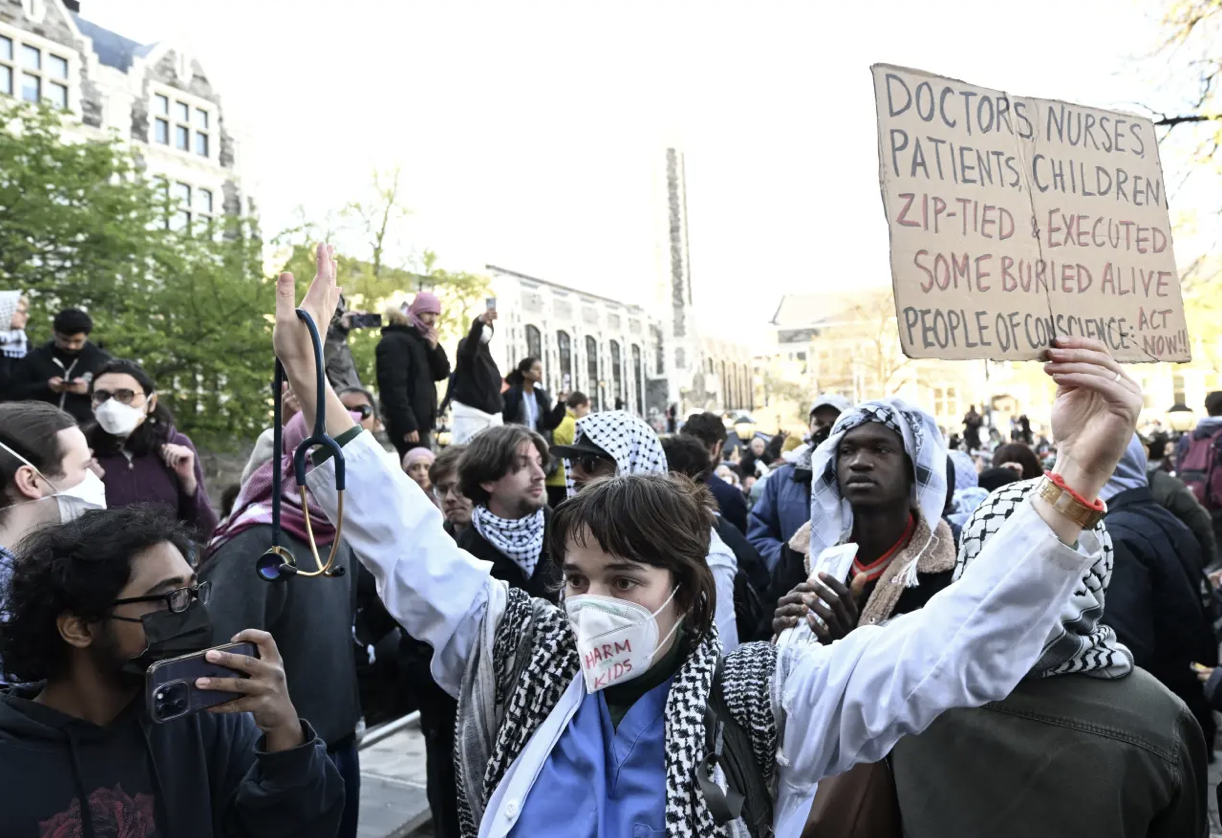
Columbia initially restricted access in October 2023, after protests connected to the Israel-Gaza war began intensifying on campus.
The gates opened and closed at different points afterward, but access became considerably more restricted in the spring of 2024, when pro-Palestinian demonstrators established an encampment and protesters later occupied Hamilton Hall.
NYPD officers eventually entered the campus and cleared the building.
Columbia continued restricting general public access after the major protests ended.
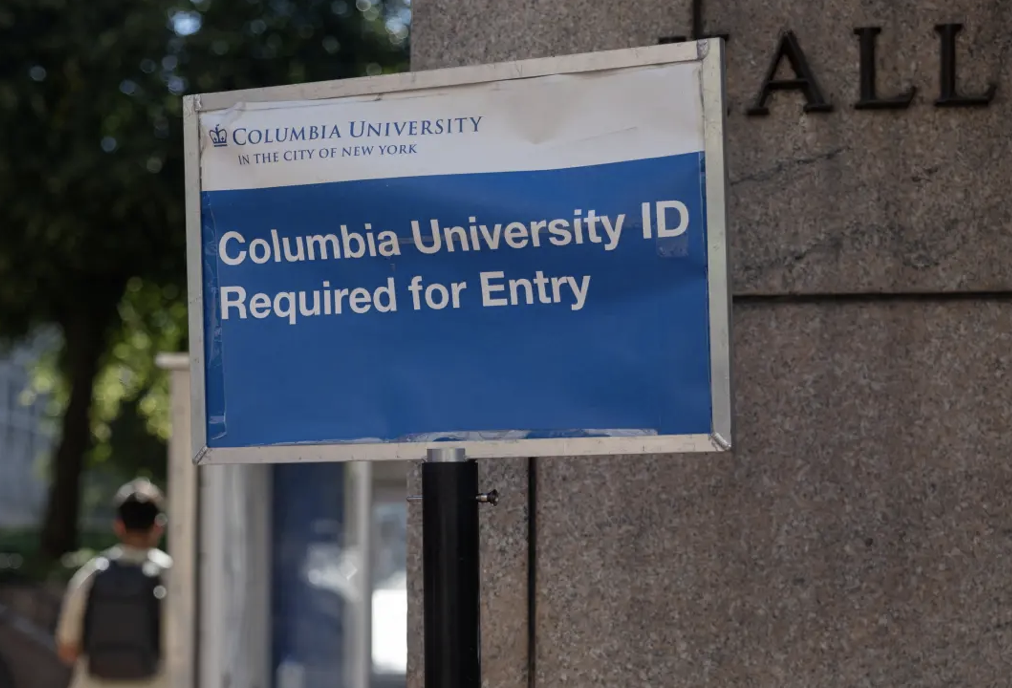
Today, students, faculty and authorized people can enter through security checkpoints, while nonaffiliated visitors generally face access restrictions or registration requirements.
The result has transformed a route that many residents used for generations.
What used to be a straight walk through 116th Street became a trip around Columbia’s perimeter.
For a healthy person in a hurry, that may simply be irritating.
For some elderly residents and people with disabilities, plaintiffs argue, it is considerably more burdensome.
NY1 recently timed different routes around the closure. Going around the perimeter from the Broadway gate to Amsterdam took approximately 7 minutes and 35 seconds, while another route along West 114th Street took slightly more than three minutes.
Those extra blocks eventually led residents to court.
Morningside Heights Residents Sued Columbia and the City
A group of neighborhood residents filed suit in early 2025 against Columbia University and New York City.
The case argues that Columbia violated its obligations by blocking general pedestrian access to College Walk.
The plaintiffs include people who say the closure has made getting around Morningside Heights unnecessarily difficult, particularly older residents who had used the shortcut for years.
Their central argument is straightforward:
The city gave Columbia the former street on the understanding that pedestrian passage would remain.
Columbia disputes that interpretation.
And initially, New York City agreed with Columbia.
Under the Adams administration, city lawyers moved to dismiss claims against the city and argued that College Walk was not a public street or public space.
The city maintained that its easement was limited to government and municipal purposes rather than creating a permanent right for every member of the public to cross Columbia’s property.
Then New York elected a new mayor.
And City Hall changed sides.
Mamdani’s Administration Reversed the City’s Legal Position
The shift became public in September.
In a Sept. 3 court filing, city lawyers said New York now supports reopening College Walk to the public.
The city subsequently reached an agreement with the neighborhood plaintiffs that allowed New York City, the mayor and the police commissioner to be removed as defendants from the lawsuit.
But the most consequential part came next.
The agreement says that if Columbia does not reopen College Walk, the city intends to take “prompt legal action” to force the issue.
Mamdani confirmed the position publicly on Oct. 1.
He said his administration believes the original purpose of the arrangement with Columbia included keeping College Walk available for public access.
The mayor also emphasized the practical effect the closure has had on residents trying to travel between Amsterdam Avenue and Broadway.
Mamdani noted that he knows the neighborhood personally: he grew up near Columbia on Riverside Drive, and his father is a Columbia faculty member.
He argued that forcing neighborhood residents to walk around the campus is inconsistent with what the city originally intended when it transferred the former street.
Columbia Says the City Is Rewriting the Deal
Columbia University has a very different interpretation.
The university maintains that College Walk is private property.
According to Columbia, the city’s easement concerns access required for municipal infrastructure and government services, not unrestricted pedestrian access by the public.
“As the property owner,” a Columbia spokesperson said, the university has the right and responsibility to control access to College Walk while taking measures necessary to protect its community and maintain academic operations.
That argument is not frivolous.
The precise language of the 1953 agreement is less clear than the decades-long history of public use might suggest.
One surviving document from then-Manhattan Borough President Robert Wagner discussed creating a “perpetual easement for the right of pedestrian passage.”
But the final agreement contains language more specifically linking city access to the Fire Department and other municipal services.
That difference could become crucial if the dispute reaches a new lawsuit.
A court may eventually have to decide whether decades of public access, the negotiations surrounding the original transaction and the wording of the easement collectively created a legally enforceable public right, or whether Columbia simply permitted public passage for decades while retaining the ability to close its privately owned campus.
This Fight Is Bigger Than Whether People Have to Walk a Few Extra Blocks
At first glance, the Columbia University College Walk lawsuit might sound like an unusually expensive fight over a shortcut.
It is actually about property rights, municipal authority and the meaning of an agreement made more than seven decades ago.
If Columbia is correct, the university owns the property and has broad authority to decide who enters it.
If the residents and Mamdani administration are correct, Columbia accepted a permanent public-access obligation in exchange for receiving a former city street.
And there is another major issue hanging over the case:
Security.
Columbia tightened campus access after a period of extraordinary unrest.
The university has dealt with major demonstrations, building occupations, arrests and intense concern from students on different sides of the Israel-Gaza debate.
Some students and Jewish organizations have argued that maintaining controlled access remains an important security precaution.
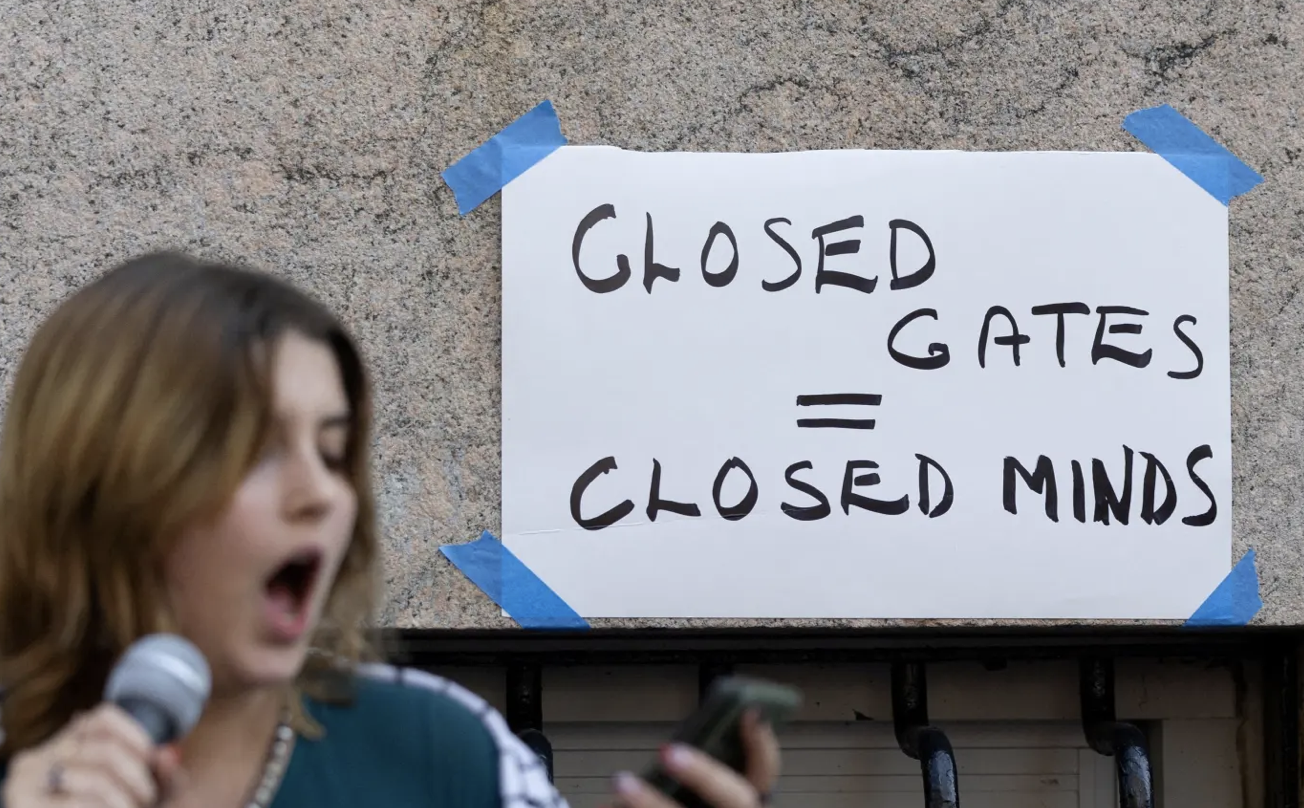
Other students, residents and community groups argue that keeping the campus effectively closed long after the largest demonstrations ended has disconnected Columbia from the surrounding neighborhood.
Recent reporting indicates Columbia has issued more than 1,200 access passes to nearby residents and established an advisory committee to examine ways of increasing public access while addressing safety concerns.
That suggests the university itself recognizes that the current arrangement may not be permanent.
But it does not mean Columbia accepts the city’s legal interpretation.
Mamdani Says His Position Is About the Agreement, Not the Protests
The political backdrop makes this case unusually sensitive.
Mamdani has been outspoken on issues involving Israel, Gaza and Palestinian rights, and Columbia became one of the most visible American campuses in the national debate surrounding the war.
That has led to questions about whether the mayor’s position on College Walk is connected to the demonstrations that originally prompted the closures.
Mamdani says it is not.
He has framed his administration’s position around the historic agreement, neighborhood access and the fact that residents relied on College Walk for decades.
The legal question ultimately will not be whether the mayor supported or opposed particular protesters.
It will be what rights New York City retained when West 116th Street became Columbia property.
A State Lawmaker Has Already Tried to Settle the Question Through Legislation
The legal battle is not the only attempt to force College Walk open.
Legislation introduced in Albany in 2025 proposed explicitly requiring the pathway to remain open to public pedestrians.
The bill’s legislative findings take the position that when New York City transferred the street to Columbia for $1,000, the city retained a perpetual pedestrian easement.
If enacted, the measure would give members of the public standing to sue to enforce access.
The existence of that bill also illustrates something important:
The historic paperwork has generated enough ambiguity that lawmakers have considered passing a new statute specifically spelling out what they believe the old agreement requires.
Why Did Columbia Have Public Access for So Long If It Was Private?
This is likely to become one of the strongest practical arguments made by residents.
For generations, people simply walked through.
Columbia itself describes College Walk as the main pedestrian walkway of the Morningside Campus in university policies.
The school has controlled vehicles on the path for years, but pedestrians from the surrounding community historically crossed with few restrictions.
Residents will undoubtedly argue that more than 70 years of practice supports their interpretation of the original agreement.
Columbia can respond that allowing public access is not the same thing as surrendering the legal right to control private property.
Property owners can allow people onto their land without automatically creating an unrestricted public right forever.
That is precisely why the language of the original easement matters so much.
Could New York City Actually Sue Columbia?
Yes.
The city’s filing explicitly says it intends to pursue legal action if College Walk is not reopened.
But threatening litigation and winning litigation are two different things.
If New York sues, Columbia could argue that the city itself previously interpreted the agreement exactly the way the university does now.
The Adams administration’s filings may therefore become useful evidence for Columbia—even though a new mayor is legally free to change the city’s litigation position.
City lawyers would likely rely heavily on the history surrounding the 1953 transfer, decades of public use and documents suggesting the original negotiations contemplated pedestrian access.
The university would likely emphasize the deed and easement language, its private-property rights and its security obligations.
That could leave a judge interpreting documents written when Dwight Eisenhower was still closely associated with Columbia and long before modern campus security checkpoints even existed.
Both Sides Say They Are Protecting Something Important
That is what makes the Mamdani Columbia University dispute more complicated than a simple politician-versus-Ivy-League headline.
The city says it is defending public access and holding Columbia to an old agreement.
Neighborhood residents say they want back a route they used for decades.
Columbia says it is protecting students, faculty and the uninterrupted operation of a private university that experienced serious campus unrest.
All three positions involve legitimate interests.
The unanswered legal question is which interest the 1953 agreement actually controls.
The Next Move Belongs to Columbia and City Hall
For now, Mamdani has drawn a line.
His administration says College Walk should reopen immediately.
Columbia has not agreed that it is legally required to do so.
And the city says it is prepared to go to court if the university continues restricting public access.
If that lawsuit arrives, the fight will likely center on a transaction that once seemed incredibly simple:
New York City gave Columbia a stretch of West 116th Street.
Columbia turned it into College Walk.
For generations, everybody walked through it.
Then the gates closed.
Now lawyers may have to decide whether those gates can legally stay that way.
What do you think? Should decades of public access to College Walk weigh heavily in deciding whether Columbia must reopen the gates, or should the university retain the right to restrict access because it owns the property and is responsible for campus security? And if the original agreement is genuinely ambiguous, should the city and Columbia negotiate a secure public-access system instead of spending years fighting in court? Share your thoughts in the comments.