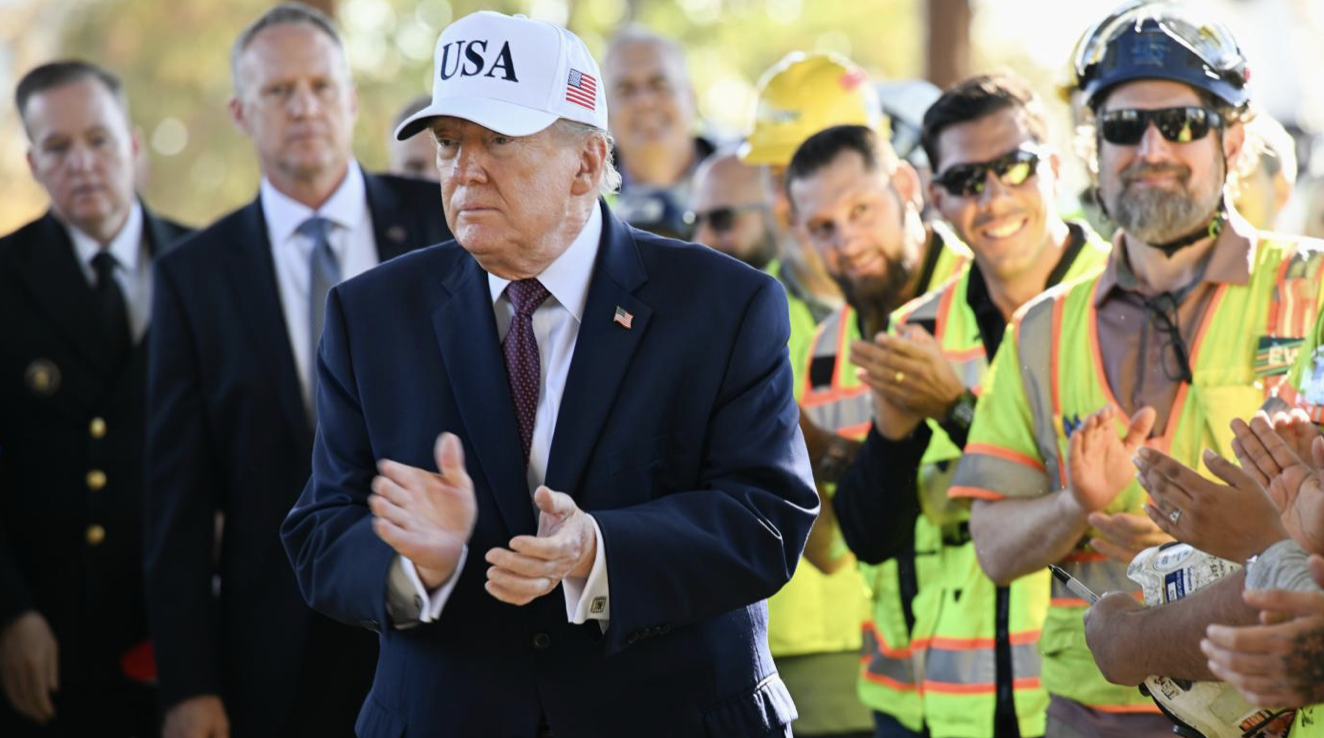
Trump Says Hegseth Is Staying—But an Impeachment Fight Could Be Days Away
President Trump says he intends to keep Pete Hegseth despite mounting pressure after Republicans’ midterm losses. With a Republican-led impeachment push already underway and Democrats preparing to take control of Congress, the Pentagon chief faces a fight that goes beyond his job security.
 Marie NovakMarie Novak is a crime news writer for Crimehowl, covering true crime, missing persons cases, court updates, and stories that leave communities searching for answers. She focuses on writing with empathy, clarity, and a deep respect for victims and their families while encouraging readers to think critically about the cases that shape the headlines.
PUBLISHED NOV 07, 2026 · 12:00 | 5 MIN READ | FILED UNDER POLITICAL CRIME
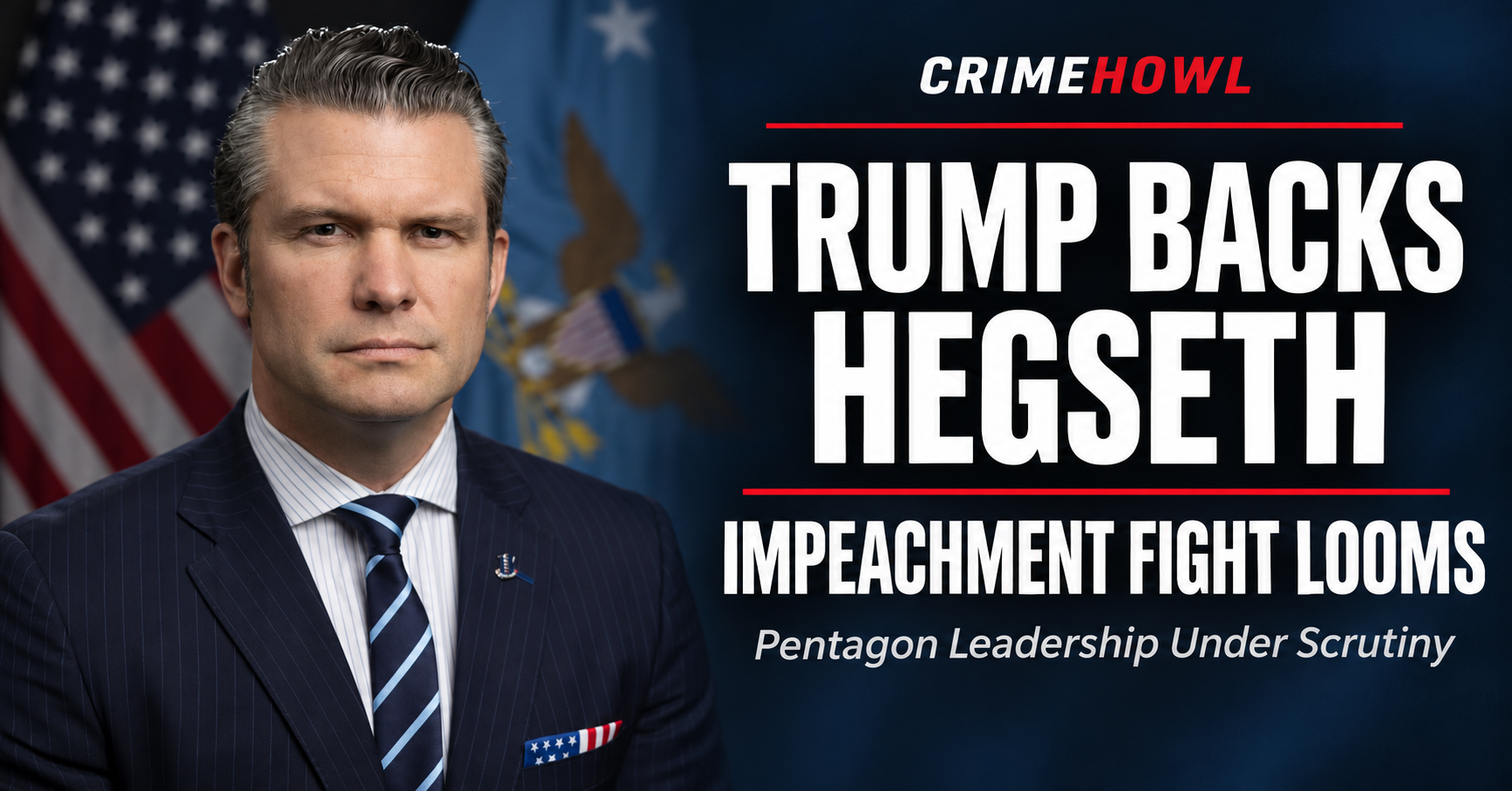
President Donald Trump is publicly standing behind Pete Hegseth. That has not stopped the pressure building around the Pentagon chief, or the prospect of an impeachment showdown when lawmakers return to Washington.
On Thursday, November 5, Trump told ABC News’ Jonathan Karl that he planned to retain Hegseth following Republicans’ losses in Tuesday’s midterm elections.
“I have every intention to keep him,” Trump said.
He also acknowledged receiving complaints about Hegseth, adding: “I get these calls, you know, about him. I don’t understand why.”
The president’s comments offer Hegseth public support at a moment when critics are demanding accountability for the Iran war. But the dispute now involves more than whether Trump wants a different person running the Pentagon.
Congressional allegations about the use of military power are already on the table.
Why Hegseth Is Under Pressure
The November 3 elections delivered control of both congressional chambers to Democrats, according to Reuters. The Iran war has become a major focus of Republican recriminations over the result.
Vice President JD Vance has blamed the conflict for the party’s defeat. That is the vice president’s assessment of the election; it should not be treated as proof that every competitive race turned on the same issue.
Hegseth, a prominent advocate of the military campaign, has become a target as Republicans debate what went wrong.
Trump had already defended him on Wednesday. Reuters reported that, despite that public backing, sources said a leadership change remained possible.
For me, the central question is whether Washington is examining the decisions behind the war or looking for one official to absorb the political damage. Those are different exercises, and the evidence lawmakers produce will matter far more than the post-election blame game.
The Criticism Is Coming From Republicans, Too
Retiring North Carolina Sen. Thom Tillis has been among Hegseth’s Republican critics.
According to Anadolu’s reporting, Tillis has questioned whether the Pentagon can obtain the defense funding it needs under Hegseth’s leadership. He has also urged Trump to appoint a replacement capable of earning congressional support.
That adds a practical issue to the political controversy. The Pentagon needs to work with lawmakers on spending, oversight, and military priorities. A breakdown in those relationships can create problems even when a secretary retains the president’s confidence.
It also helps explain the timing of calls for a replacement. Republicans still control the current Senate, while the newly elected Congress takes office on January 3, 2027.
Trump acknowledged to Karl that confirming a replacement would be easier before Democrats take control of the chamber. That does not make a future confirmation impossible, but it would change the negotiations surrounding any nominee.
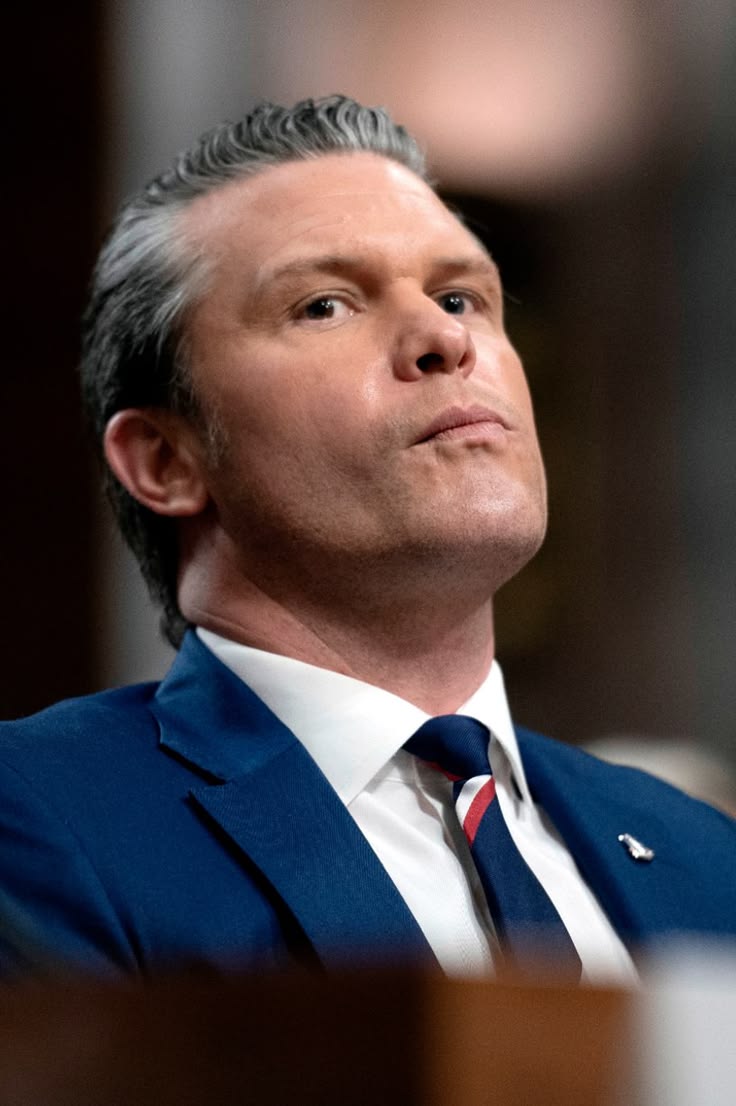
The Impeachment Effort Started Before the Election
One important detail can get lost in the latest headlines: the impeachment campaign did not begin after Republicans lost the midterms.
Republican Rep. Thomas Massie of Kentucky announced eight proposed articles against Hegseth in September.
In a statement published by his congressional office, Massie alleged violations of the War Powers Resolution, including conducting hostilities against Iran without congressional authorization and continuing the conflict beyond statutory deadlines.
His proposed articles also raise allegations involving civilian protections, military operations elsewhere, and retaliation against a senator over protected speech.
These are Massie’s allegations. Their appearance in an impeachment proposal does not establish that Hegseth committed the misconduct described.
Still, the substance matters. A dispute about whether an official violated congressional war powers raises questions that cannot be settled simply by pointing to an election result.
Could the House Vote Next Week?
A vote could come soon, but the outcome and procedure remain uncertain.
Roll Call reported before the election that Massie intended to seek action during the week of November 9, when the House returns for its lame-duck session.
The outlet explained that a qualifying privileged resolution could require action within two legislative days. However, that does not guarantee a direct vote to approve every allegation. Lawmakers could instead consider a motion to table the resolution.
That distinction is worth watching closely. A procedural vote can reveal whether lawmakers want to advance an impeachment effort without resolving the underlying accusations.
There is also an important timing issue: any vote before January would involve the current Congress, including members who lost their elections or are retiring. Democrats’ election victories do not immediately change who holds the seats.
Impeachment Would Not Automatically Remove Hegseth
A House vote to impeach would formally charge Hegseth through the constitutional process. It would not, by itself, remove him from office or amount to a criminal conviction.
The House can approve articles of impeachment by a simple majority. The Senate then considers the case, with conviction requiring two-thirds of senators present.
If all 100 senators participated, that would mean 67 votes to convict.
That is why winning a congressional majority and securing an impeachment conviction are different challenges. Even with Democratic control, removal would require substantial support beyond a narrow party majority.
For readers following the case, three developments should be kept separate: introducing articles, the House approving them, and the Senate convicting. Headlines can blur those stages, but each has a different consequence.

The Pentagon Is Pushing Back
Hegseth’s department has rejected the effort to force him out.
Anadolu reported that Pentagon spokesman Sean Parnell said Hegseth remained committed to serving through the end of Trump’s term and characterized the attacks against him as partisan.
The Guardian also reported a statement from Pentagon press secretary Kingsley Wilson describing the department as united behind his leadership.
Those responses establish the administration’s public position. They do not resolve the allegations, just as the allegations themselves do not establish guilt.
The useful next step for the public is evidence: what orders were issued, what legal authority officials relied on, and how the administration responded to Congress.
What Happens Next Matters More Than the Reassurances
Trump’s message on Thursday was clear: he intends to keep Hegseth.
What remains unresolved is whether that support will hold, whether Massie can move his resolution forward, and how lawmakers will respond when required to take a position.
My view is that accountability should follow the evidence and the chain of decision-making. Replacing one official may change the leadership of the Pentagon, but it would not, on its own, answer the questions about how the war was authorized or conducted.
Keeping him would not make those questions disappear, either.
Do you think Congress should move forward with an impeachment inquiry into Hegseth’s conduct, or should lawmakers pursue other oversight first? What evidence would you want made public before deciding? Share your thoughts in the comments.