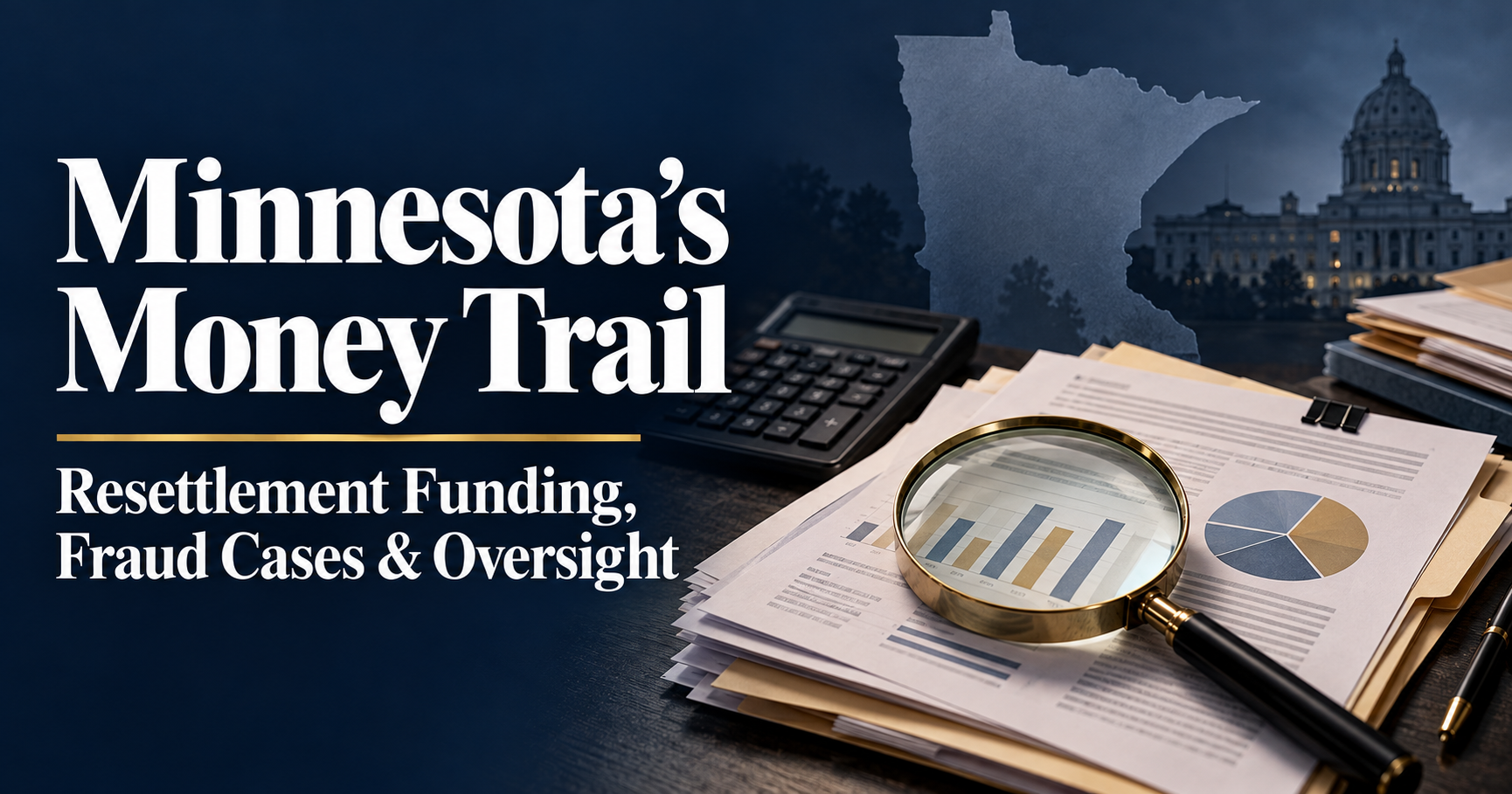
Millions for Resettlement, Billions in Fraud Claims: What Minnesota’s Money Trail Actually Shows
A report linking millions in Minnesota refugee resettlement funding to broader fraud scandals raises important questions, but several claims need clarification. Here’s what the money figures mean, how the organizations differ and why separate investigations should not be treated as one proven scheme.
 Marie NovakMarie Novak is a crime news writer for Crimehowl, covering true crime, missing persons cases, court updates, and stories that leave communities searching for answers. She focuses on writing with empathy, clarity, and a deep respect for victims and their families while encouraging readers to think critically about the cases that shape the headlines.
PUBLISHED OCT 27, 2026 · 08:00 | 5 MIN READ | FILED UNDER POLITICAL CRIME
Minnesota’s refugee resettlement system is facing renewed scrutiny as a report highlights millions of dollars in government funding received by faith-based organizations and attempts to connect that spending to the state’s expanding fraud scandals.
The report says Catholic and Lutheran organizations received at least $62 million to help resettle Somali refugees over several decades. Critics argue that the funding deserves closer examination, particularly as prosecutors pursue major public-benefit fraud cases.
Taxpayers have legitimate questions about how government money was awarded, monitored and spent. But resettlement contracts, criminal fraud prosecutions and the investigation involving Rep. Ilhan Omar are separate matters. Connecting them requires evidence, not simply a shared location or Somali identity.
Several details in the account also need clarification, including the identities of the organizations involved and what the widely circulated $9 billion fraud estimate actually represents.
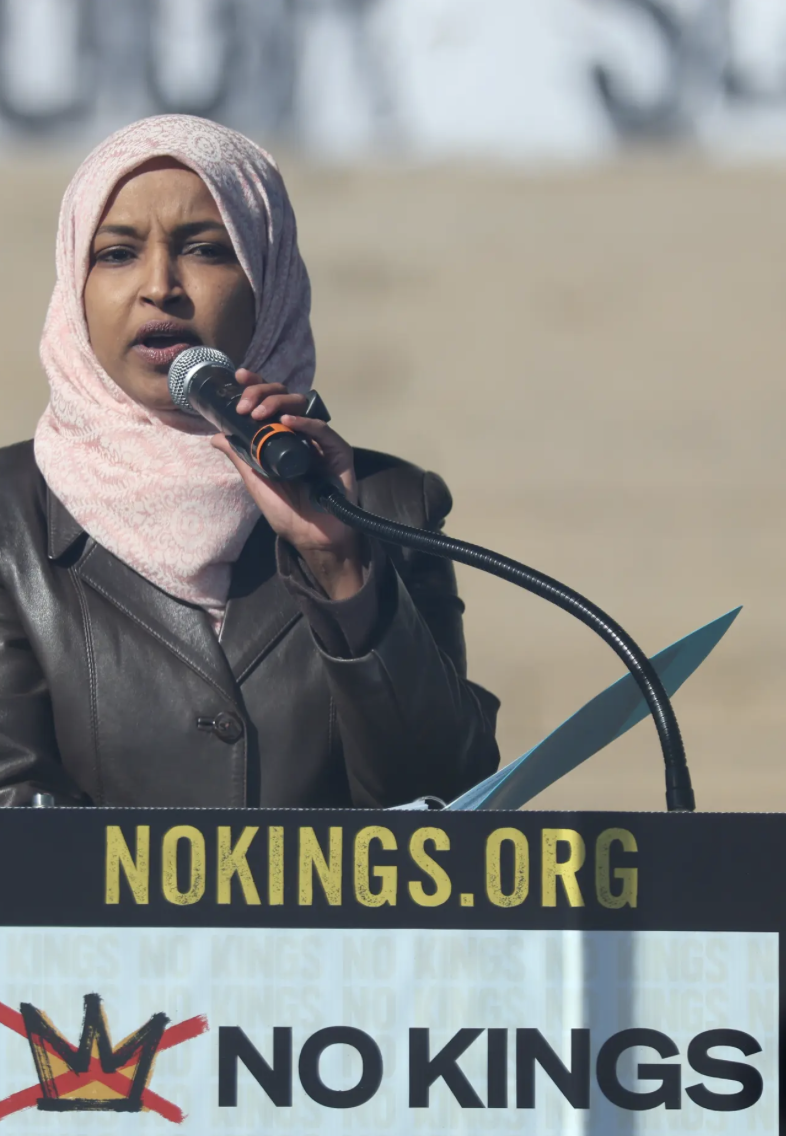
What Is Behind the $62 Million Resettlement Claim?
The new reporting attributes at least $62 million in government funding to organizations involved in bringing approximately 29,000 Somali refugees to Minnesota since the 1990s.
That is a reported historical total, not an established finding that $62 million was stolen or improperly awarded.
The account describes payments intended to cover initial assistance such as housing, food and case management. Government reimbursement for those services is different from unrestricted profit, although the contracts and resulting expenditures remain appropriate subjects for public scrutiny.
There is also a numerical issue worth resolving. Multiplying the report’s estimated 29,000 arrivals by its cited $2,500 payment produces $72.5 million, not $62 million.
That does not automatically disprove the lower figure, which is described as a minimum. It does mean that readers need the underlying dates, payment rates, recipient organizations and accounting method before treating either number as a verified total.
A rate from one period cannot simply be applied to every arrival across three decades.
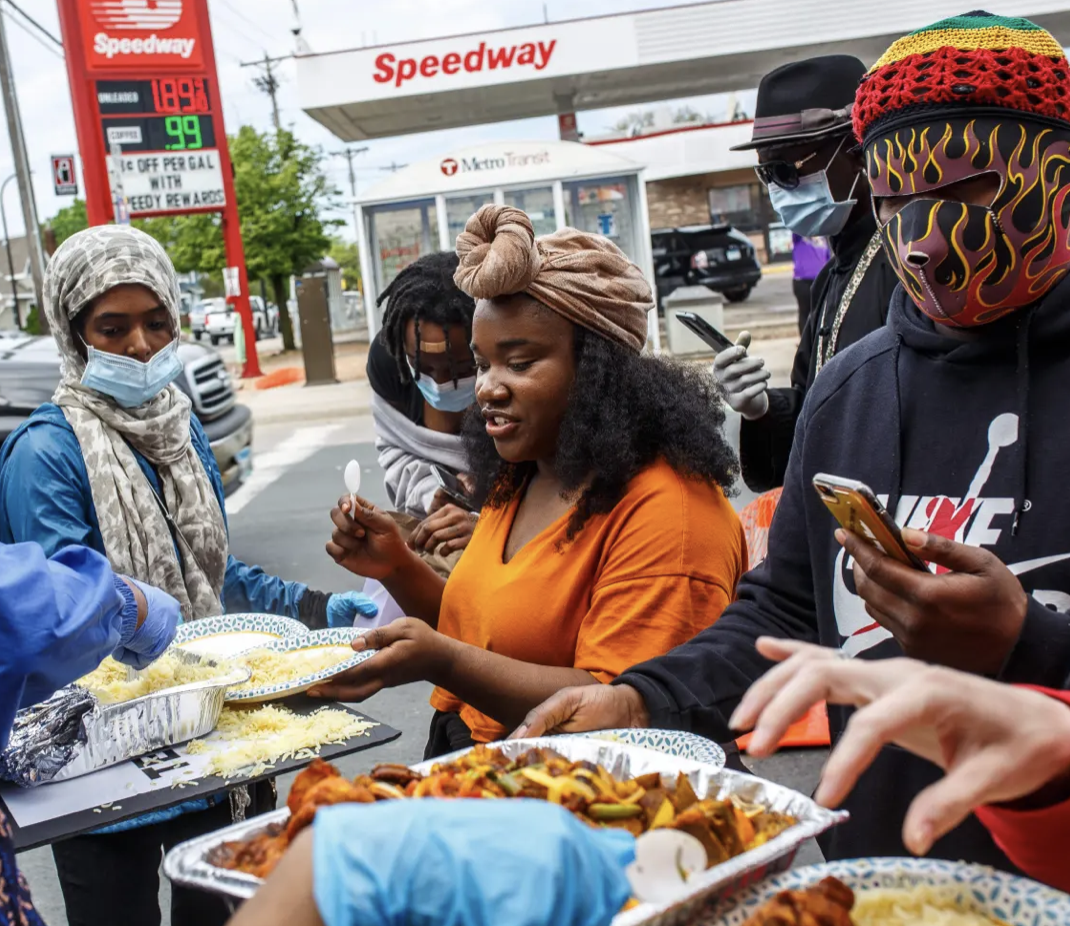
The Lutheran Organizations Are Not Interchangeable
One important correction concerns the organizations named in the report.
Global Refuge is the organization formerly known as Lutheran Immigration and Refugee Service. Lutheran Social Service of Minnesota is a separate organization.
Both operate within the broader landscape of refugee assistance, but their names, finances and responsibilities should not be collapsed into a single entity.
Similarly, a nationwide funding figure for the U.S. Conference of Catholic Bishops cannot automatically be counted as money received by Catholic Charities Twin Cities or spent exclusively on Somali resettlement in Minnesota.
A spokesperson for Catholic Charities Twin Cities said its refugee and immigrant programs closed in 2018.
That timeline matters when discussing more recent contracts or fraud allegations. Any claim connecting an organization to a particular payment or criminal scheme should identify the actual recipient and relevant period.

How Minnesota Became a Major Somali Resettlement Destination
Minnesota’s Somali community developed through several pathways: initial refugee placements, family sponsorship and people moving from other states.
The Minnesota Historical Society documents Somali arrivals beginning in 1992, following the civil war that devastated Somalia.
Faith-based agencies played a role, but so did other resettlement organizations, Somali-led groups and individual families.
The historical account identifies employment, education, social networks and access to services as reasons people chose Minnesota. Describing the community’s growth solely as a response to welfare benefits leaves out those other documented factors.
Minnesota’s resettlement history also predates Somali arrivals. Hmong refugees began establishing communities in the state after the war in Southeast Asia.
One political detail in the supplied account is incorrect: former Minnesota Gov. Al Quie was a Republican, not a Democrat. His support for refugees illustrates that the state’s resettlement history included leaders from both parties.
Minnesota’s Fraud Cases Are Real and Serious
There is substantial evidence of fraud involving Minnesota-administered programs.
The Feeding Our Future prosecution is a major example. Federal authorities uncovered a scheme involving approximately $250 million intended for child nutrition during the pandemic.
In March 2025, a federal jury convicted Feeding Our Future founder Aimee Bock and co-defendant Salim Said. The case involved fraudulent meal claims and the diversion of money meant to feed children.
Those are concrete criminal findings involving identified defendants and a specific program.
However, Feeding Our Future’s child-nutrition funding is not the same funding stream as refugee resettlement assistance.
The existence of proven fraud in one program does not establish that a separate charity’s resettlement contracts were fraudulent. Investigators would need evidence connecting the organizations, transactions or individuals involved.
Accountability is strongest when the money trail is specific.

What Does the $9 Billion Figure Mean?
The frequently repeated $9 billion figure requires particular care.
It originated as a federal prosecutor’s estimate of potential fraud across certain Minnesota Medicaid services, rather than a court-established total of money stolen.
State officials challenged the estimate, and local reporting has questioned the supporting documentation.
The distinction is substantial: an estimate of possible exposure, an allegation in an indictment and a loss established through evidence are different things.
It would therefore be inaccurate to describe the entire $9 billion as a single proven welfare theft uncovered in the past year.
The figure also should not be assigned collectively to Minnesota’s Somali population. Criminal responsibility belongs to the people and organizations whose conduct investigators can establish.
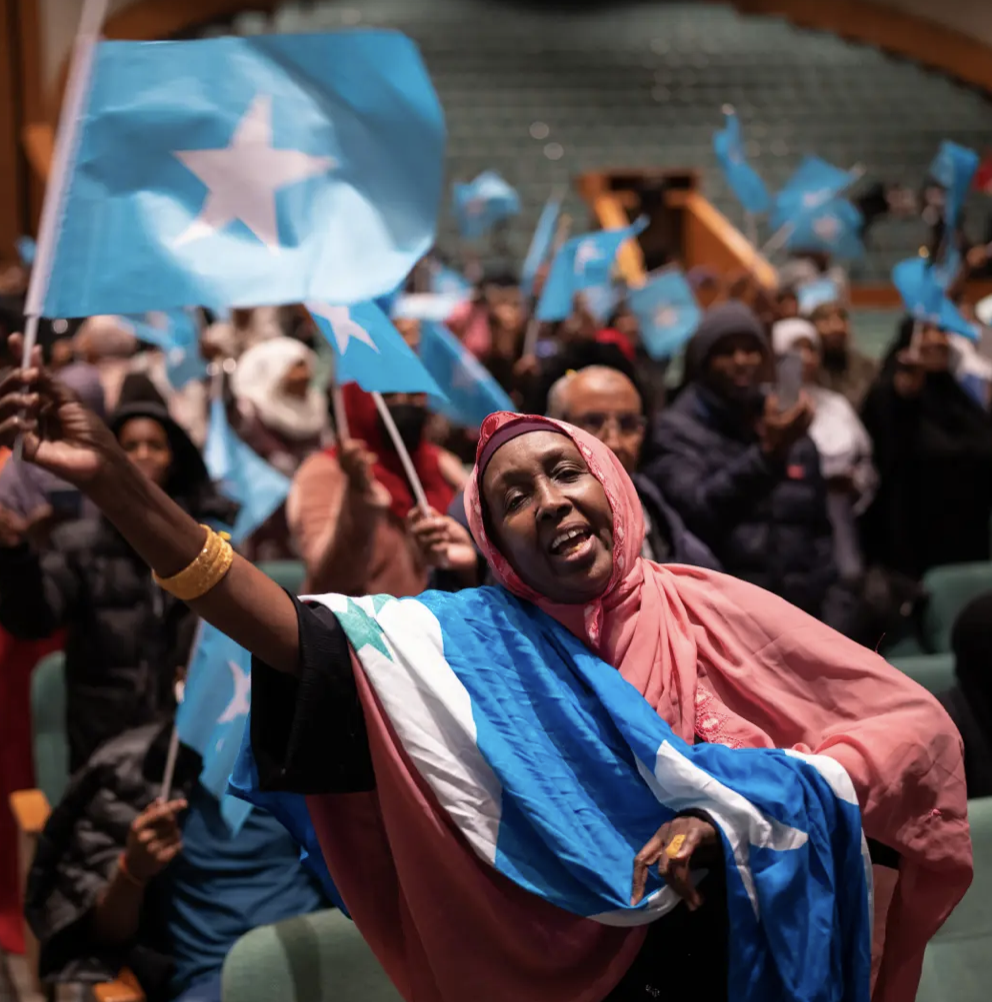
Where the Ilhan Omar Investigation Fits
Federal agents searched Omar’s Washington, D.C., home on October 12 as part of a criminal investigation. Reporting describes scrutiny of immigration-related paperwork, and Omar has denied wrongdoing and called the action politically motivated.
The search is a significant development, but it does not establish guilt.
More importantly for this story, the available reporting does not establish that the search was part of a prosecution involving the resettlement contracts discussed above or the Feeding Our Future scheme.
Omar’s Somali background and Minnesota constituency do not supply that missing connection.
Any direct financial or operational link would need to be demonstrated with records or other evidence.
The Questions Taxpayers Deserve Answered
The strongest public-interest questions concern documentation and oversight.
Which organizations received the contracts? What services were required? How were expenditures verified? Did audits identify unsupported payments, conflicts of interest or failures to deliver assistance?
For the criminal cases, the questions are more specific: who submitted false claims, who approved payments, who benefited and how much money can be recovered?
Those inquiries can expose misconduct without treating refugee status, religious affiliation or ethnicity as evidence of wrongdoing.
Minnesota’s fraud scandals warrant aggressive investigation. Its resettlement spending warrants transparent accounting. What remains unproven is the broader claim that helping refugees establish a community caused the criminal schemes now under scrutiny.
What would you most want to see disclosed: the original resettlement contracts, independent audits or a program-by-program breakdown of proven fraud losses? Share your thoughts in the comments and keep the discussion focused on evidence and accountability.