Kansas Senate Race Explodes Over 20-Year-Old Church Abuse Case: What Records Actually Show About Adam Hamilton and Convicted Offender Scott Moore
A new Roger Marshall campaign ad accuses Democratic Senate challenger Adam Hamilton of “protecting a pedophile” after teenage boys reported disturbing encounters with church volunteer Scott Moore in 2005. Hamilton denies a cover-up and says he would handle the initial allegations differently today. Court records show the church failed to notify police after the first reports, but did contact law enforcement a year later, barred Moore from youth work and eventually assisted in the case that led to his conviction. Now a painful case from two decades ago has become one of the biggest controversies in Kansas’ 2026 Senate race.
 Marie NovakMarie Novak is a crime news writer for Crimehowl, covering true crime, missing persons cases, court updates, and stories that leave communities searching for answers. She focuses on writing with empathy, clarity, and a deep respect for victims and their families while encouraging readers to think critically about the cases that shape the headlines.
PUBLISHED OCT 10, 2026 · 07:00 | 13 MIN READ | LONG READ | FILED UNDER POLITICAL CRIME
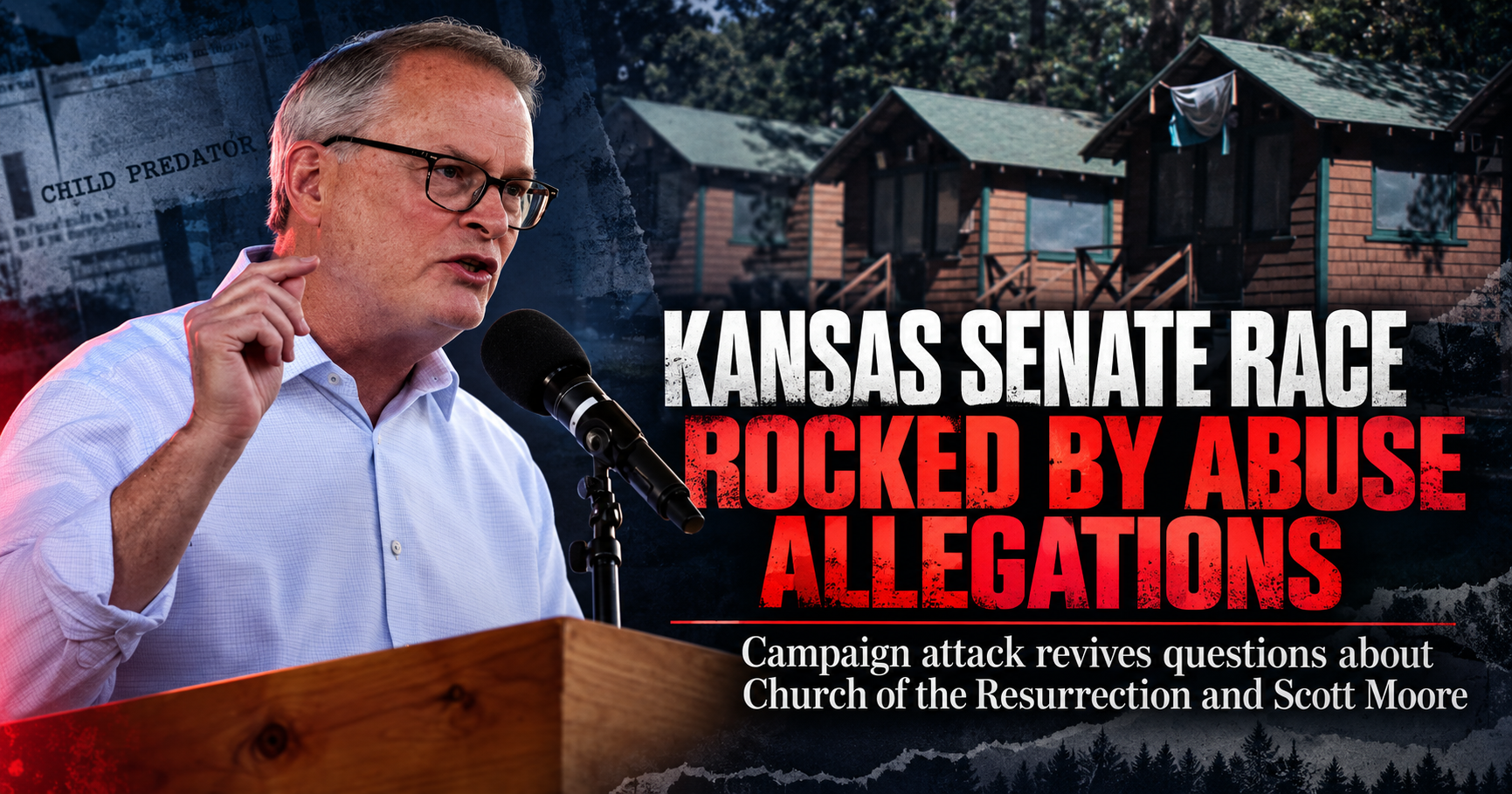
Content warning: This article discusses allegations of child sexual abuse.
The increasingly competitive Kansas U.S. Senate race between Republican Sen. Roger Marshall and Democratic challenger Adam Hamilton has taken a deeply personal and disturbing turn.
Marshall’s campaign has launched a statewide television and streaming advertisement accusing Hamilton, founding pastor of the United Methodist Church of the Resurrection in Leawood, of failing to protect teenage boys from a church volunteer later convicted of sexual battery.
The 30-second ad makes an explosive accusation:
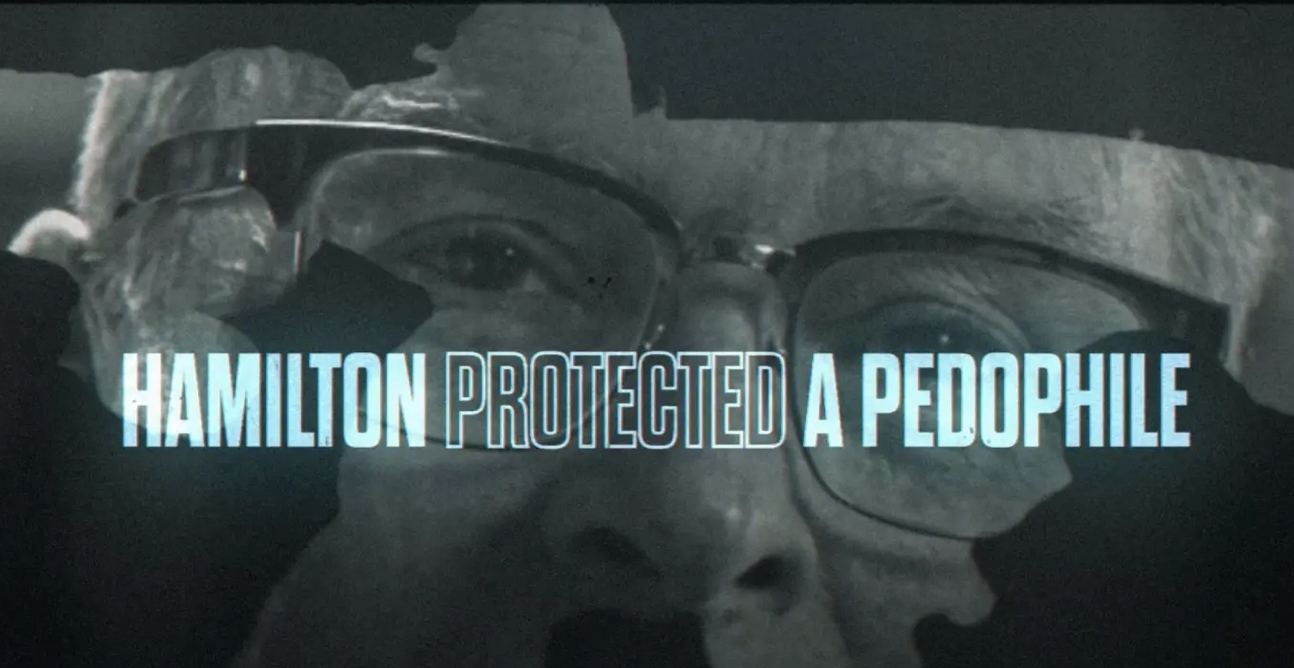
“Adam Hamilton protected a pedophile.”
But the events behind that sentence stretch back more than 20 years, involve multiple alleged victims, an initially inconclusive church investigation, a later police referral, conflicting recollections and a criminal conviction involving an entirely separate teenager.
And the documentary record paints a more complicated picture than either campaign’s attack lines suggest.
What is established is troubling enough.
In 2005, teenage boys attending a Church of the Resurrection retreat reported that a man entered their cabin at night and touched them while they were in sleeping bags. Church leaders conducted their own investigation but did not immediately report the allegations to police or child-protection authorities. A year later, the volunteer later identified as Scott Preston Moore returned to the retreat.
When concerns involving Moore surfaced again in 2006, however, the church did call law enforcement, turned over information about both years and barred Moore from working with children and vulnerable people.
Hamilton says there was no cover-up.
He also says something significant:
If the same situation happened today, he would handle the initial 2005 reports differently.
The New Attack Ad Makes the Case Personal
Marshall’s new advertisement is part of a reported $1.2 million statewide media buy as the two candidates head toward the November election.
The ad tells viewers that teenage victims reported Moore to church leaders, their concerns were ignored and Hamilton failed to contact police.
It then notes that Moore returned as a counselor the following year.
The narrator ultimately declares that Hamilton “protected a pedophile” and argues that the Democrat should not become Kansas’ next senator.
Hamilton’s campaign calls the accusation false and says the ad removes important details from the record.
That dispute matters because court records do confirm an initial failure to report, but they also show that the church later did contact authorities and that Hamilton himself was not at either retreat where the alleged misconduct occurred.
What Happened at the 2005 Church Retreat?
The earliest allegations at the center of the controversy involve an annual youth retreat held by Church of the Resurrection in Linn County, Kansas, in November 2005.
According to later court records and testimony, two teenage boys reported disturbing encounters during the night.
One boy, who was 15, later testified that an adult touched his genitals.
Another, then 14, said a man reached into or near his sleeping bag around his groin before leaving when other people began waking.
The boys reported what happened to camp leadership.
But according to an appellate-court account later cited in reporting on the case, some camp leaders were “dismissive of their claims.”
One boy later testified that a youth minister accused them of potentially damaging another person’s reputation and warned that there could be serious repercussions if they were making false accusations.
That response understandably became one of the most disturbing pieces of the later record.
The Boys Could Not Positively Identify Their Alleged Abuser
There was also a major evidentiary problem.
The cabin was dark.
Court filings say the teenagers could not clearly see the person’s face and were not able at the time to positively identify Moore as the man who had touched them.
Church officials nevertheless knew that at least some campers suspected him.
Hamilton delegated the investigation to two people associated with the church: Randy Meyer and Nancy Brown.
The resulting internal review did not reach a definitive conclusion.
And instead of notifying police or child welfare officials anyway, church leaders handled the initial matter internally.
That decision is now at the heart of the political controversy.
Records cited by multiple Kansas news organizations confirm that the 2005 allegations were not immediately reported to law enforcement or social services.
Hamilton has since acknowledged that he would not make the same decision today.
Hamilton Says He Would “Absolutely” Call Police Today
Speaking about the case earlier this year, Hamilton defended the intentions of church leaders but acknowledged that the response would be different under modern standards.
Asked whether he would now report such allegations directly to law enforcement, Hamilton answered “absolutely.”
He said the church had been trying to determine what happened and insisted there was never an effort to conceal abuse.
“There was no attempt at a cover-up,” he said.
Former longtime assistant Sue Thompson confirmed that Hamilton personally met with the family of at least one of the boys following the 2005 allegation, although Hamilton told reporters he did not remember the specifics of the conversation.
Thompson has also said the people conducting the internal investigation were not qualified professional criminal investigators.
Hamilton disagreed with that characterization, pointing to Brown’s experience with church sexual-ethics training.
That distinction is important.
The criticism is not simply that the internal investigation failed to prove who committed the abuse.
The bigger question is why church leaders believed they should be making that determination themselves instead of immediately handing the allegation to authorities.
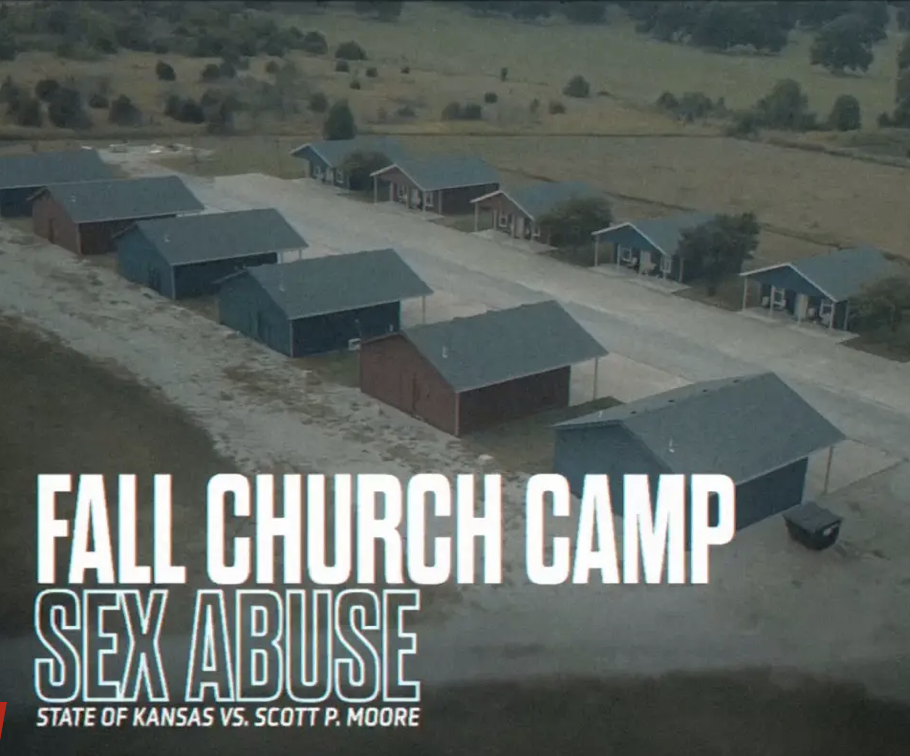
Scott Moore Returned to the Retreat in 2006
Perhaps the most damaging fact politically for Hamilton is what happened next.
Scott Moore returned as a youth-camp volunteer in 2006.
That means the person eventually identified as responsible for the earlier abuse was again placed around teenage boys.
However, records reviewed by Kansas reporters contain an important detail that is often lost in current campaign rhetoric.
The court documents do not establish that Moore sexually assaulted another child during the 2006 retreat.
They do say that he again entered campers’ rooms at night.
This time, church leadership responded differently.
Authorities were contacted.
Moore was barred from working with children, young people or vulnerable adults.
The church also provided investigators with information concerning both the 2005 and 2006 incidents.
The Linn County prosecutor ultimately declined to bring charges arising from those retreat allegations.
The Church Changed Its Child-Safety Policies
Following the Moore incidents, Church of the Resurrection overhauled how it dealt with youth safety.
The changes eventually developed into a program known as Safe Gatherings, which uses background checks, reference screening, training requirements and rules intended to prevent adults from being isolated with unrelated children.
The program eventually expanded far beyond Hamilton’s congregation and has been used by thousands of organizations.
Former student-ministry director Jason Gant has said his own approach after taking the position in early 2006 was straightforward:
If an allegation like that arose, law enforcement should be contacted immediately.
Gant has defended Hamilton’s broader commitment to protecting children while acknowledging that the earlier response taught the church important lessons.
In that sense, Hamilton’s own defense is not that everything was handled perfectly.
It is that the church learned from what went wrong.
Moore Was Eventually Convicted, but Not for the Church Retreat Allegations
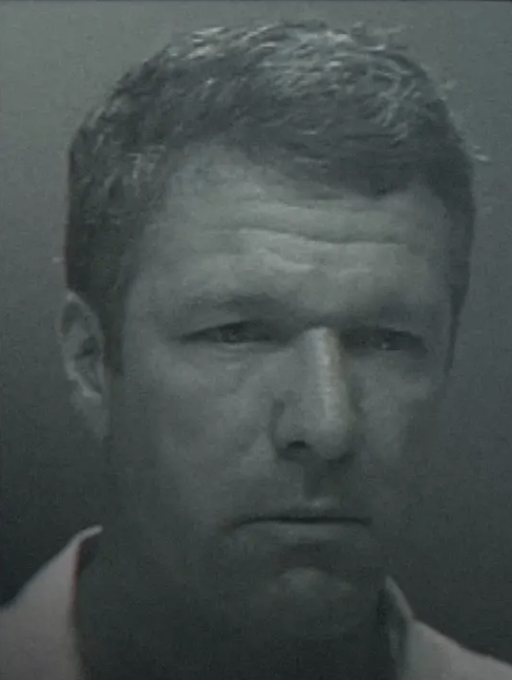
Scott Preston Moore did eventually become a convicted sex offender.
But it is important to be precise about why.
Moore’s 2013 conviction was not for the alleged assaults at the Church of the Resurrection retreats.
He was convicted of misdemeanor sexual battery involving a separate incident in 2010.
Police said Moore inappropriately touched a 16-year-old friend of his child during a sleepover at Moore’s Overland Park home.
A judge sentenced him to one year in jail, the maximum sentence for the misdemeanor charge, and ordered him to register as a sex offender.
The teenage boys from the 2005 church retreat later testified during proceedings connected with that case, and evidence concerning the church incidents became part of the prosecution’s broader picture of Moore’s conduct.
That later conviction is the basis for calling Moore a convicted sexual offender.
Hamilton Personally Encouraged Another Alleged Victim to Go to Police
There is another part of the history that complicates the claim that Hamilton consistently shielded Moore.
In 2010, an adult man approached Hamilton with a story dating back decades.
The man said Moore had sexually abused him in 1979, when he was approximately five years old and Moore was a teenager.
By then, the statute of limitations had reportedly expired.
Court records nevertheless say that after speaking with Hamilton, the man chose to make a police report so that the allegation would be documented.
Hamilton’s campaign cites that episode as evidence that by 2010 he was actively encouraging alleged victims to contact law enforcement.
That does not erase the decision made in 2005.
It does provide important context about what Hamilton did later.

Moore Faced More Allegations Before His Death
Moore’s legal troubles did not end with the 2013 conviction.
In 2015, authorities reportedly encountered him in a vehicle with another teenage boy under circumstances that again raised concern.
Moore fled.
Hours later, he was found unconscious at a relative’s home and later died.
Some people who knew the situation have described his death as suicide, but contemporary reporting noted that authorities did not publicly confirm the manner of death at the time.
That is another area where campaign rhetoric can become more definitive than the documented record.
The Controversy First Came From Hamilton’s Own Party
Marshall did not uncover this story.
The controversy first became a campaign issue during the Democratic primary.
State Sen. Patrick Schmidt, who was challenging Hamilton for the nomination, publicly accused Hamilton of failing to adequately protect children and called on him to withdraw from the race.
Schmidt’s campaign highlighted a large archive of court records relating to Moore.
But reporting by the Kansas Reflector concluded that some of Schmidt’s accusations could not be verified in the underlying court documents.
The controversy became even stranger when reporters examined a website hosting those records and discovered metadata connecting multiple uploaded documents to Schmidt’s campaign manager.
That did not make the court documents themselves invalid.
It did reveal that the supposedly independent online repository being used to fuel the controversy had direct ties to Hamilton’s political rival.
Hamilton nevertheless won the Democratic nomination.
Now Marshall is using the same underlying case in the general election.
Marshall’s Ad Goes Further Than the Documentary Record
The wording of Marshall’s ad is designed to leave viewers with a simple narrative:
Victims identified a predator.
Hamilton ignored them.
The church knowingly brought the predator back.
He attacked again.
Hamilton protected him.
The documented sequence is messier.
Two boys reported sexual touching in 2005.
The boys could not positively identify the perpetrator because of the darkness.
Some camp officials behaved dismissively.
Hamilton met with at least one family.
The church conducted an internal investigation.
That investigation was inconclusive.
Church leaders did not report the 2005 allegations to authorities at that time.
Moore returned in 2006.
He again allegedly entered boys’ rooms, although the records cited in reporting do not establish new sexual touching at that retreat.
Church officials then contacted police, reported both years’ incidents and barred Moore from youth involvement.
The local prosecutor declined charges.
Years later, Moore was convicted of sexually battering a different teenager.
Those facts still provide substantial room to criticize the 2005 response.
But they are more complicated than saying Hamilton knowingly sent a confirmed child predator back into camp.
Hamilton Was the Founding Pastor, but How Involved Was He?
That question may be central to how people understand the case.
Hamilton was not simply an anonymous pastor somewhere in a giant organization.
He co-founded the Church of the Resurrection and was its senior leader.
He therefore carried institutional responsibility for what occurred under the church’s name.
At the same time, court documents concerning the 2005 investigation largely focus on other church officials rather than Hamilton personally.
He was not at either retreat.
He did not personally conduct the internal investigation.
But former employees say he knew about the allegations and met with at least one affected family.
That means two extreme versions of the story are difficult to reconcile with the available evidence.
It would be inaccurate to say Hamilton had nothing to do with the situation.
It would also go beyond the record to say he personally identified Moore as a sexual abuser in 2005 and deliberately protected him.
Hamilton’s Campaign Says the New Attack Is False
Hamilton’s campaign has accused Marshall of exploiting child sexual abuse for political gain.
A campaign spokesperson said local reporting had already examined the episode during the Democratic primary and emphasized that the church ultimately contacted law enforcement.
The campaign has also pointed to Hamilton’s subsequent involvement helping another alleged Moore victim make a police report.
Marshall’s campaign, meanwhile, argues that the most important fact is that no police report was made after the first allegations in 2005 and Moore was allowed to return the following year.
Both campaigns are emphasizing the parts of the record most favorable to their candidate.
The underlying court history allows readers to see where those arguments differ.
The Race Has Suddenly Become Nationally Significant
The controversy is arriving as the 2026 Kansas Senate race draws an unusual amount of national attention.
Kansas has not elected a Democratic U.S. senator since the 1930s, but this year’s contest between Hamilton and Marshall has become more competitive than party strategists initially expected.
Recent public polling has shown a close contest, although individual surveys differ and polling represents snapshots of particular electorates rather than election results.
The shifting landscape has also led Republican-aligned groups to commit millions of additional advertising dollars to Kansas in the final weeks of the campaign.
That environment explains why a 20-year-old controversy is suddenly appearing in statewide television advertising.
But the closeness of an election does not change what is established by the historical record.
Child Abuse Cases Were Handled Very Differently 20 Years Ago
Another uncomfortable element of this story is how institutions once responded to sexual-abuse allegations.
Churches.
Schools.
Youth organizations.
Sports programs.
For decades, many organizations treated allegations as internal personnel or disciplinary matters before deciding whether to call law enforcement.
Today, child-protection experts generally warn organizations not to attempt to conduct their own substitute criminal investigations before notifying the proper authorities.
Church leaders are not detectives.
Pastors are not forensic interviewers.
And an internal investigation that cannot “prove” abuse does not necessarily mean police should never hear about the allegation.
Hamilton’s acknowledgment that he would handle the 2005 reports differently today reflects that broader change.
Whether voters view that admission as accountability or as evidence of a serious leadership failure is a judgment they will make for themselves.

The Boys’ Experience Should Not Get Lost in the Politics
There is also an uncomfortable danger in watching a decades-old child sexual-abuse case become political advertising.
The two boys who reported disturbing encounters at that 2005 retreat were teenagers.
One later testified that after reporting what happened, a church leader effectively warned them that they were damaging a man’s reputation.
Their allegations became courtroom evidence years later.
Now those experiences are being replayed in campaign advertisements and political arguments across Kansas.
Whatever anyone thinks about Hamilton or Marshall, those victims existed long before either campaign decided their stories were useful.
The most important failure documented in the 2005 response may not be partisan at all.
Two children told adults something frightening had happened.
The adults investigated internally.
Police were not called.
That is a fact worth examining regardless of who is running for Senate.
So Did Adam Hamilton “Protect a Pedophile”?
The available record supports a narrower conclusion.
Church of the Resurrection leaders failed to immediately report serious sexual-abuse allegations to law enforcement in 2005, and their internal investigation did not establish Moore as the perpetrator. Moore was permitted to return as a camp volunteer in 2006.
Hamilton was the church’s founding pastor, knew about the issue and met with at least one affected family.
He says he would call police immediately if faced with the same situation today.
When further concerns arose in 2006, the church contacted law enforcement, reported both years’ allegations and removed Moore from youth-related roles.
Later, Hamilton encouraged another alleged victim to report Moore to police.
Moore was ultimately convicted in 2013 of sexually battering a different teenager in a separate 2010 incident.
Whether that entire history justifies the much broader campaign claim that Hamilton deliberately “protected a pedophile” is a political accusation, not an established judicial finding.
There has been no court ruling concluding that Hamilton covered up Moore’s abuse.
There is, however, documented evidence that his church’s initial response in 2005 fell short of what Hamilton himself now says should have happened.
And that may be the most important distinction in one of the most contentious stories of the Kansas Senate campaign.
What do you think about how the church handled the 2005 allegations? Is Hamilton’s acknowledgment that he would immediately involve police today an adequate response to a mistake made more than 20 years ago, or should the decision to keep the original complaints inside the church receive greater scrutiny? And do you think campaign ads involving child-abuse survivors should be held to an especially high standard when summarizing complicated historical records? Share your thoughts in the comments.