ICE Shot Him on His Way to Work. Now Mexico Is Threatening Legal Action
Lorenzo Salgado Araujo, a 52-year-old Mexican national and longtime Houston resident, was fatally shot by an ICE officer during an immigration enforcement operation. While federal officials say he used his vehicle as a weapon, his family is demanding an independent investigation, and Mexico’s President Claudia Sheinbaum is now vowing legal action over the killing.
 Marie NovakMarie Novak is a crime news writer for Crimehowl, covering true crime, missing persons cases, court updates, and stories that leave communities searching for answers. She focuses on writing with empathy, clarity, and a deep respect for victims and their families while encouraging readers to think critically about the cases that shape the headlines.
PUBLISHED JUL 13, 2026 · 06:00 | 5 MIN READ | FILED UNDER CURRENT CRIMES
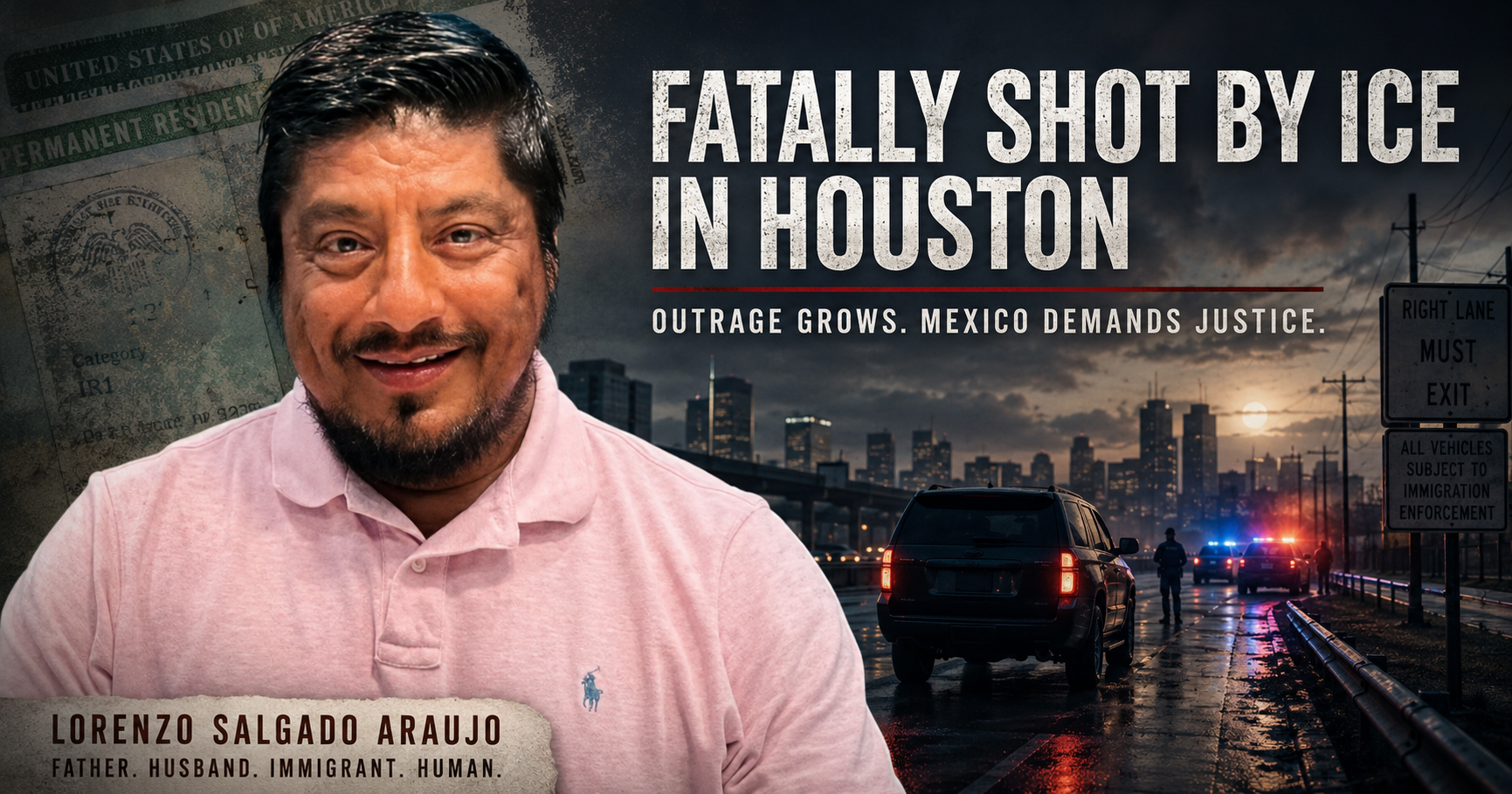
The fatal shooting of Lorenzo Salgado Araujo by an ICE officer in Houston has now become more than a local investigation. It has sparked outrage from his family, immigrant rights advocates, Houston community members, and the president of Mexico.
Araujo, a 52-year-old Mexican national, was killed during an immigration enforcement operation in Houston, Texas. Federal authorities say the shooting happened during a traffic stop connected to a targeted ICE operation. But his family and supporters are now demanding transparency, saying the public still has not been shown enough evidence to understand why deadly force was used.
According to federal officials, Araujo allegedly tried to evade arrest, rammed an ICE vehicle, and used his vehicle as a weapon. ICE has framed the shooting as a response to a dangerous situation.
But Araujo’s family is challenging that version of events.
His relatives have said they believe he may not have realized the people surrounding him in unmarked vehicles were law enforcement. They have also described him as a hardworking family man who had lived in the United States for more than 30 years and was on his way to a construction job when he was shot.
That is where the outrage begins.
To his family, this was not the death of a dangerous criminal. This was a man heading to work who never came home.
Mexico Responds With Outrage
Mexico’s President Claudia Sheinbaum responded sharply to Araujo’s death, saying her government is preparing “legal measures” after the fatal shooting.
Sheinbaum said Mexico cannot allow its citizens in the United States to be mistreated, adding that the response would go beyond a basic diplomatic complaint or public statement.
“We cannot permit the mistreatment of our brothers in the United States,” Sheinbaum said. “So we are preparing measures.”
Her spokesperson did not clarify exactly what those legal measures would look like, but the message was clear: Mexico is not treating this as just another immigration enforcement incident.
Sheinbaum also criticized the broader use of force in immigration enforcement, saying undocumented immigrants do not need to be held in detention centers and that violence does not need to be used.
Her comments add fuel to already tense relations between the United States and Mexico, especially as immigration enforcement and cartel-related security disputes continue to create friction between both governments.
His Family Wants an Independent Investigation
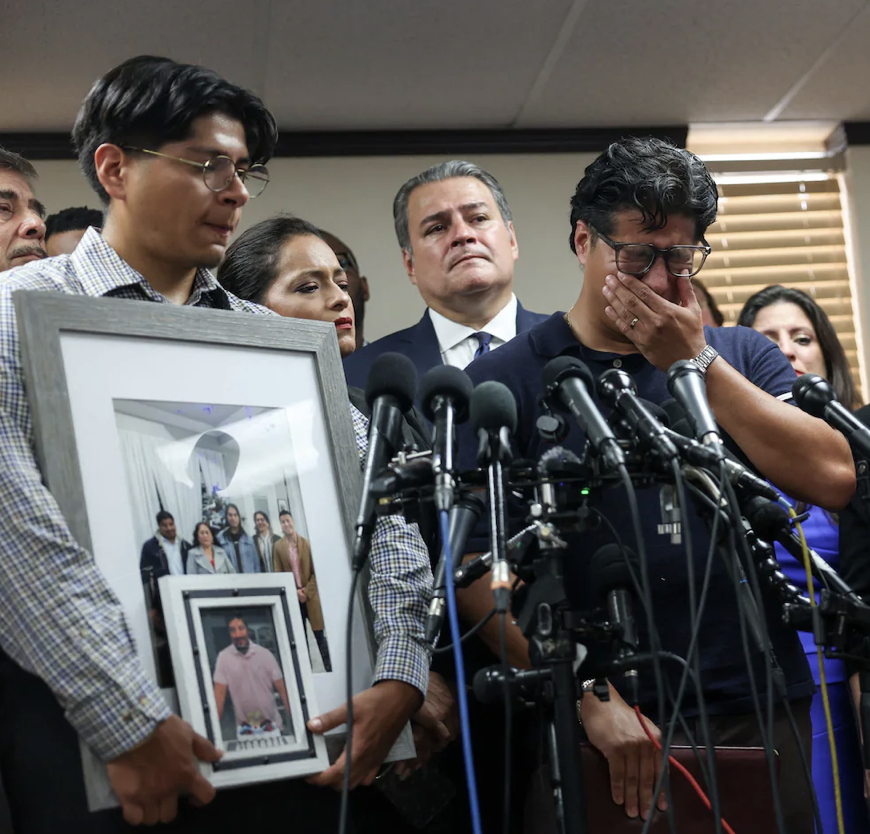
Araujo’s family is calling for an independent investigation into the shooting.
That demand has also been echoed by civil rights groups, immigrant advocacy organizations, and local leaders who say the public needs more than a federal agency’s statement to understand what really happened.
One major concern is the lack of publicly released video evidence.
Federal authorities have said Araujo used his vehicle in a threatening way, but family members and advocates want body camera footage, surveillance video, or other evidence released so the public can see the moments leading up to the shooting for themselves.
That matters because deadly force cases involving law enforcement often come down to seconds, angles, commands, vehicle movement, and whether the person shot actually understood who was confronting them.
If Araujo was surrounded by unmarked vehicles, as his family believes, that raises even more questions.
Would he have known they were federal agents? Did agents clearly identify themselves? Was he trying to flee because he was afraid? Was there another way to stop the vehicle without shooting him?
Those are the questions his family wants answered.
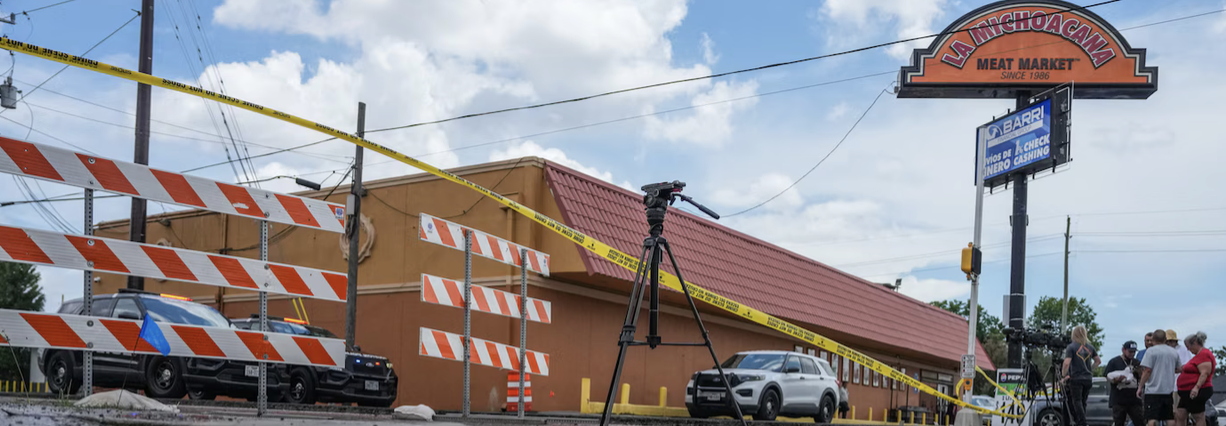
A Worker, a Father, and a Longtime Houston Resident
Araujo’s family has described him as a devoted father and provider.
Reports say he had lived in Houston for decades and was working in construction. His family said he was in the process of trying to legalize his status, and U.S. Rep. Sylvia Garcia reportedly said he had no criminal convictions.
That detail has become central to the public anger.
For many people, this case represents what they see as the most frightening part of aggressive immigration enforcement: a longtime worker with no violent criminal history being killed during an operation before his family fully understands why.
Araujo’s death has sparked protests in Houston, including demonstrations where people demanded that ICE leave the city and called for answers about the shooting.
For his loved ones, however, the political debate is personal.
They are not just asking about immigration policy. They are asking why their father, husband, relative, and provider is dead.
Another Worker Was Detained
The case has also raised concern because another Houston worker, identified in local reporting as Daniel Tirado Pantoja, was reportedly detained by ICE after the same incident.
According to his attorney, Tirado was one of Araujo’s employees and was taken into custody after the shooting. His family has said he is also a longtime Texas resident and is in the process of obtaining legal status.
That part of the case has only deepened concerns among immigrant families in Houston.
To many in the community, this was not just one fatal shooting. It was part of a larger enforcement action that left one man dead, another detained, and multiple families terrified.
A Bigger Immigration Fight
Araujo’s death comes during a period of intensified immigration enforcement under President Donald Trump’s renewed crackdown on illegal immigration.
Critics argue that immigration operations have become more aggressive and less transparent. Advocates say deadly incidents like this show the dangers of using militarized tactics against workers and families.
Federal officials, meanwhile, argue that ICE officers face real dangers during enforcement operations and must be able to protect themselves if someone uses a vehicle as a weapon.
That is the conflict at the heart of this case.
Was this a justified use of force during a dangerous enforcement stop? Or was it a preventable killing of a man whose only offense, according to Mexico’s president, was not having legal papers?
Until more evidence is released, the public is left with two very different narratives.
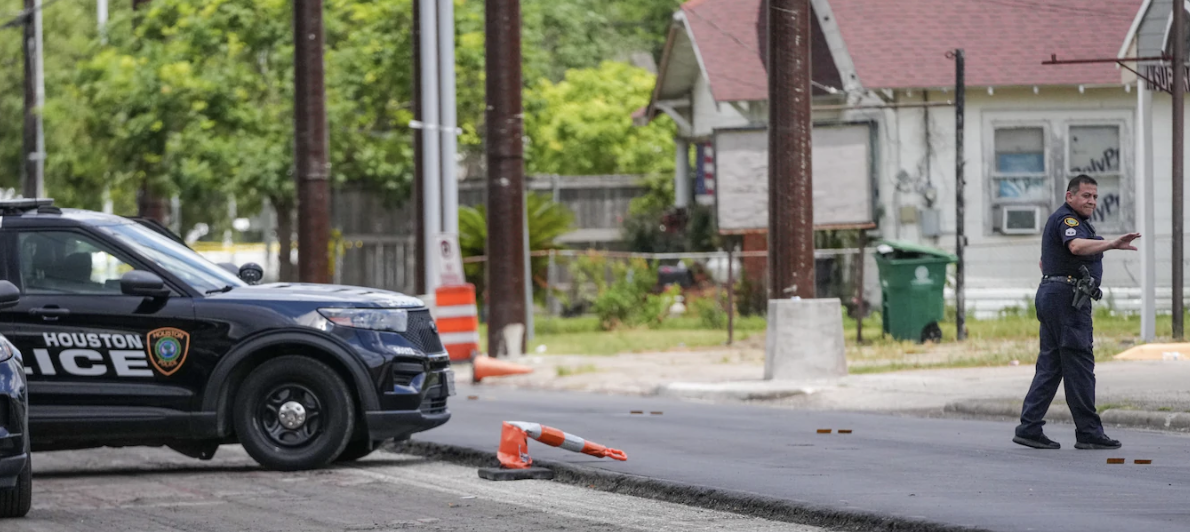
What Happens Next?
The FBI and the Department of Homeland Security are reportedly involved in reviewing the shooting. But Araujo’s family and advocates want an investigation that is fully independent, transparent, and not controlled only by federal agencies connected to immigration enforcement.
Mexico’s promise of legal action may also increase pressure on U.S. authorities to release more information.
For now, the case remains under investigation, and many key questions remain unanswered.
Was Araujo clearly told he was being stopped by ICE? Was there video of the encounter? Did he pose an immediate deadly threat? Were less-lethal options available? And why has the public not seen the evidence federal authorities are relying on?
This case is not only about one traffic stop in Houston. It is about immigration enforcement, government accountability, the rights of undocumented workers, and the consequences of using deadly force in civil immigration operations.
Lorenzo Salgado Araujo left for work and never made it home.
Now his family, his community, and the government of Mexico are asking why.
What do you think should happen next? Should ICE be required to release video quickly after deadly force incidents? And should immigration officers be allowed to conduct traffic-stop-style operations in unmarked vehicles?