Tyler Robinson’s Family Business Is Still Running-But Taxpayers May Pay Millions For His Defense
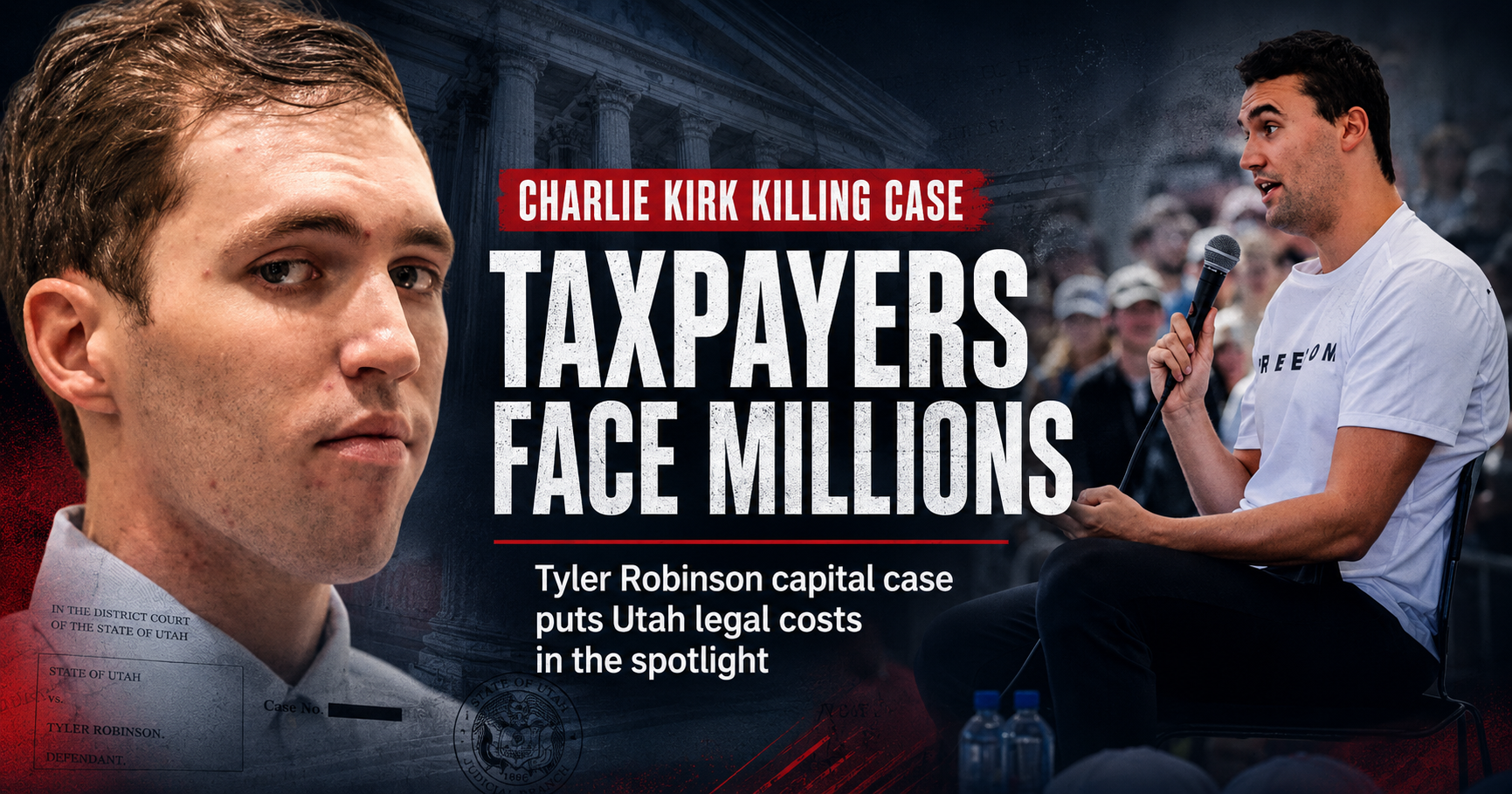
As Tyler Robinson faces a potential death penalty case in the killing of Turning Point USA founder Charlie Kirk, new attention is falling on his family, his father’s thriving Utah masonry business, and the massive taxpayer-funded legal bill that could climb into the millions. Prosecutors say the evidence includes surveillance, DNA, digital messages, and alleged confessions, while the defense continues fighting over forensic claims and the death penalty.
 Marie NovakMarie Novak is a crime news writer for Crimehowl, covering true crime, missing persons cases, court updates, and stories that leave communities searching for answers. She focuses on writing with empathy, clarity, and a deep respect for victims and their families while encouraging readers to think critically about the cases that shape the headlines.
PUBLISHED JUL 19, 2026 · 18:00 | 8 MIN READ | FILED UNDER CURRENT CRIMES
A Murder Case That Has Pulled An Entire Utah Family Into The Spotlight
The case against Tyler James Robinson, the 23-year-old Utah man accused of killing conservative activist and Turning Point USA founder Charlie Kirk, has already become one of the most watched criminal cases in the country. But now, the story has expanded beyond the courtroom and into questions about family money, taxpayer-funded defense costs, and the life Robinson came from before he was accused of one of the most shocking political killings in recent memory.
Robinson is accused of fatally shooting Kirk on September 10, 2025, while Kirk was speaking at an event at Utah Valley University. Prosecutors say the shot came from a rooftop while Kirk was addressing a crowd, and Robinson now faces charges that include aggravated murder. Prosecutors are also seeking the death penalty, making this a capital case with enormous legal stakes.
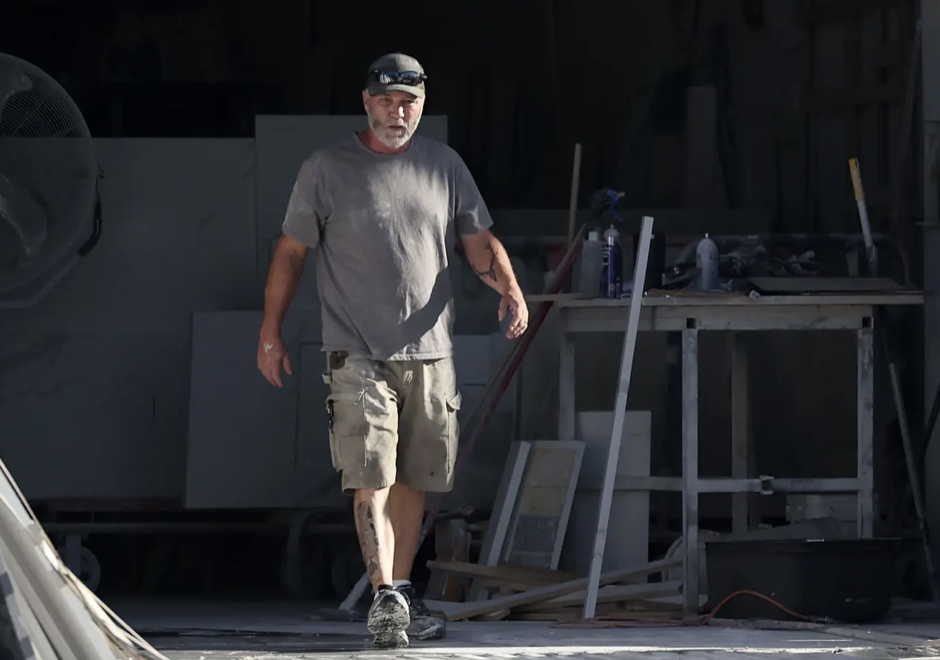
But while the case is focused on Robinson, his family has also been pulled into the public glare. His father, Matthew Robinson, has been described in reports as the person who helped turn him in after Robinson allegedly confessed. Now, nearly a year later, Matthew is reportedly back to running his family’s stone and marble business in southern Utah while his son’s defense is being handled at public expense.
That is where this case gets even more complicated.
Because according to recent reporting, Robinson has been declared indigent, meaning he cannot pay for his own defense. In a death penalty case this large, that means taxpayers may be responsible for a legal bill that could climb into the millions.
The Business Behind The Family Name
Matthew Robinson reportedly runs a local stone and marble supplier in the St. George area, a business that has been in the family for more than a decade. The company reportedly does much of its work through word-of-mouth and long-standing relationships with customers, and sources told The New York Post that many clients have stayed with the business despite the high-profile charges against Tyler.
From the outside, it sounds like a family business that continued operating while everything around the family changed.
But reports also point to an older family dispute. Matthew’s brother and former business co-founder, Clint Robinson, sued him in 2014, accusing him of embezzling about $100,000 over nearly two years. The lawsuit reportedly included claims about hidden financial records and business dealings, though the brothers later reached a confidential settlement.
That old lawsuit does not connect Matthew Robinson to the criminal case against his son, but it does add another layer to the public curiosity surrounding the family. People are naturally asking how a defendant with a family tied to a functioning business ends up with a taxpayer-funded defense. The legal answer is that indigency is based on the defendant’s own finances, not necessarily the finances of his parents.
Still, to the public, that distinction can feel messy.

Why Taxpayers Could Be On The Hook
Death penalty cases are not ordinary criminal cases. They are usually longer, more complicated, and far more expensive than standard murder trials. They require specialized defense attorneys, investigators, mitigation experts, forensic experts, mental health evaluations, jury consultants, and potentially years of appeals if there is a conviction.
Utah County officials had already asked the state for help with the cost of the Robinson case earlier this year. Local reports said Utah taxpayers could pay $2 million for defense and prosecution costs, and a formal state funding request was made as the case grew more expensive.
Some estimates now suggest the total price tag could eventually exceed $10 million, especially if Robinson is convicted and the case moves into long appeals. That number is not a final court bill, but it reflects the potential cost of defending and litigating a capital murder case with national attention.
And that is the part that has people talking.
Some readers will see the public defense costs as frustrating, especially given the nature of the allegations. Others will argue that even the most hated defendants are entitled to a full defense because that is how the justice system protects convictions from being overturned later.
That debate is now sitting right beside the criminal case itself.
What Prosecutors Say They Have
During a five-day preliminary hearing in Provo, prosecutors laid out some of the evidence they believe connects Robinson to Kirk’s killing. According to the Associated Press, prosecutors presented surveillance footage showing a man believed to be Robinson on campus before and after the shooting, along with evidence about a bolt-action rifle found wrapped in a towel near the campus.
Forensic testimony also became a major issue. People reported that an ATF forensic biologist testified about DNA testing on the rifle, ammunition, a towel, and a rotary tool allegedly used to engrave messages on bullets. The defense pushed back on the strength of that evidence, highlighting that DNA analysis often uses likelihood ratios rather than simple yes-or-no certainty.
That means the prosecution says the science supports its case, while the defense is already working to question how strong that science really is.
Digital evidence also played a central role. Prosecutors have alleged that Robinson made statements to his roommate and romantic partner, Lance Twiggs, that amounted to confessions. AP reported that prosecutors presented digital messages where Robinson appeared to confess, while Twiggs also gave emotional statements about what Robinson allegedly said after the shooting.
Twiggs was reportedly given immunity for recorded statements, meaning those statements cannot be used against Twiggs in a potential criminal case.
The Defense Is Fighting Back
Even with the heavy evidence presented by prosecutors, this case is far from over.
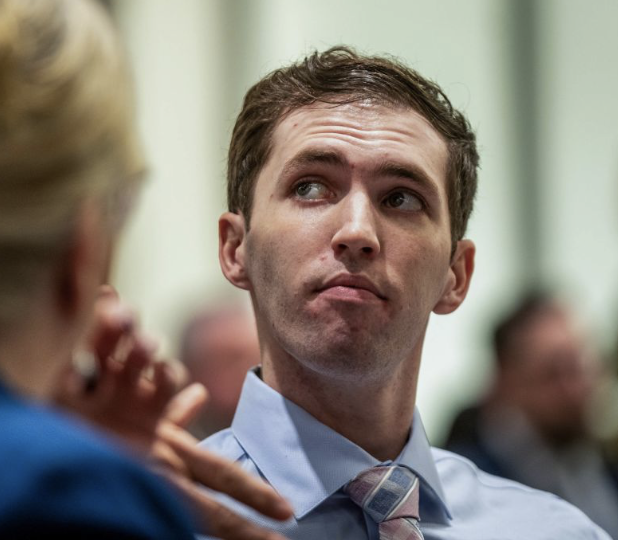
Robinson has not yet gone to trial, and Reuters reported that Judge Tony Graf will decide whether the case proceeds after oral arguments in September. Robinson faces seven charges, including aggravated murder, and prosecutors are seeking the death penalty.
The defense has challenged parts of the forensic case, including DNA evidence. The Guardian reported that defense attorneys focused on the reliability of the forensic evidence during the preliminary hearing, while prosecutors leaned on surveillance, DNA, and witness statements.
There has also been courtroom tension over what should be public. Reuters reported that Kirk’s widow, Erika Kirk, pushed for transparency and attended hearings where she viewed evidence, while the judge balanced public access against Robinson’s right to a fair trial.
That balance is important. This is a case with massive public emotion around it, but it is still a criminal proceeding. Robinson is accused, not convicted, and the court has to protect the process even when the public wants answers immediately.
A Community That Wants Out Of The Spotlight
Robinson’s hometown in southern Utah has also been stuck in the middle of the story. Reports have described the area as a tight-knit, heavily Mormon community where neighbors and former teachers remembered Robinson as a hardworking young man who once seemed close to his family. He had reportedly attended Utah State University on a scholarship before dropping out.
That is part of what makes the case so unsettling for people who knew him. It is not just the accusation itself. It is the shock of watching someone from a familiar community become the defendant in a nationally followed murder case.
The Post reported that Robinson’s former teacher said it was difficult to process seeing a former student in this situation, guilty or innocent.
And honestly, that reaction makes sense. Communities often struggle when a major crime becomes attached to one of their own. People start replaying old memories, looking for warning signs, and wondering whether the person they thought they knew was ever really the full story.
The Family’s Silence Speaks Loudly
Matthew and Amber Robinson have mostly kept quiet publicly since their son’s arrest. That silence has only made people more curious.
Matthew Robinson’s role is especially complicated. On one hand, he is reportedly the father who helped bring his son to authorities after Robinson allegedly confessed. On the other hand, he is now a public figure by association, still working, still running his business, and still living in the same community while his son faces a possible death sentence.
It is hard to imagine what that kind of public and private pressure feels like.
But for readers watching this case from the outside, the questions are unavoidable. Should a defendant’s family resources matter if the defendant himself is indigent? Should taxpayers pay millions for a capital defense? Or is that exactly what has to happen if the state is going to pursue the harshest punishment available?
The Bigger Question: Justice Or Cost?
This case is now about more than one courtroom. It has become a debate over justice, money, politics, public access, family responsibility, and the death penalty.
If prosecutors are seeking death, then Robinson’s defense has to be thorough. A weak defense could create appellate issues for years. But if taxpayers are looking at a bill that could reach eight figures, many people are going to ask whether the cost is fair, especially when the defendant’s family appears to have an established local business.
The uncomfortable truth is that capital punishment is expensive on both sides. Prosecutors must prove their case beyond a reasonable doubt, the defense must investigate every possible issue, and courts must make sure the process is strong enough to survive appeal.
That is why this case may drag on far longer than the public wants.

What Happens Next?
The preliminary hearing wrapped in July, but the case is not moving straight to trial yet. Final arguments are expected on September 1, and Judge Tony Graf will then decide whether prosecutors have shown enough evidence for the case to proceed.
For now, Robinson remains the accused defendant in a death penalty case. His family remains under public scrutiny. His father’s business continues operating. And Utah taxpayers may be looking at one of the most expensive criminal cases the state has seen in years.
This is the kind of case that leaves people divided before the trial even begins.
Some will focus on the evidence. Some will focus on the victim. Some will focus on the family. Some will focus on the cost. And some will ask whether the justice system can truly stay fair when the entire country is watching.
What do you think? Should taxpayers cover every dollar of Tyler Robinson’s defense if prosecutors are seeking the death penalty, or should family resources be considered when a defendant comes from a business-owning household?